Showing posts with label Jerry Dammers. Show all posts

Thursday, January 5, 2023

Duff Review: The Specials "Work In Progress Versions"

The artwork features Walt Jabsco, an illustration of a rude boy in suit, tie, sunglasses and pork pie hat, on the cardboard sleeve and paper label.
10" vinyl single
2 Tone/Chrysalis
2022

(Review by Steve Shafer)

Did you know there was a new Specials 10" single released in the UK this past November on Record Store Day? Neither did I.

I'm not sure how it slipped by without my noticing it. Last week, I was perusing the online 2 Tone Records shop and thinking about when to preorder the newly restored Dance Craze Blu-ray/DVD from BFI (British Film Institute), which for some odd reason isn't available in the US (though the triple-vinyl is). As I was scrolling through the goods (including some Dance Craze totes), I came across the recent 10" rarities from 2 Tone's vaults (see my reviews of Dub Mixes Exclusive and At The Home Organ: Demos 1980-82) and unexpectedly spied a new one: Work In Progress Versions!

This 10" contains The Specials' instrumental rehearsal version of (Terry Hall's composition) "Friday Night, Saturday Morning" and Jerry Dammers at the organ and Horace Panter on bass performing an early take of "I Can't Stand It." While it's probably not worth the casual fan's time to track this record down, diehard Specials followers will, of course, desperately need this in their collection.

Recorded in 1981, "Friday Night, Saturday Morning [Instrumental Rehearsal]" is a brighter, more upbeat version of this song with a shimmering guitar breezily wandering through the vocal line. It's fantastic and something you'll keep returning to. "I Can’t Stand It [Jerry Dammers at the Home Organ with Horace Panter on bass]," a demo recorded in 1980, is out there--and makes the final take of the song on More Specials seem pretty sedate in comparison. This is Dammers unleashed in exotica-land. He uses the familiar, preprogrammed Casiotone-like Latin percussion and many of the cheesier, Muzak-like synth tones on his Yamaha organ (check out his great solo during the bridge!). Ska purists will likely bristle at this (much as they did for side two of More Specials), but it's a fascinating glimpse of where Dammers' head was at during the recording of The Specials' second album. And I, for one, like it.

+ + + +

Considering how long it took to record the brilliant In the Studio (two years at a cost of half a million pounds!), there has to be unreleased Special AKA material to release in the future, right?

+ + + +

Monday, January 2, 2023

Remembering Terry Hall of The Specials

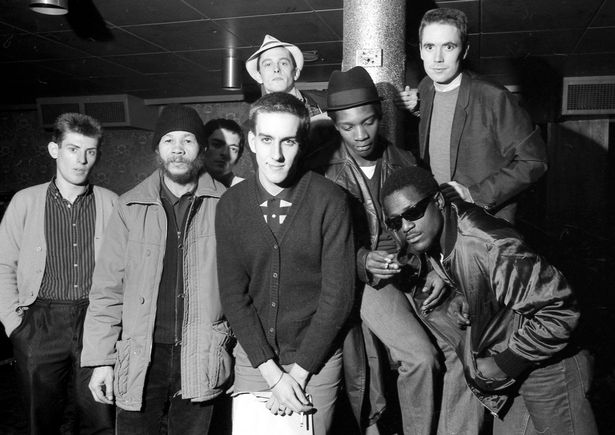
Members of The Specials, with Terry Hall in center front, pose for a newspaper photo.
Terry Hall, center, with The Specials and Rico (Image: Coventry Telegraph)
(By Steve Shafer)

The news of Terry Hall's death on December 18 at age 63 from pancreatic cancer landed like a sucker punch to the gut--and I've been wrestling with how to process and write about it ever since. Several wonderfully insightful pieces about Hall's music and life already have been published--including Alexis Petridis' "Terry Hall was the self-assured eye of the Specials storm" in The Guardian and Neil Kulkarni's "Coventry & A Spirit Of Unbelonging: Terry Hall Remembered" in The Quietus. And Billy Bragg summed up Hall's and The Specials' impact so incredibly well in 280 characters. So, I'm not sure what I can add (but I need to add something).

As I write this, the terrible news of Pelé's death is just sinking in. I had seen him play at Giants Stadium in the Meadowlands in 1977 when I was 11, during his final season with the Cosmos. I've always considered it to be one of the highlights of my life, to have witnessed the greatest soccer player of all time in action, even if past his prime. While I'm reluctant to admit it, it's hitting me harder than Hall's passing--and forcing me to realize that I've always held Terry Hall at a bit of a distance, though I shouldn't be.

Even though he was the phenomenal, irreplaceable voice of my beloved Specials, Hall's dour and perpetually acerbic (though often bitingly funny) public persona left me cold. He was someone who could put anyone in their place with a quick, cutting remark. A man of few words, but they always hit their mark. I've always been wary of and felt at a disadvantage interacting with people this quick and sharp. (I have to mull things over--and often take longer than I'd like to admit to sort out the truth of a situation and articulate my thoughts.)

Having said all that and without ever having met him, I can immediately relate to several aspects of Hall's life and death. For several years after college, I worked as a caseworker at a residence for people with chronic mental illness (much later in his life, Hall was diagnosed as suffering from bipolar disorder). About five years ago, I witnessed a friend of mine--only a few months younger than me--undergo grueling treatment and slowly die from pancreatic cancer. And I've been a devoted fan of The Specials ever since first hearing "Ghost Town" in 1981.

Hall's detached and dispassionate vocals--often delivered standing stock still while the rest of the band exploded in furious motion behind him (as Petridis points out, see the closing credits of Dance Craze)--and fuck-all attitude made him the perfect frontman for The Specials, whose songs were mostly about how adults and their institutions had largely failed their generation. His disaffection with the world was not a pose. Growing up, he was subjected to one of the most horrific betrayals of adult trust imaginable.

At age 12, Hall was kidnapped by a teacher on a school trip in France and sexually abused by a pedophile ring for four days before being punched in the face and discarded on the side of a road. The trauma Hall suffered triggered a deep depression, whose treatment left him addicted to Valium for years and housebound for months (he also dropped out of school when he was 14). Hall also likely experienced emotional numbing--an unconscious psychological defense/survival mechanism common to people who have been severely traumatized where the brain attempts to lessen the pain by dampening all emotions (leaving someone who seems distanced, detached, and unfeeling).

It's not a stretch to argue that this abduction and sexual assault--in addition to his experience of growing up in a decaying, unfashionable Coventry in the 1970s (see Kulkarni's piece above)--lent Hall's voice and stage presence a unique authority and authenticity. In his alienation, cynicism, and emotional remove lay his power as he sang about everything around him--endemic racism and racial violence; working-class youth denied opportunity, purpose, even a satisfying night of fun by a government that didn't give a damn about their future; and the shared constant dread of all life being wiped out in a nuclear war. But his detachment didn't mean that Hall didn't care deeply about how the litany of society's unaddressed and intentionally aggravated ills was impacting Britain's youth. He was just clear-eyed about their plight. And everyone loved him for it.

Two of The Specials' greatest songs that bookend the original band's brief existence--Dammers' "Nite Klub" and Hall's own composition "Friday Night, Saturday Morning"--are both about the inability to take pleasure in a night out on the town. In "Nite Klub," Hall's deadpan delivery of the lyrics "I'm a parasite/I creep about at night" is spectacularly ambiguous. Is this meant to be sarcastic, commenting on the establishment's view of working-class youth on the dole? Or has the narrator internalized mainstream society's low opinion of him and his lot? And the suddenly released white-hot anger in the last line of this verse is devastating: "I don't work/'Cause I don't have to/I don't have to work/There's no, no work to do!" How can you have fun (or be a productive member of society, for that matter) when your life's going nowhere?

The narrator of "Nite Klub" is still hitting the nightspots a few years later in "Friday Night, Saturday Morning," but the piss and vinegar in his belly is gone. It's all now bleakly rote. Hall's unembellished singing conveys the track's boredom, futility, and despair extraordinarily well. But this portrait of Britain's forsaken youth is drawn with great empathy, not self-pity or anger at the powers that be (though Thatcher's the subtle target). And Hall's song contains one of the most universally relatable--and bluntly heartbreaking!--lyrics in pop music history: "Wish I had lipstick on my shirt/Instead of piss stains on my shoes."

In a 2019 interview with Richard Herring’s Leicester Square Theatre Podcast, Hall stated:

"I find it quite easy to forgive and forget. It’s like, you know, going back to my abduction, it’s like you can let that eat away at you but then well you know it’s paedophilia and it’s like part of life really.

"It’s unfortunate it happened to me but you can’t just let it destroy your life, it’s not good."

While there's much to unpack here (the forgiveness, his resilience), Hall's observation that child sexual abuse is "like part of life" is shocking. But considering what took place in the Catholic Church worldwide for decades--and god knows in how many other institutions that dealt with children--he's not wrong, is he? 

Clear-eyed to the end.

+ + + +

I offer my deepest condolences to Terry Hall's family, bandmates, friends, and fans.

+ + + +

(Updated on 1/3/2023 to include information on emotional numbing.)

+ + + +

Sunday, September 11, 2022

Duff Review: "Blue Beat Baby: The Untold Story of Brigitte"

(Review by Steve Shafer)

Blue Beat Baby: The Untold Story of Brigitte, a new 30-minute video documentary by Joanna Wallace, does an excellent job of piecing together the largely forgotten story of Brigitte Bond, who inadvertently inspired the design of The Beat girl. While the average ska fan knows 2 Tone's Walt Jabsco was created by Jerry Dammers (and refined with help from Horace Panter and John "Teflon" Sims) and based on a photo of Peter Tosh from his early Wailers' days, far fewer are aware of the origins and background of The Beat girl.

In Blue Beat Baby, Wallace explains that Brigitte Bond was a popular Soho burlesque performer who showed up to welcome Prince Buster at Heathrow Airport in 1964 during his first tour of the UK (to promote I Feel The Spirit). In the process, she was photographed and filmed dancing with Buster in the terminal (most likely a calculated move to help generate press for her then forthcoming single and supporting gigs). A little over a decade later, one of these photos was re-published in Melody Maker in the spring of 1979 (see it above), just as 2 Tone started to rule the airwaves and charts. Cartoonist/graphic artist Hunt Emerson, who was tasked by The Beat to quickly come up with their logo (and later designed the covers of the first two Beat albums), spied the photo of the beautiful and fashionably mod Bond dancing with Prince Buster and modeled his striking--and now iconic--Beat girl illustration on her. Notably, neither Hunt Emerson nor anyone in The Beat was cognizant of Bridget Bond's claim to fame. Emerson was drawn to her elegant sense of style and the wonderful motion of her hips, arms, and legs captured in that phenomenal photo.

Employing archival newspaper clips, strip joint advertisements, and TV news footage, Wallace fills in as many blanks in Bond's story as possible in this compelling documentary. Her professional life on stage, in the press, and on the screen is well-covered here, but little is known of Bond's origins or fate (the trail goes cold in Italy in 1976). However, Wallace highlights several fascinating aspects of Bond's life, such as her (so-so) 1964 ska single on Blue Beat; the episode where she hijacked Billy Graham's attempt to minister/preach to the sinful denizens of Soho, which garnered her worldwide press coverage; and the fact that she is/was a gorgeous, transgender woman (which, refreshingly, didn't seem to be that big of a scandal in the UK at the time--many of her strip club patrons and admirers had no complaints!).

Both The Beat's Dave Wakeling and Emerson observed that after The Beat girl began to be featured on gig posters and Beat merchandise, the band's previously male-dominated audiences were flooded with female Beat fans (and there were far fewer fights at shows). Many girls even began to copy The Beat girl's style of dress. So, a crucial part of Bond's legacy is that her image helped welcome/make space for girls and women in the 2 Tone scene. (Then, as now, representation matters.) Perhaps the most significant unanswered question in all of this is whether Bond is/was aware of her consequential and celebrated place in 2 Tone history.

+ + + +

On a related note, ska author Heather Augustyn provided research assistance for this documentary and she wrote a chapter on Brigitte Bond in her forthcoming book Rude Girls: Women in 2 Tone and One Step Beyond.

+ + + +

Friday, June 10, 2022

Duff Review: Victor Romero Evans "At the Club" b/w The Detonators "Lift Off" reissue

The paper label indicates the song title, band, and label (Special Request)
12" vinyl single
Special Request
1980 (2022 reissue)

(Review by Steve Shafer)

Remastered and reissued for the first time since 1980, the John Collins-produced/co-written 12" single featuring Victor Romero Evans' "At the Club" and The Detonators' "Lift Off" should be of interest to Specials' fans, as it's forever linked to their most brilliant release--the Ghost Town EP.

Back in the day, after the Evans/Detonators record was played on Radio One's "Roundtable" program and favorably reviewed (it also was #1 on Black Echoes' reggae chart at the time), Collins received a late-night call from Jerry Dammers asking him if he might be interested in producing The Specials' next recording. The band was very impressed with Collins' production (recorded on a four-track in the front room of his house and released on his own label) and, in the wake of More Specials' not completely welcome excursion into muzak/lounge and the hi-tech 24-track studio it had been recorded in (that offered Dammers too many choices!), The Specials wanted to capture a more authentic reggae sound for these new songs in a much simpler fashion. And they believed Collins was their man.

When The Specials' met John Collins, they didn't expect him to be white. Lynval Golding and Neville Staple told him, "We were expecting someone like Lee Perry; a wild rasta smoking ganja." Indeed, the seductive Lovers Rock of "At the Club" and mysterious outer space dub of "Lift Off" seem as if they could have come from the mixing desks of Dennis Bovell or Mad Professor, two of the top UK reggae producers back then--and now. (Trainspotters will be interested to know that Victor Romero Evans also played the part of Lover in Franco Rosso’s stellar 1980 film Babylon--an updated Thatcher-era The Harder They Come shot in South London, with a boss reggae soundtrack by Bovell, Yabby U, I-Roy, Cassandra, Aswad, Vin Gordon, and Michael Rose.)

Of these two tracks, the wonderful dub instrumental "Lift Off" is clearly the sonic blueprint for what Dammers wanted for "Ghost Town." It sports a clean, warm, roots reggae sound with electro percussion and trippy synth effects (shades of every B 1950s sci-fi film you've ever seen)--and features the same ghost synth that is later used to open and close "Ghost Town." (To these ears, John Bradbury's drumming on "Ghost Town" and "Friday Night, Saturday Morning" sounds like its programmed, even though it's not; but I think it's a combination of how Brad is drumming--reportedly influenced by Gregory Isaacs' "Night Nurse"--and how Collins recorded him.)

Specials' completists will want to snap up a copy of this (I ordered a copy through Juno.co.uk), but the Victor Romero Evans "At the Club"/Detonators "Lift Off" 12" is worth having in its own right. It's a fantastic slice of early '80s UK reggae that stands the test of time. 

+ + + +

Friday, August 6, 2021

Duff Review: Jerry Dammers "At the Home Organ: Demos 1980-82 (Ghost Town & Theme from The Boiler)"

(Review by Steve Shafer)
The single's cardboard sleeve features Walt Jabsco, a stylized illustration of a rude boy (based on Peter Tosh) in a suit and pork pie hat; the paper label is worn and mildewy, and features the song title and artist.

Issued in the UK as part of the second 2021 Record Store Day drop (cue the evergreen complaints about RSD), Jerry Dammers' At the Home Organ: Demos 1980-82 (10" vinyl single, 2 Tone/Chrysalis, 2021) is as advertised--these are his DIY instrumental demos of The Specials' "Ghost Town" and Rhoda Dakar with The Special AKA's "Theme from The Boiler" performed on his "home entertainment type organ." These recordings, mastered from their cassette originals (and which feature pretty good audio fidelity), are really for Specials completists, as there's nothing immediately revelatory here. Having said that, there's something wonderfully intimate and thrilling about hearing Dammers' playing this early, more muzak-y version of his masterpiece "Ghost Town" (think "Stereotype, Part 2"--yet it's also B-horror movie-sounding) that doesn't yet include the bright, major key "Do you remember the good old days before the ghost town?" bridge. We weren't ever meant to hear this--but it's fascinating to compare it to the studio recording and note how producer John Collins helped shape the extraordinary final product. And this demo of "The Theme from The Boiler" with John Shipley (The Swinging Cats, The Special AKA) on guitar is unexpectedly fleshed out and pretty fantastic. Since the bloodcurdling "The Boiler" was only meant to be heard once, this 45 is rarely pulled out to play. Which is a shame, as I've always thought that the studio version of "The Theme from The Boiler" is a superb and jittery dance floor-filling cut that should be spun frequently. Hopefully, this demo's inclusion will bring some renewed attention to this gem.

The paper label for At the Home Organ doesn't feature Walt Jabsco (the cardboard sleeve does), though it's designed to look worn and slightly mildewy, as if these faux demo-only singles were recently rescued from a forgotten box in a damp cupboard--a nice touch. As a Specials/2 Tone fan, I'm quite happy to have Dammers' At the Home Organ in my collection. Get 'em while you can.

+ + + +

Saturday, June 26, 2021

Duff Book Review: Lee Morris "2 Tone: Before, During & After"

(Review by Steve Shafer)

After several decades marred by a dearth of tomes about 2 Tone apart from George Marshall's foundational and wonderfully opinionated The Two Tone Story (1990) and an extraordinary chapter about 2 Tone in Dick Hebdige's Cut 'n' Mix: Culture, Identity and Caribbean Music (1987), we're finally in a golden age of plenty. The spigot began to open in the late 2000s, with autobiographies from Horace Panter and Pauline Black, plus Paul Williams' superb biography of The Specials, You're Wondering Now. And more recently, we've seen coverage of 2 Tone in Heather Augustyn's terrific surveys of the genre, Ska: An Oral History and Ska: The Music of Liberation; amazing autobiographies from Ranking Roger (read my review) and Madness (read my review); and the best oral history of 2 Tone one could hope for in Daniel Rachel's Walls Come Tumbling Down: The Music and Politics of Rock Against Racism, 2 Tone and Red Wedge. (Oh, and I published The Duff Guide to 2 Tone in 2020, as well!) 

To this crowded bookshelf, the discerning 2 Tone fan absolutely should add Lee Morris' book 2 Tone: Before, During & After (Paperback, Media House Books, 2020). Morris provides a comprehensive overview of every band that released music on the 2 Tone label (including the lesser-known, non-ska acts that were signed on the tail end of 2 Tone's existence, like Friday Club, The Higsons, and The Apollinaires), from their origins in the '70s up till the present day--and includes biographical sketches of all band members and key collaborators. (Plus there's a chapter on 2 Tone related bands, and if you ever make the pilgrimage to Coventry, info on the 2 Tone Trail.) Morris' book is crammed with details (and some welcome commentary) that help flesh out the entire 2 Tone story--and American fans, most of whom didn't have easy access to the British music publications breathlessly covering 2 Tone's rapid rise and prolonged flame out, will find it especially enlightening. I was particularly grateful for Morris' chapter on The Special AKA, since I knew too little of this band's history other than it's Phoenix-like rise from the post-Ghost Town ashes of The Specials; and that Jerry Dammers' perfectionism in crafting the magnificent In the Studio cost an ungodly sum, took forever to complete, and was so miserable an experience that Rhoda Dakar to this day has never listened to it.

2 Tone: Before, During & After is an essential and handy reference guide to the label--one that you'll be thumbing through for years to come (I certainly will be).

+ + + +

Tuesday, May 11, 2021

Duff Guide to Ska Fast Takes: Danny Rebel & The KGB, Winds of Matterhorn!

(Reviews by Steve Shafer)

In the "I still learn something new every day" category comes the great new trad-leaning ska single from Danny Rebel & The KGB that's a preview of their new album (!) Toss It Up, which is being released on Stomp Records on May 28th, 2021. It features five new songs and five corresponding dubs by Victor Rice (you can pre-order the digital album now; is it too much to hope that this will be issued on wax?). Employing a term for female genitalia that I've never encountered before, "Whispering Eye" is unapologetic in its direct and unadorned expression of lust ("We don’t need this love (I’ll save you the pain)...You don’t have to call (just call out my name)...All I really want is your whispering eye"). As one wry FB commenter replied to Danny about his new song: "rent a room!" (Danny Rebel & The KGB's most recent album was 2017's incredible Lovehaus (read my review of it here), which still needs to be released on vinyl, if there's any justice left in this world.)

Led by Swiss-Italian trombonist Mattbrass and producer Jackayouth, Swiss traditional ska band Winds of Matterhorn's superb new self-titled debut EP (12" vinyl/digital, Fruits Records, 2021) sounds like what one imagines the follow-up to Rico's incredible Jama Rico (with Jerry Dammers and Dick Cuthell again at the helm) would have been had all the stars aligned back in the '80s. This EP has the same wonderful vibe and sound (who knew the Swiss Alps were like the hills of Wareika?). Winds of Matterhorn's excellent original instrumentals are named after the four elements ("Earth," "Air," "Fire," and "Water") and lend this EP a theme that gives one's imagination a bit of direction when listening to these marvelous tracks. And while you're picking up Winds of Matterhorn's new EP, make sure to grab a copy of 2 Tone's vinyl reissue of Jama Rico (out this June), if you don't already have it!

+ + + +

Thursday, May 6, 2021

Duff Guide to Ska Fast Takes: Eric Blowtorch and the Inflammables "Quality Items"!

Eric Blowtorch stands outside as it snows holding the letters Q and I.
(Review by Steve Shafer)

Quality Items, the excellent new triple-LP (containing 36 songs!) from Eric Blowtorch and the Inflammables (3 x vinyl LPs, Bopaganda! Records, 2021--you can buy it through their Discogs page), brings to mind The Clash's Sandinista (also 36 tracks), not just for the album's length, but for the band's versatility and daring--they're going wherever their creativity and inspiration leads them. Like The Clash, Eric Blowtorch and the Inflammables don't limit themselves to any particular musical genre. There's some really fantastic ska and reggae here, but also a few mix tapes' worth of top-shelf jazz (big band/free form/no wave), soul, bossa nova, pop and rock, even disco (the musically omnivorous Joe Strummer would've been proud). Duff Guide readers will be most interested in the ska tracks "Bad Dream" ("...and you feel so lonely, lonely, alone/Like Margarita with one limp hand stuck inside the trombone/Bad dream...today was just a bad dream/This terror must subside/You'll feel better after you have cried"), a version of Leonard Cohen's cinematic and vengeful "First We Take Manhattan" ("...then we take Berlin"), and a different, stripped down take of "Mercy" (which was released as a digital single last year and reviewed by me here), and the reggae cuts "Hatred of Captivity" (a spectacular "Ghost Town"-y instrumental), a wonderfully ragged cover of Marley's "Dance Do The Reggae," and the jazz-inflected "Last Day of School." But less parochial music fans also will find much to devour, including the big band "She's a Pro"; the no wave/free form jazz songs "Set My Woman Free" and "Paz Para Vieques"; the Motown-ish "You Ain't Mad" and "Town for Sale"; the harrowing, defiant, and hopeful WWII/Holocaust (and Peter Ivers-sounding) ballad "Ghetto Resistance"; and the offbeat pop and rock cuts "Best of Times" ("Please pardon the expression/But we've all known great depression/Stop, look, and listen, pity party's out of session--not waiting for your blessing!/These could be...the best of times"), "Guzzling Gasoline" ("The first foot on the pedal seldom touches earth/Millionth customer at Citgo knows what life is worth/'This bucket is my birthright!' cries the bully in the pulpit/Give me the premium, let me gulp it!"), "Every Star in the Sky" (an end-of-the night-slow-dancer), "Never Too Far Away," and "Throw Open Your Arms." There's a lot to digest here (I've only scratched the surface), but like Sandinista, the longer you live with it, the more you discover, and deeper you find your love for it. 

(For a bit more background on Quality Items, check out this interview with Eric Blowtorch in Shepherd Express.)

+ + + +

Monday, April 12, 2021

Rico's "Jama Rico" To Be Reissued on Vinyl for the First Time Since Its Release in 1982!

The album cover features a carved, wooden African mask.
As part of 2 Tone/Chrysalis's 40th Anniversary program, Rico's positively stellar Jama Rico LP is finally being reissued on 180 gram heavyweight vinyl on June 25, 2021 (pre-orders can be made through Dusty Groove in the USA or Juno Records in the UK, and elsewhere). This is the first time this relatively hard-to-find record has been reissued on vinyl since the album was originally released in 1982 (it was recently made available on CD via the Two Tone: The Albums CD box set, which I reviewed here). Rico's That Man is Forward is also being reissued by 2 Tone on the same day, though this great album has been easier to find, since Reggae Retro reissued it on CD and LP in 1998

Here's an excerpt of what I wrote about Jama Rico from my book The Duff Guide to 2 Tone:

"But on this day, the gods of vinyl were good to me. I snagged one of the rarest 2 Tone releases (at least, on this side of the pond)—a near mint copy of Rico Rodriguez's Jama Rico (1982), which is filled with phenomenally good vintage ska and reggae instrumental cuts. 2 Tone's parent label Chrysalis never opted to release this album in the US, and I wonder if any specialty shops here even bothered to import copies of it; in all my many years of digging through the crates, this is the first time I've ever seen it. There is also very little written about it, either online or in the reference books on ska and reggae in my bookshelves; even George Marshall's The Two Tone Story gives it short shrift. 2 Tone ska's flame-out in the UK, no doubt, had a lot to do with the album's scarcity and the dearth of info about it, but Rico and this brilliant album deserved much better.

Recorded both at Joe Gibbs Studio in Kingston, JA and in London, with various tracks produced by Dick Cuthell and Jerry Dammers, Jama Rico featured some of the finest Jamaican and British musicians around, including Tommy McCook (tenor sax), Felix "Deadly Headley" Bennett (alto sax), Ansell Collins (organ), Winston Wright (piano, guitar), Earl "Chinna" Smith (guitar), Jah Jerry (guitar), Sly Dunbar (drums), Robbie Shakespeare (bass), and other top performers—plus several members of The Special AKA: Jerry Dammers (organ, piano), John Bradbury (drums), Sir Horace Gentleman (bass), and Dick Cuthell (cornet, flugel horns, funda drums).

Ska fans who love Rico and The Special AKA's "Jungle Music" will immediately take to the stunningly evocative ska and reggae of "We Want Peace," "Jam Rock," "Love and Justice," "Some Day," "Do the Reload" (which is a cover of Rico's dear friend and mentor Don Drummond' awesome "Green Island"), and "Easter Island" (written by Japanese saxophonist Sado Wattanobe)—all of which follow the expected song structures for this genre of music. Those open to more musical paths less traveled will enjoy the jazzier, looser experimental takes on Jamaican music on "Destroy Them," "Distant Drums" (with Rico on vibraphone and funda drums!), and "Java."

According to Paul "Willo" Williams in his fantastic biography of The Specials (and 2 Tone Records) You're Wondering Now: The Specials from Conception to Reunion, Rico's "Jungle Music" single and the Jama Rico album failed to gain any traction and climb the charts due to the rise of the New Romantics in the UK (Ultravox, Spandau Ballet, Duran Duran, etc.). It was all a matter of unfortunate pop-culture timing (one can't blame Rico's material or the performances, as they're brilliant). The UK record-buying public's massive infatuation with ska music was over by 1982."

2 Tone is also reissuing The Selecter's Too Much Pressure on April 23, 2021 (read all about that deluxe reissue here) and a half-speed remaster of The Specials' Ghost Town EP on June 4, 2021.

+ + + +

Thursday, April 8, 2021

New Single from Rhoda Dakar: "Everyday Is Like Sunday" b/w "Everyday Is Like Sunday (Dub)"!

The cover features an illustrated version of Rhoda Dakar sitting in a booth at Pearl's Cafe, holding a cup of tea, and staring out the window at the ocean.
(Preview by Steve Shafer)

During the dark early months of the Covid-19 pandemic, when everyone was struggling with the new reality of lockdowns, living in isolation, and trying desperately to avoid the virus (with even the hint of vaccines many months away), Rhoda Dakar, like many of us, sought out music that reflected the times and what she was feeling in response. One of the tracks that she found particularly resonant was Morrissey's "Everyday Is Like Sunday" (from his 1988 Viva Hate album; lyrics by Moz, music by Stephen Street), which is about longing for release from drab sameness, unending boredom, and loneliness. 

While the original refers to being in a decaying seaside town in England on a Sunday when all the shops and diversions are closed, the emotions of the original were--and still are--painfully relevant to our pandemic times. 

Everyday is like Sunday
Everyday is silent and grey

Hide on the promenade
Etch a postcard:
"How I Dearly Wish I Was Not Here"
In the seaside town
That they forgot to bomb
Come, come, come, nuclear bomb


Moz imagined collective deliverance from ennui through The Bomb--the very scary Cold War was still on back then--but our threat of armageddon is more personal. With this plague, we've been faced with the prospect of a never-ending line of individualized, isolated deaths on ventilators tended by medical staff in space suits. Goodbyes to loved ones said over cell phones held by nurses. Thankfully, our release from this nightmare can be found through trust in science and public health--getting a vaccine shot or two and wearing a mask. Not too much to ask to save yourself and everyone around you, is it?

Rhoda Dakar's really great reggae take on "Everyday Is Like Sunday" plus its dub version are being released digitally on April 21, 2021--and an already sold-out 7" single is being issued on Sunday Best Records on July 2. She's backed here by several of her LoTek Four collaborators (read my reviews of their terrific Volume 1 and Volume 2 EPs), including Lenny Bignell (Pama International, Sidewalk Doctors), who also produced the single and dub, and Terry Edwards (The Higsons, Madness).

And do make sure to take a closer look at the single's picture sleeve artwork by Pete McKee and note that the illustrated version of Rhoda is sitting in Pearl's Cafe--a nod, of course, to her duet with Terry Hall on the Dammers-penned More Specials track of that name, also about desperate loneliness: "It ain't easy when there's no one to lean on/It ain't easy when there's nobody there" (plus the song contains these immortal lines: "It's all a load of bollocks/And bollocks to it all!").

+ + + +

Wednesday, April 7, 2021

Ska and Reggae Record Store Day 2021 Releases of Note: Jerry Dammers, Desmond Dekker, LKJ, Madness, The Selecter, Blue Beat, Jump Up, Studio One, and More!

The cover features the paper label with the title; and the sleeve features Walt Jabsco, an illustration of a rude boy in a sunglasses, suit, tie, loafers, and trilby.
As always, the Record Store Day offerings for ska and reggae fans in the UK are simply better and more plentiful that they are in the US. And with the insane cost of shipping LPs from the UK to the US these days, even if you are able to track down a UK-only RSD release you want for more that you want to spend, you're going to get absolutely killed by postage.

The only bright spots for US fans are domestic releases from The Selecter, Desmond Dekker, and two Soul Jazz Studio One compilations.


Please note that Drop 1 is on June 12 and Drop 2 is on July 17.

Blackbeard (Dennis Bovell): I Wah Dub (LP, PLG, UK only, Drop 1)

Joseph Cotton, Winston Reedy, Barry Isaacs, Vin Gordon: Kiki Kiki EP (7" single, Room in the Sky Records, UK only, Drop 1)

Jerry Dammers: At The Home Organ: Demos 1980-82 "Ghost Town (Original Demo) b/w "Theme from The Boiler" (10" single, 2 Tone/Chrysalis, UK only, Drop 2) These two previously unreleased tracks are Jerry’s home recordings made on cassette in 1980/1982. This is a rare glimpse into his working practice, including The Specials' most famous recording "Ghost Town," which celebrates its 40th Anniversary in July this year (and is being reissued by 2 Tone in both 7" and 12" formats).

Desmond Dekker: The King of Ska Live at Dingwalls (2xLP, Burning Sound, UK only, Drop 1)

Desmond Dekker: King Of Ska - The Ska Singles Collection (10 x 7” box set, BMG/Trojan, US & UK, Drop 1)

George Dekker: "Run Dem" b/w "Foey Man" (7" single, G.D. Records, UK only, Drop 1)

George Dekker & The Inn House Crew: "Nana" (7" single, Room In The Sky Records, UK only, Drop 1)

Jah Floyd: "20 Years Inna Leaky Boat" (7" single, Jamaican Recordings, UK only, Drop 1)

Owen Gray: Sings (LP, Burning Sound, UK only, Drop 1)

Linton Kwesi Johnson: Making History (Color vinyl LP, UMC, UK only, Drop 1)

Jump Up Records: Chuck Wren is releasing four LPs for RSD: Bim Skala Bim's new album Sonic Tonic; a reissue of The Skatalites' Bashaka; an anthology from Skanking Lizard; and the first-ever vinyl edition of The Scofflaws' fantastic debut album originally released on Moon Records in 1991!

Madness: I Do Like To Be B-Side The A-Side Vol 2 (LP, BMG, UK only, Drop 1)

Freddie McGregor: "Never Run Away" (12", Greensleeves, UK only, Drop 1)

Mungo's Hi Fi: Antidote (LP, Scotch Bonnet Records, UK only, Drop 1)

Lee "Scratch" Perry: Roast Fish Collie Weed & Corn Bread (LP, VP Records, US & UK, Drop 1)

The Selecter: Live In Coventry ’79 (Clear vinyl LP, 2 Tone/Chrysalis, US & UK, Drop 1) This is the vinyl version of the live concert included in the forthcoming 3xCD reissue of Too Much Pressure. Read about this concert and this reissue here.

Millie Small: "My Boy Lollipop"/"Something's Gotta Be Done"/"Don't You Know It"/"Until You're Mine" (7" Island/UMC, UK only, Drop 2)

Toots & The Maytals: Funky Kingston (LP, Get On Down, US & UK, Drop 1)

Various Artists: Legends of Blue Beat: The Blue Beat Label (LP, Blue Beat Records, UK, Drop 2)

Various Artists: Soul Jazz Records Presents Studio One Ska Fire! (5 x 7" box set, Soul Jazz Records, US & UK, Drop 2)

A: Bob Marley and The Wailers – "Rude Boy"
AA: Derrick Morgan – "It’s Alright"

A: Don Drummond – "Don D Special"
AA: The Maytals – "A Man Who Knows"

A: The Skatalites – "Something Special"
AA: Lee Perry – "Open Up (aka Cook Book)"

A: The Regals – "Shammy Back"
AA: Bob Marley and The Wailers – "Diamond Baby"

A: Jackie Opel – "The Mill Man"
AA: Ethiopians – "I Am Free"

Various Artists: Studio One Soul (2 x LP, Soul Jazz Records, US & UK, Drop 2)

Wailers & U-ROY: My Cup Runneth Over (LP, Tsosume Records, UK only Drop 2)

Wailing Souls: Wailing (2 x LP, 17 North Parade, US & UK, Drop 2)

+ + + +

Updated 4/8/2021.

+ + + +

Sunday, February 21, 2021

Duff Interview: Author Daniel Rachel on Writing the Liner Notes for the Deluxe Reissue of The Selecter's "Too Much Pressure"

If you haven't heard yet, on April 23, 2021, 2 Tone/Chrysalis is releasing a deluxe reissue/remaster of The Selecter's debut 1980 album Too Much Pressure as a three-CD set and LP + 7" single + 7" single live EP (each edition includes previously unreleased material and super-fans will likely want both). My ears pricked up when I spotted that music journalist Daniel Rachel had written the liner notes for this reissue (included only with the CDs), as he is the author of Walls Come Tumbling Down: The Music and Politics of Rock Against Racism, 2 Tone and Red Wedge and co-author of Ranking Roger's I Just Can't Stop It: My Life in The Beat (which I reviewed here)--two of the best and most essential books about 2 Tone ever published. So, I was eager to speak with him about this reissue and what he might have uncovered during his research. Daniel was most generous with this time and spoke with me earlier this week on a fairly wide range of topics related to The Selecter's Too Much Pressure and the 2 Tone era. Please note that the transcript below has been slightly edited for clarity and length (though it's still a long read...).

+ + + +

Duff Guide to Ska: So, a couple of years ago, I had the pleasure of talking to Neol Davies about recording Celebrate the Bullet. But he mentioned that he had tried to get his hands on the original tapes for Too Much Pressure, because he wanted to do a remix. And I remember reading how the band felt rushed when they recorded the first album and really weren't always happy with the results. Do you know if they're happy with this new remaster. And were they involved with it? 

Daniel Rachel: Well, I think with the first album, the problem was the choice of the producer. Charlie Anderson brought in Errol Ross, and not all of the band agreed with his choice. Neol, particularly, wanted to stay with Roger Lomas, who had recorded "On My Radio" and "Too Much Pressure." But with that change and experience in the studio in December '79 made the experience fraught for them, I think. Pauline didn't get on with Errol at all, and there was a mixed reaction to Errol's approach to production. And added to that was the cantankerous nature of The Selecter, in which they kind of existed because of their differences. Of course, their differences caused a lot of the antagonism between them, which would eventually erupt and cause them to split in summer of 1980.

So, the album was rushed. Even though it was in a tight period, The Selecter were well played in by that point. They'd done the 2 Tone Tour and had done a fair amount of their own touring. But, at the same time, they had only existed as a band for a little more than six months, if that. You know, you're talking June, July, 1979, and then they're recording an album in December. And if you take into consideration the gestation time of a band forming, having to get to know one another as musicians, having to write songs, agree on songs, rehearse songs, get them tight, form a musical relationship--that's an incredible demand on any set of musicians. The fact that they were even up and running within literally weeks is quite astonishing. 

(l-r) The Selecter's Arthur "Gaps" Hendrickson,
author Daniel Rachel, and The Selecter's Pauline Black
So, then in answer to your question, the original master tapes were found, and they had been remastered, not remixed. Who's heard the tapes? Neol's heard it, Pauline's heard it. And that may be it at this point. I think all the other members of the band, except for Desmond, were invited to be involved in the project and to a greater or lesser degree, they did or didn't.

Duff Guide to Ska: And were you able to interview all of the band members?

Daniel Rachel: No. The invitation was sent out to every member of the band, and some declined, didn't want to contribute. Pauline didn't want to, even though I know Pauline and get on with her well. I have the strange experience where I can chat her, but we didn't chat about the album. But that's her right. Desmond is not in a healthy place, I understand, for him to be involved. And the connection was never directly with him, it was through a family member. And I've spoken to everybody else.

Duff Guide to Ska: When you were putting together the liner notes for this reissue, did you learn anything from either your research or speaking with the band members that you didn't know back in 1980 or that surprised you?

Daniel Rachel: An enormous amount. Before I got involved with writing the sleeve notes, I'd started writing, and am currently writing, the story of 2 Tone Records, with an attempt to try and lay down a definitive version of events by revisiting everything I can find in the archive--and coupling that with attempting to speak to every member and backroom staff member of 2 Tone/Chrysalis that is possible to this day. So, I've spoken to already more than 60+ people and laid down a lot of research. So, yes, as I get inside The Selecter, I've uncovered an incredible amount of stories, and try to get to the bottom of what was going on with the recording of the album. And that was incredible. 

Of course, some members of the band don't often talk or haven't talked for a long time. So, their experiences haven't been put on the record. Whereas, Pauline will often talk about that period and Neol will, it's a lot rarer to hear H talk or Compton, even. Both of those people have got fantastic memories and fantastic opinions. As a fan of the band, and if you're a fan of 2 Tone, what you most probably want is to hear the rounded version of events. As you well know, with seven people involved from the band, with their producer making eight, and I spoke to Errol as well, they've all got their eye on how it happened, and some of those stories concur and some of them are vastly different. And that's the joy of history. There's no one simple truth that can exist at one time, right? 

Duff Guide to Ska: Yes, absolutely. Were you a fan back in 1980? Were you a 2 Tone fan, a Selecter fan?

Daniel Rachel: In 1980, I was 10 years old. I was a fan through through magazines, and I was a fan through BBC Radio One and Top of the Pops. I think the first record I ever heard was "Too Much Too Young" by The Specials. And I remember learning the lyrics to those songs as an 11 year-old and performing them in school with a bunch of mates in front of the class. Then I seriously got into 2 Tone increasingly with each year through "Ghost Town." And I then I continued with it, so I was really into following stories about Special AKA in that period as well.

Duff Guide to Ska: As a side note, I'm a fan of your book with Ranking Roger and then your other book Walls Come Tumbling Down. The latter book is amazing--I've called it the best history of 2 Tone that's out there. But did you did you ever come across George Marshall's Two Tone Story back from the late '80s?

Daniel Rachel: George Marshall's book is fantastic. It was originally part of The Compact 2 Tone box set, and you could buy it on its own from ST Publishing. It's really great and so important because at the time it was written in the early '90s. So it's only less than 10 years on from the events, and it's got the spirit of George Marshall as a fan. As he writes, I think it's in his introduction to his book on Madness, he doesn't claim to be a writer or an author. He's just writing from passion. And I love that as much as I love the book Total Madness he wrote.

He can write and really got in great detail. And I think that set the template for 2 Tone books. But, of course, I don't think a lot of material was necessarily available to George Marshall at this point that he wrote it. And subsequently you can find now the full stretch of UK fanzines and all the music papers, from Sounds, New Music Express, Melody Maker, Look In, Smash Hits. You know, there's so many places where all of the 2 Tone bands did interviews. Fanzines, for example, is where musicians were historically looser with their tongues because at that period in '79, '80, '81, you didn't think if you did an interview in a small town somewhere in the United Kingdom for a fanzine anybody was going to read it beyond that. You get a lot of honesty, right? Likewise, there are a lot of musicians subsequently that, as they reflect back on that period, have got an important distance. They are freer to tell stories that they wouldn't have told you at the time--or their memories can be sparked by different archive material. And you get different perspectives and the newer versions of older history, I guess. So, George Marshall, great template, but there's a great depth and exciting narrative to reveal.

Duff Guide to Ska: This reissue features a fair number of unreleased live tracks from The Selecter. Do you know where they've been all this time? Where were they sitting for the last 40 years? 

Daniel Rachel: I think they've been sitting in record company archives, because the ownership of the label has changed so many times, originally from Chrysalis to EMI it was, at one point. One of the guys at Chrysalis now, Dermot James, he's great because he's a real fan of the music. And that's why there have been all of these reissues, and certainly more possibilities now for 2 Tone stuff to come out, and unreleased stuff, because he's prepared to dig in there and find it.

He gave me a load of different track sheets of what was in the archive and asked me what's there that would be brilliant to release. So, I went through all of that. And then you can get rough mixes done of different concerts. So, I had those done up. And then coupled with that, Neol had a few tapes of Selecter concerts either originally from those 2 Tone archives or board mixes from a couple of gigs. So, my job was to go through all of the live tapes from '79 and '80, and say, "this is what's great, and we could use this, and this would be brilliant." And then it had to exist on multi-tape, so that it could be properly mixed. So that was just so exciting--I loved it!

Duff Guide to Ska: That's amazing!

Daniel Rachel: Wow, some really amazing revelations--like, who has ever heard, unless you were at The Selecter gig in 1979 or early '80, who has ever heard them playing the song "The Selecter"? It's really brilliant. It's got Gapper toasting over the top of it. And then there's the brilliant version of The Upsetters "A Live Injection." So, you get an instrumental version, as it was, of "A Live Injection" really showcasing Desmond Brown's organ skills that then cuts momentarily as a link into "Mony Mony," that Tommy James & The Shondells track, which seques into the beginning of "Too Much Pressure," and then comes "Too Much Pressure." And all of that put together, which is about nine minutes, is just great! And then they started the gig with "Soulful I," the [Lee "Scratch" Perry] instrumental.

And so things like this were really, really brilliant to hear. And then just the fact that we then get to the Too Much Pressure tour, the second 2 Tone Tour in February, March 1980, they've really played in the tracks that they were laying down on the album two months, three months before. And so there's a new energy in the tracks. There's only about, I think, four of those recordings on this.

But the key recording is The Selecter at Tiffany's, which was the key venue in Coventry, which they played in December 1979 at the end of the 2 Tone Tour. And they support The Specials. You can just feel the raw, visceral energy of the hometown audience throughout the whole gig. There's a run on tickets, because there's been some forgeries. So, there's massive queues to get in--a demand, and feeling of those lucky ones that were in Tiffany's. They just explode as the band come on stage and The Selecter played great. Everybody knows that's a 2 Tone fan, the B-side of The Special's Live EP, the "Skinhead Symphony," which is from that gig, which sounds like one of the greatest concerts ever. On the flipside of The Selecter single "Missing Words," "Carry Go Bring Come" is from that gig and, as a fan, who's ever not wanted to be one of those members of that audience? And here's now the whole concert.

Duff Guide to Ska: Oh, that's extraordinary! Do you know if 2 Tone/Chrysalis have plans to do sort of a deluxe reissue of Celebrate the Bullet?

Daniel Rachel: I don't know. If there's demand...

Duff Guide to Ska: I'm curious because fans definitely consider that part of the 2 Tone canon.

Daniel Rachel: It's not, though.

Duff Guide to Ska: I know technically it's not. But personally as a fan, I've always felt that it is. Do you know if they're thinking about doing any of Rico's albums? 

Daniel Rachel: Well, Rico's albums were released this last year, weren't they, on that 2 Tone box. Jama and That Man is Forward were included on that. What I would love to hear is the tour that Brad, Horace, and Jerry did with Rico. Wouldn't you love to hear that? You know, the tour when they backed him?

Duff Guide to Ska: Yes, I don't remember the exact date, but I do remember that they did that tour. Yeah. Oh, that'd be extraordinary. When would that have been?

Daniel Rachel: Rico Jama came out just after the split. Well, I think the tour was '81, wasn't it?

Duff Guide to Ska: The tour was probably earlier. Yeah. So it's probably '81. So, they're still just at their height.

Daniel Rachel: I'm getting confused at dates. I've looked at too many dates today. I've got numbers running in front of my head to all kinds of things. Jerry keeps on saying to me, "you know more about 2 Tone than I do, Daniel. Just tell me what happened on this date."

Duff Guide to Ska: But that's probably true, right? Because you're getting all the other viewpoints and conversations and memories that he didn't necessarily have access to.

Daniel Rachel: The mad thing about talking to Jerry is that, of course, you forget as a fan, that they were busy doing their own thing. So, at the time, they don't necessarily know what the other bands are getting up to. They hear bits and pieces, but you kind of think that they would know it all inside out. But, the reasons why The Selecter decided to split, I don't know how much Jerry knows about stuff like that.

Duff Guide to Ska: Well, it's so crazy when you think about how intense and brief a period it actually was. The Selecter was only around for about two years.

Daniel Rachel: The Selecter in their original incarnation was 12 months. It was the summer of '79 and they split in the summer of 1980. And then they continue with two new members. So, that's just an extraordinarily short period of time, isn't it? 

The Bodysnatchers were together for 11 months. And that's mad, from their first gig in November '79--and they rehearse for a bit before--and then they split 31st of October, 1980. That's 11 months. And, yet, Rhoda [Dakar] has probably been asked about it every single day of her life since. It must drive her mad! 

Duff Guide to Ska: Did you hear the album that she recorded a few years ago?

Daniel Rachel: Of course, I hang out with Rhoda a lot, and drive her mad with asking her questions about The Bodysnatchers. Oh, she's great. Horace played on that album and Lynval added a bit of guitar.

Duff Guide to Ska: That was a great album. [I reviewed it here.]

Daniel Rachel: You know, the thing is, you can't replicate what a band did--it's all the individual components of that band that make up the total sound. Although they were doing the songs of The Bodysnatchers, which Rhoda rightfully credited the album as Sings The Bodysnatchers, it's not The Bodysnatchers. You can hear that by listening to the John Peel sessions, Kid Jensen sessions. You can hear what the original Bodysnatchers sounded like. And it's not what the album is.

Duff Guide to Ska: It was still nice to have, particularly for fans in the United States. I had never heard some of those songs before. So, it was nice to have even if it wasn't the full Bodysnatchers experience.  But it definitely gave a fan like me a really good idea of what they were about, because in the United States, they're really just their two singles.

Daniel Rachel: That's all there was to hear. Plus, what was on Dance Craze.

Duff Guide to Ska: When should we be expecting your book on 2 Tone or are you still in the depths of research?

Daniel Rachel: I really don't know. I'm in a very strange, but exciting position. This year, I have four books coming out in my name, two of which have come out before and two are new. So, by doing that, I've really struggled to keep going with the 2 Tone book because my attention is just being demanded by the other releases.

Duff Guide to Ska: What are the two new books?

Daniel Rachel: The old one's a paperback of Don't Look Back in Anger and a new, slightly edited version of Ranking Roger's book. The new books are both coming out in August. One is Oasis: Knebworth, the text I've written, and the photography is by Jill Furmanovsky, which is about the Oasis weekend at Knebworth in August '96, which was, for this country, kind of the defining cultural moment of the decade. And then at the end of the month, I've written a book called Like Some Forgotten Dream, which looks at if The Beatles hadn't split up, what would have been the album they would have recorded in late '69, early 1970.

Duff Guide to Ska: Do you want to give a little hint of what the answer is or should people wait to buy the book?

Daniel Rachel: I'm happy to. The first quarter of the book just looks at all the "what if" moments, mainly starting with the "Get Back" sessions in January 1969, and looking at why that was an incredible, productive time for The Beatles--and how all of Let It Be and more than half of Abbey Road were written in that time. There were quite a lot of songs that would become solo records for each of The Beatles a year later were in some form or other rehearsed in that initial period. Things like "Gimme Some Truth," "All Things Must Pass," "Another Day." Then it looks at some of the moments where, had it been for just slightly different circumstances throughout that year, '69, they could have kept it together. And then based upon John Lennon in a meeting at Apple in '69, saying, "how about on the next album I do four songs, Paul does four, George does four, and Ringo does two?" He proposes that. I take that argument to say at that exact moment, if they had agreed, here are the songs that were written, were being written, or could conceivably have still been written in the next six month period--and it kind of formed an album. I take each of those songs and tell the back story to how they came about, and really get underneath the involvement of how they were written. So, there were lots of arrangements, say, for the song "All Things Must Pass" that Paul and John did--vocal arrangements, bass arrangements, musical arrangement. Really exciting stuff. Or how Paul worked with John on "Gimme Some Truth." Lots of stories like that. So, it was really exciting to do.

Duff Guide to Ska: I see the the great appeal in doing that and why people would want to read it. For music fans, there's always that "what if?" You see, after a band splits, where they go, and one faction does this, the other faction does that, and you're like, "that could have all been back together, and on one album with one band."

Daniel Rachel: Have you ever done that with The Specials' In the Studio? Can you imagine "What I Like Most About Your Girlfriend," if Terry had sung that? And, of course, Jerry used to write for Terry's voice. And then what if The Specials had done "The Lunatics...", which [Fun Boy Three] had demoed when they were members of The Specials with the view of giving the song to The Specials?

Duff Guide to Ska: Yeah, it's really tantalizing.

Daniel Rachel: I mean, it's kind of a form of madness, but at the same time irresistible. You can't help to sometimes listen to those songs and just imagine the organ solo in "The Lunatics..." if Jerry had got hold of it. Wow.

Duff Guide to Ska: It's extraordinary. I'm interested in the newer version of the Ranking Roger book. What was revised or added?

Daniel Rachel: Oh, to be honest, it's hardly anything really. It was because the publisher Omnibus are publishing what's known as a "B format" book, which I think just means it's slightly smaller. It just gave me an opportunity to correct a few things that were not right in the text. My final edit, that I went over with a kind of a fine scalpel, I'm not sure made the final publication, so it just gave me an opportunity to tighten up a few sections.

I think I might have found three more gigs for the gigography. I mean, it's really, really hard to find out what The Beat did in the US in the latter years. To nail down for certain every single date.

Duff Guide to Ska: For something I'm writing, I was trying to look up a gig The English Beat did at Roseland in New York in '81, and it's hard to find, it's hard to figure out.

Daniel Rachel: I wrote that gigography for Roger's book originally just because I needed reference for myself to try and make sense of the story. And then as I was giving it more and more, I realized, well, this doesn't exist and nobody's ever done it. And there's that great Specials' gigography in Paul Williams's book. And I thought, if I've got it at home here, the least I could do is share it, and accept the wrath of people going, "you didn't say about this gig I went to, it was the best one of my life, you charlatan!"

Duff Guide to Ska: Oh, I think it's fantastic. And I think people will be referring to it for years, I'm sure. So, any final thoughts or things you'd like to share about the liner notes for The Selecter reissue?

Daniel Rachel: I guess the only thing is really, in one sense, is because it's a record company release, there is a certain reserve about how much people can be critical of one another. Or the experience of making the record. It's not the right place to do it, because the release is a celebration of Too Much Pressure, not a condemnation of the record. And so there's a hell of a lot of conversations I had with members of The Selecter that I now intend to use for my book and not for the liner notes.

Just from a personal point of view, the joy that my name might be on something that is a kind of a semi-2 Tone release is unbelievable. 

Can I give a mystery to your readers for them to try and solve?

Duff Guide to Ska: Yes, please.

Daniel Rachel: On the second CD of the release is the single version of "On My Radio." When Roger Lomas mixed "On My Radio" and "Too Much Pressure," he did two versions of each song. They're almost identical, and then one of those then became the cut for the single. But the two versions I heard--I'm convinced--are not the version on the 2 Tone single that I own.

There's something slightly different on Pauline's vocal, on the effect. I can't work it out... It's real trainspotter stuff.

Duff Guide to Ska: I'm sure there is someone out there that will have the answer. Because the fans really know their stuff and are so deep in the minutiae. They will know.

Daniel Rachel: There's something of an effect that Roger put on Pauline's voice, where it goes "radio-oh-oh-oh-oh" and the effect is on the i-o of radio. And that part of the track is throwing me.

Duff Guide to Ska: I think what so perfectly encapsulates everything about The Selecter is how they would have these staged fights during their performance and people thought they were real. And I think there was real emotion behind the aggression that was expressed. And I totally agree with your assessment that, even though a lot of them were always at odds at each other, it really made for an amazing band.

Daniel Rachel: I remember writing about that in Walls Come Tumbling Down. The idea of presenting the theatrical idea of fighting is--it doesn't achieve anything, or it shocks the audience who are fighting to go "hold on, why have they all dropped their instruments, why are they laying into each other?" And at the same time, it became this excuse to pile into one another and throw a few punches.

Juliet De Vie is brilliant to talk to about that. She's the original manager of the band and co-ran the 2 Tone London office with Rick Rogers. Juliet was pulling her hair out trying to manage these eclectic, divisive people. She's great. I think her contribution to Walls Come Tumbling Down was brilliant.

Also, the other thing that's on this release is the "Cool Blue Lady" track. That, as you know, is on Celebrate the Bullet. From the evidence I've seen, that's played by the original members of The Selecter--unless the bass is Roger Lomas. It comes out of the same session as "The Whisper" and "Train to Skaville."

Duff Guide to Ska: Those were recorded when they got back from the U.S. tour, is that right?

Daniel Rachel: Yeah, in the summer of '80. 

Duff Guide to Ska: Then right after that is when Charlie and Desmond left to form The People. 

Daniel Rachel: Well, I don't I don't think they left to form it. I think they formed it as a result of not being part of The Selecter. It's a subtle choice of words there that has a separate meaning.

Duff Guide to Ska: Yeah, absolutely. OK, well, unless you have anything else to share...

Daniel Rachel: No, I mean, it's great fun to talk to somebody across the pond who's a 2 Tone fan. Wow, what a great thing to do.

+ + + +

Wednesday, December 23, 2020

Duff Guide to Ska Lightning Round: Eric Blowtorch and the Bodyguards "Take You Away," Rudebeard "20-20," and Sir Jay & the Skatanauts featuring Lorraine "Joy to the World"

(Reviews by Steve Shafer)
  • Eric Blowtorch and the Bodyguards' awesomely bold/crazy fever dream "Take You Away" (Digital single, self-released, 2020) is a dynamic mix of vintage ska, big band jazz, Latin, and spaghetti Western movie scores--plus the drums and percussion mimic a galloping horse throughout. The latter of which is appropriate, as the song's about swooping in to rescue, abscond with, kidnap (?) the one you love: "I’ve come a long, long way/and I’m coming to take you away/From council flats full of lead/Away from subways overhead/Out of the ranks of the dead/Where will we end up? In bed." 
  • All of the shiny pop Christmas standards trying to cheer holiday shoppers up--in the shops that are still open, that is--have felt particularly grim and bleak this year. Millions of people are struggling and suffering, and a shockingly high number have died. And everything else seems mighty tenuous at the moment (some days, it feels like we're not too far off from the days when we'll be bartering family heirlooms for a handful of sugar or coffee, if we're not hiding out in our basements). Thankfully, Scotland's Rudebeard have released a phenomenally good tune wholly appropriate for this season of our annus horribilis. "20-20" (Digital single, F&J Records, 2020) is a muzak-synthpop-ska track (sort of More Specials Dammers meets Yazoo-era Vince Clarke!) that is a brutally honest and darkly funny assessment of 2020 masquerading as a Christmas pop song (the music video for this track--lyrics included!--is a must see). And the lyrics are worth quoting at length:
"Do you remember how it used to be
When twenty-twenty used to mean
A score for seeing perfectly? (Hey, hey!)

But now it's just a cluster ruck
The whole world's locked down and up
We're stuck between the plague and Boris J.

And I can't tell which one is worse
I think I'd save the virus first
If it meant that lump of gammon fat was gone

I've dug a ditch for him to die in
As in life, forever lying
I only wish I could kill him with this song...

...Now here's Rotten John turned out to be
A wee fat ginger Morrissey
Trumping his own trumpet thick and loud

Just a butter-fattened irritant
With fantasies of relevance
Mouthing off on national TV

But never mind the hyper-bollocks, John
You haven't penned one single song
Worth listening to since '93...

...The world is still a trough of swill
For pigs who'll never get their fill
For the rest, it's struggle, misery, and tears...

(Chorus:) England's dreaming of a White Christmas
Flying the flag for thatch-headed racists..."

Umm...Happy Christmas, everyone!

  • Swiss ultra-traditional ska band Sir Jay & the Skatanauts have teamed up with singer Lorraine for a stupendous, live-in-the studio Skatalites-like take on the Christmas hymn "Joy to the World" (Digital single, Tip-A-Top Records, 2020). Whether you're devout or not, you won't be able to help but feel a bit better about everything after listening to this wonderful version. It's full of so much hope and life when both seem in such short supply.


Monday, October 26, 2020

Duff Review: The Specials "Dub Mixes Exclusive"--"Gangsters ('Clangsters' Dub)" b/w "Too Much Too Young (Piano Instrumental)" and "Why (Dub)" Record Store Day 2020 Release!

2 Tone Records/Chrysalis
10" vinyl record with Walt Jabsco on the paper label and cardboard label sleeve
2020

(Review by Steve Shafer)

After years of re-issues upon re-issues--and only one 45 with previously unreleased mixes ("Sock It To 'Em J.B. (Dub)" b/w "Rat Race (Dub)"; read my review here)--2 Tone/Chrysalis have finally unearthed some truly remarkable Specials tracks from the vaults that have never before seen the light of day, giving Specials' fans a surprisingly satisfying treat. Issued for Record Store Day 2020 (Drop #3), The Specials' "Dub Mixes Exclusive" 10" EP--featuring "Gangsters ('Clangsters' Dub)" b/w "Too Much Too Young (Piano Instrumental)" and "Why (Dub)"--is a thing of beauty (kudos to all who were involved in putting this together; every detail is right!). All of these alternate versions were recorded and mixed contemporaneously to their originals (1979 and 1981, respectively), which, as my colleagues at 2-Tone.info already have pointed out, is proof positive that the band was interested in pushing the boundaries of their revved-up, trademark ska sound from the very start. 

Generally, when one mentions The Specials, you think of something like the fierce and seething "Nite Klub" not dub. Yet, their debut single yielded a fully realized dub mix. Perhaps it wasn't what the average 2 Tone fan wanted/expected in '79 or '80--their live set at the time, captured on the brilliant Live at the Moonlight Club was explosive--but in the ensuing years and decades our musical palates have certainly expanded. "Gangsters ('Clangsters' Dub)" begins with the familiar screeching tires borrowed from Prince Buster, but then everything veers off the expected route from there. A rapid, unrelenting percussive element--a wood block sound likely generated by a drum machine--runs that through the entire track, creating almost unbearable tension, and foreshadows Dammers' incorporation of muzak and more synthesized beats on parts of More Specials. The song's guitar skank drops in and out, and eerie, theremin-like B-movie sci-fi outer space sounds hover at various pitches over the rhythm track (2-Tone.info helpfully notes that 'Clangsters' is a reference to a UK kids TV show The Clangers who communicated via slide whistle sounds). Even in its deconstructed form, "Gangsters" retains its menace. 

"Too Much Too Young's" debt to Lloyd Charmers' "Birth Control" is all the more pronounced in this instrumental version's piano line (and Dammers' playful improvisation on the melody is fantastic), plus the subtle touches of organ help remind one of, and honor, the song's skinhead reggae roots. It's absolutely superb. 

"Why (Dub)" takes us far from the stripped down, horror show reggae of the original ("Why did you try to kill me?," wrote Lynval Golding after being viciously beaten and stabbed in a racist attack), prominently featuring Rico's plaintive trombone riff (with Dick Cuthell's cornet in there, too), along with Horace Panter's nimble bass work and John Bradbury's super precise percussion. It's a wonderfully inventive version that transforms the song into something strikingly new.

This EP is still available at very reasonable prices and should be snapped right up by Specials' fans, as these mixes are an essential addition to the band's core discography, and provide a fascinating glimpse into their creative process and willingness to experiment. Dare one ask if there's more? And, for Pete's sake, why weren't these mixes released before now?

Thursday, September 24, 2020

Duff Review: Various Artists "2 Tone: The Albums" Box Set

(Review by Steve Shafer)

Released as part of the ongoing 40th anniversary celebration of 2 Tone (which has included a box set of 2 Tone vinyl singles), the eight-CD box set 2 Tone: The Albums captures most of the extraordinary music issued by this label over a short number of years--and soundly reminds one why 2 Tone continues to resonate with old fans and new converts to the present day. This box set is comprised of The Specials' The Specials, The Selecter's Too Much Pressure, The Specials' More Specials, Dance Craze, Rico's That Man Is Forward and Jama Rico, This Are Two Tone, and The Special AKA's In the Studio. I've seen and agree with comments from fans lamenting the exclusion of The Selecter's Celebrate the Bullet--even though they had left the label by the time it was recorded, The Selecter were still on Chrysalis, and Celebrate is unquestionably a 2 Tone record in sound and spirit. I also believe The Specials' phenomenal Live at the Moonlight Club--recorded just a few months before they went into the studio with Elvis Costello--should have been included in this collection, as it actually serves as a better debut album than the studio version, and documents the band at its best in performance.

While the majority of these albums have been previously released on CD over the decades, 2 Tone fans will still be enticed to pick up this set, as this edition of Dance Craze restores the Madness tracks that were excised from previous CD reissues over copyright issues, and for the fact that Rico's magnificent Rico Jama has never before been available on CD outside of Japan (and import, vinyl copies of both of Rico's 2 Tone albums were hard to find in the USA even when they were first released!). Jerry Dammers led the art direction for the packaging, which is sharp and in line with 2 Tone's established retro aesthetics. Each album is housed in a mini-LP sleeve with its original artwork, and the inner sleeves feature the albums' original paper labels and other graphic elements. Dance Craze and This Are Two Tone were remastered for this release (both are also being issued in half-speed master editions for Record Store Day 2020; neither has been repressed on vinyl since the 1980s; Chrysalis--please give Rico's albums the same vinyl reissue treatment!), and the other albums feature new or 2015 remastered versions. And the list price is a very reasonable £35.99 (around $38), though you'll have to find an import copy if you're not in the UK.

Lastly, I'd add that the tremendously good and insightful liner notes by Peter Walsh and Jason Weir of 2-Tone.info really cap an already fantastic package. Even though I'm fairly knowledgeable about all things 2 Tone, I learned many new details, such as what the "Ultra Stereo" listed on the back cover of More Specials referred to ("instrumental tracks were pushed hard left and right in the stereo field so listeners could listen to two completely different mono albums" by adjusting the balance knobs on their stereo receivers; I tried it while listening to "Man at C and A" and it works!); the fact that the E in More Specials was sometimes deliberately scored in ads or obscured by a what appears to be a hype sticker ("includes the single Stereotype/International Jet Set") on some album covers, so that it ironically read MOR, as in "middle of the road," which the album certainly was not; and that Rico's cut "That Man is Forward" was included in the soundtrack for Barbet Schroeder's great 1987 Charles Bukowski bio pic Barfly with Mickey Rourke and Faye Dunaway.

Obviously, 2 Tone: The Albums is the best introduction to these bands that a newbie could ask for. But long-time fans, whose old, well-worn and merely adequately mastered CDs could use updating, should definitely consider springing for this terrific box set.

+ + + +

Shameless plug: You can find my reviews of reissues of many of these 2 Tone albums, as well as write-ups of all of the 2 Tone bands' more recent records, gigs, books, and movies in my new book, The Duff Guide to 2 Tone, which is available worldwide through Amazon, and Copasetic Mail-order in Germany.

+ + + +