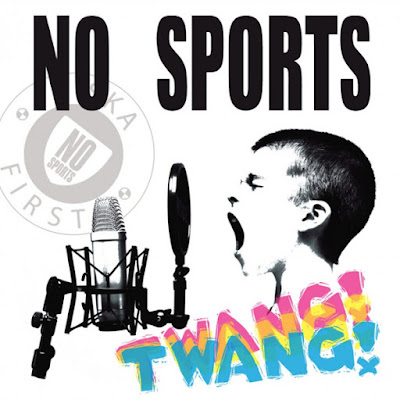
For the few, proud, and brave (and ska-starved) American ska fans keeping the faith in the late '80s/early '90s, the German ska scene was a marvel to behold, even at a distance. The records from The Busters, No Sports, The Frits, El Bosso und die Ping Pongs (which yielded Dr. Ring Ding when they were done), Skaos, The Braces, The Butlers, Blechreiz (sound it out), and more (see the comp It's a Skandal) that managed to find their way to the US via Unicorn Records mailorder or specialist record shop import bins (like Bleeker Bob's) were extraordinarily good.
No Sports' 1989 debut album King Ska--crammed full of hyper-charged, slightly demented 2 Tone ska songs about trying to get by in a mad world--was one of the finest releases of that era, and its follow-up 1990 EP Stay Rude Stay Rebel (the title track is an anti-racist/anti-fascist anthem for the ages--still applicable today!) was equally as essential (read my review of its recent reissue here; Black Butcher also reissued King Ska, too). 1992's $uccessfools had some amazing songs on it ("Summer," "Five," "Radio," and "Crazy Girl"), but overall, the album wasn't as much of a knock-out as their debut (maybe there were too many downbeat songs?).
I lost No Sports' thread for the remainder of the '90s (apparently they expanded their sonic palate to include non-ska sounds and released No Rules in 1994 and Riddim Roots An' Culture in 1998)--and they broke up in 2002. A version of the band reformed in 2005 as Nu Sports, but then officially reformed as No Sports in 2015. Twang! is No Sports' first new album since the late '90s and it's a very good one.
Like much of King Ska, there is a strong contrarian and absurdist streak running through Twang! The super catchy "Looting" is silly take on the 1960s rude boy record ("We're looting and we're shooting/We're hooting and we're footing/We're faking and we're taking...In shanty town it's all okay/You'd better stand out of my way/And call the police!"). The single off the album should be "Maybe," which swipes The Ethiopians' "Train to Skaville" riff plus a Madness lyric, and is about not caring what anyone thinks about you or what you do, since we don't have enough time in our lives to waste on all that. King Kong returns for a cameo in "The Sacrifice," a dream (or is it?) about the animal world passing judgment on humanity for its tremendous cruelty and abuse of all things great and small--and someone has to answer for all our crimes.
Several of these tracks were clearly written in response to the pandemic. The upbeat and encouraging "No Coincidence" speaks to the "Groundhog Day"-like malaise everyone's feeling stuck in ("Don't give in to your sorrow/Don't give in to you pain/You think there is no tomorrow/And everything is in vain/See the world keeps on turning/Turns around just for you/Keep your passion burning/And I keep burning for you"). And there's nothing like a deadly worldwide plague to make you realize that "Tempus Fugit" (Latin for 'time flies'), we all have an expiration date: "Every minute, every hour/Kronos offers us the chance/So we better use the power/Live life bright and full of prance."
If you loved No Sports back in the day, Twang! doesn't disappoint. And if you like 2 Tone/modern ska but don't know the band, you should grab a copy of this and King Ska as well.
As my friends at Stateside Madness recently pointed out, even though there have been loads of Madnesscompilations released in the UK over the years, only four have been issued in the USA--and none of them have included tracks past 1986! So, the release of the twelve song Our House: The Very Best of Madness (CD/LP, Union Square Music, 2021) is more than overdue and will help the casual Yankee Madness fan catch up on what they've been missing as of late. There are cuts from 2009's outstanding The Liberty of Norton Folgate (read my review of the album and film) and 2016's Can't Touch Us Now (read my review of it here)--wot, nothing from 2012's Oui Oui, Si Si, Ja Ja, Da Da?--plus the 2019 digital single "Bullingdon Boys" (read my review here), which has never previously received a physical release! Even though I have all of their albums, I'll sheepishly admit that I picked up this comp just to have "Bullingdon Boys." Such is the life of an obsessive vinyl collector. (Also make sure to check out Stateside Madness' brilliant interview with Madness guitarist Chris Foreman!)
I'm not exactly sure why Germans have such a knack for making really great ska. But if you like The Busters, No Sports, The Frits, The Butlers, El Bosso und Die Ping Pongs, Bleichreiz, Skaos, The Braces, Dr. Ring Ding, The Senior Allstars, Bluekilla, Masons Arms, Yellow Cap, etc. as much as I do, make sure to add T-Killas to the list. Their incredible new album Awareness (CD/LP, Fire and Flames Music/Grover Records, 2020; and available in the USA through Jump Up Records) is a mash up of melodic 2 Tone/early '90s Krautska (particularly The Busters/No Sports/The Frits), and The Clash, The Jam, and The Adjusters (and note that those last three bands were fiercely leftist). In the midst of seemingly everyday songs about going out and having fun, pursing women or men, and just trying to earn enough to get by in life, T-Killas pointedly include messages that are anti-fascist, and pro-socialist and gender equity. Ska fans longing for new protest songs to address some of the many injustices and evils out there have another album for their arsenal!
In what is clearly the single of the album (that I first heard through the Do the Dog Ska-A-Go-Go, Volume 3 comp), the irresistible knees-up singalong "Dandy and Rude" gleefully trades in bad-ass myth-making while celebrating rudies/workers' unity and purpose:
'Cause tonight I'm out with the most special one When he's out he spills entire bars and more He burns whole blocks dancing to the rebel sound He roars like a lion until he sleeps on the ground
He's so dandy and rude--you will never get this fool!
'Cause tonight I'm out with the most special one When she starts to rumble, the jungle is gone She drinks the enemy's blood out of her red bowl Who says you got to be tall to kick the shit out of an asshole?
Fight, drinking all night long Chanting beloved workers' songs Crew love, AFA skinheads Nothing to prove--black and red
"Rudie's Struggle" challenges gender stereotypes--particularly rude boy/skinhead machismo: "'She's so soft and she's so sweet'/You think she's not a street warrior, oh please...He or she/Poor categories/Do you want to preserve the classic roles?/Or a counterculture without sexual harm for all?" Maybe a little is lost in translation, but you get the gist. "Gonna Go" is a sweet reggae love song about that special someone you can always rely on. "Riot Ground" sounds like a Billy Bragg/Joe Strummer punk rock collaboration sending up a flare to the powers that be to take note that not all is hunky dory with the masses: "You give 'em hope, you give 'em peace, education and disease/But is going on--if there's a fucking wake up call?" And perhaps the most powerful track on the album is the anti-capitalist/pro-socialist and shout out of solidarity with the workers of the world mod cut "Calling for Stars":
I don't get no money for my rent I just keep on slaving till the end
This is another good goodbye To our empty life It's another calling for the black, black star And it's another calling for the red shine It's another calling for the red, red star And it's another calling for the black light
As someone living in a country plagued by white supremacy and enormous income inequality--and where far too many people fear and don't understand--and don't care to understand--what socialism and antifa actually mean, it's both striking and heartening to hear catchy, positive songs about both. We really need them, so keep 'em coming!
Given Dr. Ring Ding's considerable talents and history of releasing consistently great albums, a review of his latest, The Remedy (LP, Jump Up Records, 2020), could probably be summed up in just a few words: You know it's incredible, so go buy it! But since my humble lot in life is to write about ska music--even if I'm usually too verbose in doing so--I've going to delve a bit into why The Remedy is one of the best ska, reggae, and dancehall albums you'll find this year.
According to Dr. Ring Ding's brief liner notes, the music on The Remedy is intended as an antidote of sorts to the awful plague year we've all endured--to both lift our spirits, as well as acknowledge all of the suffering and loss we've experienced. So, the album is split between a Sunny Side and Cloudy Side, no doubt inspired by the completely unexpected (and great!) cover of Joni Mitchell's "Both Sides Now" (key lyric: "I've looked at clouds from both sides now"). Just as Stranger Cole preaches "more life!" as the answer to all our ills, Dr. Ring Ding plugs "More Reggae" to inject some joy into your world ("More reggae, loving the community/More reggae, celebrate life/More reggae, together in the unity/And bring on the positive vibes"). Title track "The Remedy" is a terrific '80s computer game dancehall cut with some really charming interplay between the good Doctor and Sista Gracy: "Dr. Ring Ding, how are ya?/Mi terrible, the pain in my limbs is unbearable/Dr. Ring Ding, how are ya?/Distressed, and that is why I've come to your address/Dr. Ring Ding, how are ya?/Mi horrible, want some advice, my sweet, mi adorable/Dr. Ring Ding, how are ya?/Mi bad, I wonder what kind of remedy you have"; at the end of this consult, Sista Gracy prescribes "a quart of rum" to dull the pain (personally, I recommend Tito's and soda with a twist of lime). On the minor-key, Busters-sounding ska song "Fun," Dr. Ring Ding is simply out for a good time, but stymied in his endeavor by the overly woke: "Cracked a joke the other night/Almost got me in a fight/Stuck up buzzkill got uptight/Told me my style ain't right." The showpiece "Unity" sports a serious and driving bass-heavy groove for Dr. Ring Ding and Tippa Irie to toast over ("One love, one blood, one life, one unity/Peace and understanding inna fi we community"). If you don't dance to this...
The darkest bit on The Remedy's Cloudy Side is another surprising cover--a slightly off-kilter reggae version of Radiohead's "Creep," where Dr. Ring Ding really leans into its stalker-y and narcissistic lyrics. Benny Bell's 1946 novelty song "Shaving Cream" (popularized by Dr. Demento in the 1970s)--where every vignette in each verse ends badly (literally going to shit)--feels appropriate for 2020 (and the lyrics are so calypso-like in their suggestiveness/naughtiness): "I have a sad story to tell you/It may hurt your feelings a bit/Last night when I walked into my bathroom/I stepped in a big pile of...Shaving cream/Be nice and clean/Shave everyday and you'll always look keen"). The instrumental "Toochie" sounds like a classic Skatalites cut given a brisk reading by The Scofflaws, and "Oldschool Rock" seems like it could be a long-lost Studio One Sound Dimension riddim just recovered from Coxsone's vaults. The final track on the album "Dancing in the Rain" is a beautiful, if melancholy duet with jazz singer Stephanie K that seems to be a tribute to someone who has died: "You gave us all a smile/If only for a while/We know you didn't want to stop the fun...Without your happy face/There's only empty space/It's seems the world's not round without you dear/You brightened up the day/Then you went away/We hope you know that you're forever here...Dancing in the rain/We'll never be the same/As we throw confetti/Fare thee well." So say we all. Dr. Ring Ding's The Remedy is incredible, so go buy it!
Happy People Records continues their streak of issuing choice singles from top ska and reggae acts from all over the world. The latest is Dub Fader Cuts (7" vinyl single/digital, Happy People Records, 2020) from Boston-area reggae masters Flying Vipers. Both tracks are versions of instrumentals from their stellar debut LP Cuttings (which I reviewed earlier this year) that were remixed by Dub Fader (aka Craig Welsch of 10 Ft. Ganja Plant). "The Gorgon Strikes Back" is a brighter and more deconstructed version of Cuttings'Bunny "Striker" Lee tribute "Flight of the Gorgon"; while "Fermented Herbs" is a sparser and dubbier take on "Gesho," the latter of which sports all sorts of fantastic keyboard bits and sound effects (gesho is a plant native to Ethiopia that is used to make a type of mead). Needless to say, both tracks are essential if you love dub and the Vipers. And to top it off, the band is donating their proceeds to the Alpha Boys School.
Editor's note: I'm still playing catch-up with several 2018 releases that I didn't get a chance to review before December 31...
(Reviews by Steve Shafer)
Buford O'Sullivan and the Robots "Rico Beat" b/w "Stolen Soul (The Exhumation Ska)" (digital single, Sullico Music, 2019): These are two new and very welcome sides of top-notch traditional '60s-styled instrumental ska from trombonist Buford O'Sullivan (Easy Star All-stars, The Scofflaws, Brooklyn Attractors, NYC Ska Orchestra, The Huffers, and more). "Rico Beat" is, of course, a bright and bubbly tribute to the beloved Skatalites/Specials trombone legend (the doubled trombones are a lovely touch), while the mysterious/dark arts track "Stolen Soul (The Exhumation Ska)" sounds like a primo Scofflaws track, back when Drance and Rice were among their number. Rumor has it that these tunes may be pressed on vinyl some day--and they're more than worthy of a physical release.
The CrombiesWee Beasties (3" mini CD, Jump Up Records, 2018): This collectable throwback to the 1980s (yes, these odd mini CDs were actually a thing back then -- I.R.S. Records made them for The Beat's "I Confess" and "Save It for Later" singles) features Chicago's kick-ass 2 Tone band on a mix of seven previously unavailable live cuts and harder to find tracks (like their great version of Bob Marley's "Hooligans" for the Specialized One Heart charity album and related single, which also found its way onto the Pressure Hop Jump Up/Ska Brewing sampler given away at the 2017 Supernova International Ska Fest). Of the live recordings, their rendition of Madness' "The Prince" is pretty spectacular and it's kind of funny to hear them play a bit of Norman Greenbaum's "Spirit in the Sky" while fruitlessly waiting for beer to make its way to the stage before launching into The Specials' "Hey Little Rich Girl." Technical note: You'll need a CD player with a tray to play this; forget about sticking it into a computer disc drive! And for those still sporting flight jackets, there a nice Crombies patch included with each mini CD.
Yellow CapToo Fucked To Go (CD, Pork Pie Records, 2018): First off, if you're a fan of the fantastic late '80s/early '90s German ska scene/sound (think The Busters, No Sports, The Frits, Skaos, The Butlers, El Bosso und die Ping Pongs, The Braces, Blechreiz, etc.), then you're pretty much guaranteed to love Yellow Cap's supercharged, good times 2 Tone/modern ska. The cover illustration of Too Fucked To Go depicts a rude boy splayed on his back, his brew in hand pouring out onto the ground, and, most alarmingly, his body is literally breaking up -- but there's a look of utter bliss on his face. And this image pretty much sums up the themes of many of the superb songs on the record (all in English): Enjoying life to the fullest (maybe too much--see the catchy title cut) and pursuing relationships, even if everyone is very flawed and everything is in shambles around you. Songs of indulgence and excess (gotta get it all in before your time's up) include "One More Night in Rio" ("It's that marvelous city, where I lost myself/Can't sleep a minute, I fear being left on the shelf") and the magnificent mini-epic of never-ending partying in "God Knows" ("Where are the pills that kill the pain?/Why do I smell like a dog?"). The sweetly sincere trad ska tune "Ain't Enough Flowers" ("...to show how much I care") is countered by the more sour (but musically cheery) I-can't-do-anything-to-please-you "Rain Is Falling," and the stomping album opener "Better Man," about opposites attracting, but not enough for them to go the distance ("If I am Russia, you're the CIA/If you're the mountain, I'm the beach holiday"). Other notable tracks are the wonderful deejay clash-like boasting in "Rookie," a moody cover of the "Theme de Fantômas" (from the 1960s French TV and film series about a blue-masked criminal mastermind), and an incredible plea for empathy for migrants/refugees/less-fortunate fellow human beings told from the points of view of the human trafficker, refugee, and town resident in "Safe and Sound": "Should I be afraid that my paradise might change?/Better take the first step that strangers are no longer strange/'Cause I know there are other people running after a dream/Just need to know there's somebody to listen/And I hope you will be safe and sound on the other side of the street/And I hope that this never happens to you." In short, live your life to the extreme, but never lose your humanity.
Editor's note: Below, please find links to almost all of the releases that The Duff Guide to Ska reviewed over the past year. I would have loved to have written up many more records, but just didn't have the time (though I'll have some short write ups of a few additional 2018 albums posted shortly).
Perhaps you'll find something that you missed or have a gift card waiting to be put to use and just need some recommendations as to what to pick up (there are loads of fantastic records to chose from!).
As always, thanks for reading The Duff Guide to Ska! + + + +
(All reviews by Steve Shafer)
Ska Revolution Records
CD (Available in the US through Jump Up Records.)
2017
(Review by Steve Shafer)
Germany's Busters (whom I once described as The Specials crossed with The Skatalites on speed) have been chugging along in various permutations since their fantastic debut album Ruder Than Rudeway backin 1988 (when they were one of the leaders of the late '80s/early '90s Germany ska scene that included El Bosso und die Ping Pongs, No Sports, The Frits, Skaos, The Braces, The Butlers, Blechreiz, and more). In addition to a slew of live recordings over the years, Straight Ahead is their 15th studio album and features the great Dr. Ring Ding, AKA Richie Alexander, as a full member of the band (he was also in El Bosso und die Ping Pongs back in the day). This development is sort of a mixed blessing for the band--Dr. Ring Ding's songwriting and performing skills significantly enhance the quality of the album, but several of these tracks end up sounding less like Busters songs and more like unadulterated Dr. Ring Ding cuts ("Hunky Dory" in particular), which certainly isn't a bad thing (and in all fairness, some of his tunes are bona fide Busters songs, like "Straight Ahead"). Perhaps this album should have been conceived and presented as Dr. Ring Ding Meets The Busters?
Apart from the split-personality of this album, The Busters' Straight Ahead is another excellent release in a long string of them from this unstoppable band. Amongst these 17 tracks, there is a lot to like here. Some of the top tunes composed by Dr. Ring Ding include the nostalgia for the 2 Tone era in "The Best of Times" ("I was a three minute hero/On a night boat to Cairo/I went one step beyond/with Pauline and James Bond"); the fiercely anti-racist/pro-immigrant "Chase Them Away" ("Some people walk around the streets of Germany/Mess up everybody's mind with their imbecility/With nothing to to be proud of but their nationality/And denying needy folks help and hospitality"); the fantastically funky, trying to change my bad ways "Ain't Gonna Do It Again" ("Used to do my dance and fake romance/Ain't gonna do it again..."); and "The Devil Made Me Do It" (a blistering track condemning priests who molest underage boys--and the first time I've heard a reference to St. Pancras in a ska song!). Other terrific songs by other members of The Busters are the pro-science "Love and Prayer Mania" ("Worship is their cure to save the earth/I'd feel much safer with some good engineers/To turn down the heating right now, right here/And some psychiatrists to soothe everybody's nerves"); the encouraging, roll with the punches of life "Rope-a-Dope"; the Ayn Randian, dog-eat-dog lusting for the good life of "Famine or Feast"; the creepy stalker of a celebrity in "No. 1 Fan" ("When you act like you don't know me/I still know that we are homies"); and the absurdly hilarious Chuck Berry-ish "T.I.N.A. to Ska" ("Some choices are quite awful/The devil or the deep blue sea/But then again in a deli/You will pick quite happily/It's clear from here to Srinagar/There's no alternative to ska!").
If you don't already know The Busters or lost their thread over the years, Straight Ahead is a great (re)entry point--and up-to-date fans will, of course, need this record in their collection.
+ + + +
[Ich spreche/schreibe kein Deutsch, also hoffe ich, dass Google Übersetzer gut funktioniert!]
Deutschlands Busters (die ich einmal als die Specials bezeichnet habe, die sich mit den Skatalites auf Speed kreuzten) tuckern seit ihrem fantastischen Debütalbum Ruder Than Rude im Jahr 1988 in verschiedenen Permutationen mit (als sie eine der führenden Bands der späten 80er/Anfang der 90er Jahre Deutschland Ska-Szene, die El Bosso und sterben Ping Pongs, No Sports, Die Frits, Skaos, The Braces, The Butlers, Blechreiz, und mehr). Neben zahlreichen Live-Aufnahmen ist Straight Ahead im Laufe der Jahre ihr 15. Studioalbum mit dem großen Dr. Ring Ding, AKA Richie Alexander, als Vollmitglied der Band (er war auch in El Bosso und die Ping Pong Zurück in den Tag). Diese Entwicklung ist für die Band ein zweischneidiges Glück - Dr. Ring Ding's Songwriting und Performing Fähigkeiten verbessern die Qualität des Albums erheblich, aber einige dieser Tracks klingen weniger nach Busters Songs und eher nach unverfälschten Dr. Ring Ding Kürzungen ("Hunky Dory" im Besonderen), was sicherlich kein schlechte Sache (und in aller Fairness, einige seiner Songs sind echte Busters Songs, wie "Straight Ahead"). Vielleicht sollte dieses Album als Dr. Ring Ding Meets The Busters konzipiert und präsentiert worden sein?
Abgesehen von der Split-Persönlichkeit dieses Albums ist The Busters' Straight Ahead eine weitere exzellente Veröffentlichung in einer langen Reihe von ihnen aus dieser unaufhaltsamen Band. Unter diesen 17 Tracks gibt es hier viel zu sehen. Einige der Top-Tunes von Dr. Ring Ding enthalten die Nostalgie für die 2-Ton-Ära in "The Best of Times" ("Ich war ein Drei-Minuten-Held/Auf einem Nachtboot nach Kairo/Ich ging einen Schritt weiter/mit Pauline und James Bond"); der heftig anti-rassistische/pro-immigrant "Chase Them Away" ("Manche Menschen laufen durch die Straßen Deutschlands/Versammeln jeden mit seiner Schwachsinnigkeit/Mit nichts, worauf man stolz sein kann, aber ihre Nationalität/Und bedürftigen Menschen zu helfen und zu helfen Gastfreundschaft"); der fantastisch funky, versuchend, meine schlechten Weisen zu ändern "wird nicht es wieder tun" ("verwendete, um meinen Tanz zu tun und gefälschte Romanze/wird es nicht wieder tun..."); und "Der Teufel ließ mich es tun" (ein glühender Track, der Priester verurteilte, die minderjährige Jungs belästigten - und das erste Mal, dass ich in einem Ska-Lied einen Hinweis auf St. Pancras hörte!). Andere großartige Songs von anderen Mitgliedern von The Busters sind die pro-Wissenschaft "Love and Prayer Mania" ("Anbetung ist ihre Heilung, um die Erde zu retten/Ich würde mich mit einigen guten Ingenieuren viel sicherer fühlen/Um die Heizung jetzt abzulehnen, genau hier/Und einige Psychiater, die alle nerven sollen"); das Aufmuntern, Rollen mit den Schlägen des Lebens "Rope-a-Dope"; der Ayn Randian, Hund, der nach dem guten Leben von "Hungersnot oder Schmaus" lechzt; der gruselige Stalker einer Berühmtheit in "No. 1 Fan" ("Wenn du dich benimmst wie du, kennst du mich nicht/ich weiß immer noch, dass wir Homies sind"); und die absurd urkomische Chuck Berry-ish "T.I.N.A to Ska" ("Einige Entscheidungen sind ziemlich schrecklich/Der Teufel oder das tiefblaue Meer/Aber dann wieder in einem Deli/Sie werden ganz glücklich/Es ist klar von hier nach Srinagar /There's keine Alternative zu Ska!").
Wenn du The Busters noch nicht kennst oder im Laufe der Jahre den Faden verloren hast, ist Straight Ahead ein großartiger (Re-) Einstiegspunkt - und aktuelle Fans werden diese Platte natürlich in ihrer Sammlung brauchen.
Erin Bardwell Collective vs. Friends, Guests, and Studio StarsGreat Western Reggae Soundclash (CD, Pop-A-Top Records, 2017): The Erin Bardwell Collective makes great, laid-back old school rocksteady and early reggae with a bit of worldbeat in the mix--think of The Trojans--and are joined here by a number of high profile friends, including Neol Davies (The Selecter), Dave Clifton (Hotknives), Pat Powell (Melbourne Ska Orchestra), Matty Bane (Neville Staple Band), and London's Nostalgia Steel Band. The connective tissue of this album is a Western reggae vibe coursing through many of the tracks, but it's really all about great songs/performances (check out "Best News of The Year," "Edith New," It's No Lie," "Dominica," "Waiting for the Conversation," or "Night Bus to Highworth"). This one may take a few listens to reveal its offbeat charms, but once it clicks--damn, it's good!
Buster's All StarsSkinhead Luv-a-fair (LP, Black Butcher Classics, 2014 reissue; originally released in 1989 on Blue Beat Records): Read The Duff Guide to Ska appreciation here.
The Busters "Hunky-Dory" b/w "Ska Bang 87" (red or clear yellow vinyl 7" single, Jump Up Records, 2017): This single off The Busters' eighteenth album (if I'm counting right) Straight Ahead features two awesome Richie Alexander penned tunes (Dr. Ring Ding has been a member of The Busters since 2013, if you're not up on the German ska scene). Side A is a great swinging-jazzy-ska tune about looking good, feeling fine, luck shining down on you, and being in love. The flip "Ska Bang 87" is a cracking instrumental that swipes a bit of the riff from The Rolling Stones' "Miss You."
The Georgetown Orbits "Keep Your Chin Up" b/w "Picture on the Wall" (7" vinyl picture sleeve single/digital, Simmerdown Productions, 2017): Read The Duff Guide to Ska review here.
Napoleon SoloEarly Recordings: First Demos - 1984/1985 (Six-track, limited-edition vinyl EP, Jump Up Records, 2017): Ska old-timers will remember this fantastic Danish ska-soul act from the late 1980s--their How to Rule the World EP and Shot! LP are very much worth tracking down, and they contributed really winning tracks like "I Don't Believe You" to Skankin' 'Round the World, Volume II, "Drive Me Wild" to Live in London: The London International Ska Festival, and "Go Home" to Ska United. This new EP features the band's early cassette-only demos which contain some very catchy material that probably should have turned up later on proper releases. "0059," "Nobody Told Me," the "Ghost Town-ish" "What Comes After Spring," and the South African anti-apartheid cut "Victory" ("ANC is going to make them free/ANC is going to lead to victory") are particularly good.
Pama International "Man Next Door" b/w "Austerity Skank" (clear vinyl 7" single/digital download, Record Kicks, 2017): Read The Duff Guide to Ska review here.
Made up of British, Canadian, and Aussie ex-pats residing in Hong Kong, The Red Stripes' sound is similar to many bands in the late 80s and early 90s who were heavily influenced by 2 Tone, but shed that scene's rougher edges in favor of the traditional jazzy/big band ska of The Skatalites and their contemporaries (think The Scofflaws, The Busters, Potato 5). Produced by Sean "Cavo" Dinsmore (of the Skaboom and Thrill Me Up era Toasters, who also contributes some vocal effects on one track) and featuring Neville and Christine Staple on "Hong Kong Special," In the Ska East offers a mix of fine instrumentals ("Hong Kong Dub," "Theme from 'Rocky,'" and "Rude Rude Rude") and catchy originals with male and female vocals (and lovely harmonizing) by Fred Croft and Sarah Watson ("Julia Posh," "Let Me Tell Ya," and "OK La"). Based on this album, The Red Stripes seem like they'd be a fantastic night out.
+ + + +
(Speaking of connections to The Toasters, The Red Stripes' drummer's name is Matt Davis--can't possibly be that one, right?)
On the surface, the new(ish) First Proper Album from The Stiff Joints is simply incredibly good fun, as the cover image suggests. The band plays amped-up, hook-filled, sing-along-to-the-chorus modern/2 Tone-inspired ska that may remind one of Madness, The Busters, or The Toasters (they must be a blast to see live). However, despite the good-time musical zaniness, the lyrics (full of word-play) reveal that life in The Stiff Joints' version of the world is kind of off-kilter and crappy--and some of the catchiest and most compelling tunes on the album are the darkest. "Mona Lisa"--the sublime, idealized example of Renaissance beauty--is about coming to the realization that it just might be in your own best interest to let your dream girl go. The blistering "Pop A Knocker" (punch a boob?) relates the story of a marriage gone real sour real fast ("Everybody's bringing presents to my wedding because/They are told they have to/As if all these nice pretty things that all my buddies will bring/Will help me love you...Complications have arised/Cannot look you in the eyes/You're a cheating, rotten liar/Breaking us and full of fire/Broken lives and broken dreams/Things are never what they seem...Stick our love right up your bum!"). The positively swinging "Bubble Bubble" is an ode to less painful living through chemistry ("Gotta little something in the palm of my hand/To keep the big bad wolf from coming around (and blowing me down)...Give me a kiss from the sweet angel bliss...I talked to Frankie, he said relax..."), while "Bruno" is about someone completely devoted to drink and drugs and sex in the pursuit of an effortless life (chorus: "I'll do anything/Just as long as I can sit down"). It's a wild ride with The Stiff Joints on First Proper Album (where will you find yourself waking up in the morning?), but completely worth it.
I can't quite remember how I first learned about The Frits--it may have been a review in George Marshall's essential Zoot! skazine--but I know I mail-ordered their releases through Unicorn Records and managed to buy their entire catalogue in the early 1990s (I just checked The Frits' Discogs entry for confirmation--I even have their CD single "Ebbies Bluff," which has their cover of Guns N' Roses' "November Rain"!). Fortunately, you don't have to go to the lengths that I did (going to the bank, exchanging dollars for pounds, and mailing them off with fingers crossed to the UK) to enjoy some of the best tracks from the band dubbed "the German Specials"--they're all collected on the aptly titled The Greatest Frits.
Like the post-2 Tone UK ska scene, which featured the likes of Laurel Aitken, Bad Manners, The Trojans, Potato 5, Maroon Town, The Loafers, King Hammond, The Riffs, The Deltones, and more, the late 80s/early 90s German ska scene had fostered an equally impressive roster of bands, including The Busters, No Sports, El Bosso und die Ping Pongs, The Braces, Skaos, The Butlers, Blechreiz, and, of course, The Frits. What first attracted me to the band was their hyper-charged 2-Tone ska, but what made keep coming back for each subsequent release was their fantastic songwriting and performances, all of which still sound great and vital twenty-five years on.
The Greatest Frits opens with "Life of Brian" (from The Frits' 1988 single of the same name), their inspired cover of Monty Python's "Always Look on the Bright Side of Life," which, like The Specials' cover of "Enjoy Yourself" (released at a time when things were becoming increasingly dire for working class youth and non-white Britons under Thatcher's rule), is cheerfully positive on the surface ("If life seems jolly rotten [I always thought it was, "If life seems Johnny Rotten"!]/There's something you've forgotten/and that's to that's to laugh and smile and dance and sing/When you're feeling in the dumps/Don't be silly chumps/Just purse your lips and whistle/That's the thing/And...always look on the bright side of life"), but is really meant to be taken ironically, since it masks a much more ominous message. (In the movie "Life of Brian," the protagonist has been sentenced to death and is surrounded by fellow condemned prisoners who try to cheer him up by singing "always look on the bright side of life," while they're all slowly dying on crucifixes--it's interesting to note that The Busters covered Bobby McFerrin's similarly-themed "Don't Worry, Be Happy" a year later; and, like The Busters, The Frits sing in English, which sometimes results in awkwardly phrased lyrics, but their meaning is always clear.)
While The Frits' material from their first two albums, Die Erstein 1988 and The Rude Messagein 1989, is very strong and is concerned with work, women, and generally not being a dope, the band really hit their stride in 1991 with Little Idiots. After the unexpected fall of the Berlin Wall in 1989 and the reunification of (communist and very poor) East and (democratic and prosperous) West Germany, there was a horrific increase in the number of fascist/neo-Nazi groups and hate crimes, primarily in the former East Germany, which had seen an influx of Eastern European refugees (who were being blamed by the hate groups for the high unemployment and economic hardship prevalent at that time). The Frits' 2 Tone-like response to this worsening situation was to write some of the most powerful and catchiest anti-racist/anti-fascist songs of that era (which, maddeningly enough, are still very relevant in many parts of the world today, including the USA).
The absolutely searing "The Most I Hate Is You" expresses The Frits' equivocal feelings about fascist youth and their neo-Nazi leaders who've lured and trapped them in their twisted, dead-end ideology:
"You walk in every morning
The same old naked way
Your head is much too heavy
Your thoughts are full of hate
You think of what you've talked about
Last night with your friends
But now you're on the run again
There is no other chance
The most I hate is you
The most I hate is you
The most I hate is you
What you gonna say?
What you gonna do?
The most I hate is you
They will make you smaller
Smaller than you seem
Tell you, "What is all the work for?"
Tell you, "What do you mean?"
You're sitting in a big cage
But you haven't got the key
The key has got your big balls
There is no way to live"
With its irresistible, sing-along chorus, "Bonehead" tries to reach the very misguided--but not irredeemable--knucklehead, to persuade them to stop their violent, racist behavior:
"You are so proud
Of what you've done
Now I see you standing there
With all your friends
You've had a lot of fun
They show you how to go "right" ways
Can't you feel so tall?
You know every trick
To hide your little weakness now
But I tell you
(I tell you)
You are so wrong
Everyone can see your little sign
Saying...
Bonehead, you are going wrong
Listen to the message
The message of this song, yeah
The black man is all right
There is no reason for a fight, see?
Only stupid reasons are for you, all right?"
[There is only one fan-created video of "Bonehead" out there; it uses footage of neo-Nazi and white power skinheads in an attempt to shame them with the sharp lyrics of this song, but I'm not posting it here, as they don't deserve any kind of exposure that could be misinterpreted as endorsing or glorifying their hateful ways.]
"Searching for Another Place in Town" perfectly captures the loneliness and despair of finding oneself an outcast in one's own neighborhood (because of your anti-racist beliefs) and having no other choice but to leave everything you've known behind:
"I'm searching for another place in town
All the people try to treat me down
I'm searching for another place in town
Without my life, with all the things I do right here
Walking up my home run street I feel so down
Recognize these stupid guys, make me so frown
They never try to understand what is going all wrong
Going on their stupid ways, I never go
'Cause I am strong, yeah
That I'm searching for another place in town
Is because of all the stupid talk of youth
I want you to respect me and all my dreams
And I won't wait while you try to understand..."
It's such an incredibly sorrowful--but ultimately triumphant--track that will haunt you for days after hearing it (I wake up in the night with this one running through my head).
The Frits' following album Not Enough for You (1993), produced by Roger Lomas (The Selecter, The Bodysnatchers, Bad Manners), didn't burn quite as white hot, but they still delivered the goods (see "It's Not Enough for You" and "I Don't Want To Live Alone") and contained some fiercely political songs: "We Fight For You" ("We saw them kill an innocent/We saw them bomb some families and kids/We won't just sit home and wait/We won't just close our eyes and walk away/We fight for you/We'll fight for your rights!"); a cover of Oscar Brown, Jr.'s"The Snake," a jazz/Northern Soul cautionary tale of an act of compassion and charity repaid with betrayal and violence; and The Specials' "Concrete Jungle" with Sir Horace Gentleman making an appearance on bass. The Frits' final (?), live album Always Look on the Bright Side of Live (1994), also recorded by Lomas, showcased the band's considerable live chops (represented here by covers of Specials and Selecter tracks, as well as two Frits originals).
Lastly, there is one terrific newly recorded Frits cut, the defiant "Still Alive," which gives us hope that there may be much more new music to come as long as they're, "On the street/With something to say/Kicking the blues away..."
The Greatest Frits is a fantastic compilation for people new to the band (if you're a fan of 2 Tone, you're likely to be a Frits fan) and will remind long-time followers just how good The Frits were back then--and still are today!
+ + + +
Here's a German translation of this review (courtesy of Google):
Ich kann mich nicht mehr genau erinnern, wie ich zum ersten Mal über die Fritten gelernt - es kann eine Überprüfung in George Marshall wesentlich Zoot gewesen! skazine - aber ich weiß, dass ich für E-Mail aufgefordert, ihre Veröffentlichungen durch Unicorn Aufzeichnungen und verwaltet den gesamten Katalog in den frühen 1990er Jahren zu kaufen (Ich habe gerade den Discogs Eintrag 'Frits zur Bestätigung - ich habe sogar ihre CD-Single "ebbies Bluff" die hat ihre Abdeckung von Guns N 'Roses' "November Regen"!). Glücklicherweise müssen Sie nicht auf die Längen gehen, die ich habe (zur Bank gehen, Dollar für Pfund Austausch und Mailing sie mit Daumen nach Großbritannien aus) einige der besten Tracks aus dem Band zu genießen genannt "die Deutsch Specials "- sie sind alle auf dem passenden Titel The Greatest Frits gesammelt.
Wie die Post-2 Tone UK Ska-Szene, die die Gleichen von Laurel Aitken gekennzeichnet, Bad Manners, die Trojaner, Kartoffel 5, Maroon Town, die Loafers, König Hammond, die Riffs, die Deltones und mehr, die Ende der 80er / Anfang 90s deutschen Ska-Szene hatte eine ebenso beeindruckende Liste von Bands gefördert, darunter The Busters, No Sports, El Bosso und sterben Ping Pongs, die geschweiften Klammern, Skaos, The Butlers, Blechreiz, und, natürlich, die Fritten. Was mich zuerst an die Band war ihre hyper geladen 2-Tone Ska, aber was immer wieder für jede weitere Veröffentlichung kommen würde ihre fantastische Songwriting und Aufführungen, von denen alle immer noch groß und vital 25 Jahre klingen auf.
Die größten Frits öffnet mit "Life of Brian" (aus dem Frits 1988 Single mit dem gleichen Namen), ihre inspirierten Cover von Monty Pythons "Always Schauen Sie auf der Sonnenseite des Lebens", die, wie die Specials "Cover von" Genießen Yourself "(zu einem Zeitpunkt freigegeben, wenn die Dinge immer mehr dire immer für Jugend arbeiten und nicht-weiße Briten unter Thatcher-Regel), ist fröhlich positiv auf der Oberfläche (" Wenn das Leben scheint lustig faul [ich dachte immer, es war "Wenn das Leben scheint Johnny Rotten "!] / Es gibt etwas, das Sie vergessen haben / und das ist zu, dass zu lachen und lächeln und Tanz ist und singen / Wenn Sie das Gefühl nicht dumm chumps sein in den Deponien / Do / So Portemonnaie Ihre Lippen und Pfeife / das ist die Sache / Und ... schauen immer auf der Sonnenseite des Lebens "), aber ist wirklich ironisch gemeint genommen werden, da es Masken eine viel ominösen Nachricht. (In dem Film "Das Leben des Brian", der Protagonist wurde zum Tode verurteilt und ist umgeben von Mitgefangenen verurteilt, die versuchen, ihn durch das Singen aufzumuntern "immer auf der Sonnenseite des Lebens aussehen", während sie alle langsam sterben auf Kruzifixe - es ist interessant, dass The Busters Bobby McFerrin "Sorge dich nicht glücklich sein" bedeckt zu beachten, ähnlich dem Motto des ein Jahr später, und wie The Busters, The Frits singen in englischer Sprache, die manchmal in ungeschickt formulierte Texte ergibt, aber ihre Bedeutung ist immer klar.)
Während die Fritten "Material aus ihren ersten beiden Alben, 1988 Erste sterben und die Rude Nachricht im Jahr 1989, ist sehr stark und mit Arbeit, Frauen betrifft, und in der Regel nicht eine Schmiere zu sein, traf die Band wirklich ihren Schritt 1991 mit wenig Idiots. Nach dem unerwarteten Fall der Berliner Mauer 1989 und die Wiedervereinigung (kommunistischen und sehr schlecht) Ost und (Demokratie und Wohlstand) der Bundesrepublik Deutschland gab es eine schreckliche Zunahme der Zahl der faschistischen / Neonazi-Gruppen und Hassverbrechen, in erster Linie im ehemaligen Ost-Deutschland, die einen Zustrom osteuropäischer Flüchtlinge gesehen hatte (die von den Hassgruppen für die hohe Arbeitslosigkeit und wirtschaftliche Not weit verbreitet zu dieser Zeit verantwortlich gemacht wurden). Die Frits '2 Tone ähnliche Reaktion auf diese Verschlechterung der Lage war heute einige der mächtigsten und eingängigsten antirassistischen / antifaschistische Lieder jener Zeit (die aufreizend genug, sind immer noch sehr relevant in vielen Teilen der Welt zu schreiben einschließlich der USA).
Die absolut Anbraten "The Most I Hate Is You" die Fritten "zweideutig Gefühle über faschistische Jugend zum Ausdruck bringt und ihre Neonazi-Führer, die gelockt haben und gefangen sie in ihren verdrehten, Sackgasse Ideologie:
"Sie gehen in jeden Morgen
Die gleiche alte nackte Weg
Ihr Kopf ist viel zu schwer
Ihre Gedanken sind voller Hass
Sie denken an, was Sie gesprochen haben
Letzte Nacht mit deinen Freunden
Aber jetzt bist du wieder auf der Flucht
Es gibt keine andere Möglichkeit,
Die meisten, die ich hasse, ist, Sie
Die meisten, die ich hasse, ist, Sie
Die meisten, die ich hasse, ist, Sie
Was sagen Sie gonna?
Was wirst du machen?
Die meisten, die ich hasse, ist, Sie
Sie werden machen Sie kleinere
Kleiner als Sie scheinen
Sagen Sie: "Was ist die ganze Arbeit für?"
Sagen Sie: "Was meinst du damit?"
Du bist in einem großen Käfig sitzen
Aber Sie haben nicht den Schlüssel bekam
Der Schlüssel ist Ihre große Bälle bekam
Es gibt keine Möglichkeit zu leben "
Mit seinem unwiderstehlich, Mitsingen Chor, "Dummkopf" versucht, die sehr fehlgeleitet zu erreichen - aber nicht unkündbar - knucklehead, sie zu überzeugen, ihre gewalttätigen, rassistischen Verhalten zu stoppen:
"Sie sind so stolz
Von dem, was du getan hast
Jetzt sehe ich dich dort stehen
Mit all deinen Freunden
Sie haben viel Spaß gehabt
Sie zeigen Ihnen, wie "richtige" Wege zu gehen
Können Sie sich nicht so groß fühlen?
Sie kennen jeden Trick
So blenden Sie jetzt Ihre kleine Schwäche
Aber ich sage Ihnen
(Ich sage dir)
Sie sind so falsch
Jeder kann Ihr kleines Schild
Sprichwort...
Bonehead, du gehst falsch
Hören Sie die Nachricht
Die Botschaft dieses Liedes, ja
Der schwarze Mann ist alles in Ordnung
Es gibt keinen Grund für einen Kampf, sehen Sie?
Nur dumme Gründe sind für Sie, alles in Ordnung? "
[Es gibt nur ein Fan erstellte Video von "Dummkopf" da draußen; es nutzt Aufnahmen von Neonazis und Nazi-Skinheads in einem Versuch zu beschämen sie mit den scharfen Text dieses Liedes, aber ich bin es nicht hier veröffentlichen, da sie keine Art der Exposition verdienen, die als Billigung falsch interpretiert werden könnte oder verherrlichen ihre verhasste Weise.]
"Nach einem anderen Ort in der Stadt Suche" perfekt erfasst die Einsamkeit und Verzweiflung, sich ein Außenseiter zu finden, in der eigenen Nachbarschaft (wegen Ihrer antirassistische Überzeugungen) und keine andere Wahl haben, aber alles zu verlassen Sie hinter gekannt habe:
"Ich bin auf der Suche nach einem anderen Ort in der Stadt
Alle Leute versuchen, mich zu behandeln unten
Ich bin für einen anderen Ort in der Stadt suchen
Ohne mein Leben, mit all den Dingen zu tun ich hier richtig
Gehen meine Home-Run Straße bis ich fühle mich so nach unten
Erkennen Sie diese dummen Jungs, machen mich so Stirnrunzeln
Sie niemals versuchen, zu verstehen, was alles falsch läuft
Gehen auf ihren dummen Wege, ich gehe nie
Denn ich bin stark, ja
Dass ich für einen anderen Ort in der Stadt bin auf der Suche
Ist wegen all dem dummen Gerede von Jugend
Ich möchte Sie mich und alle meine Träume zu respektieren
Und ich werde nicht warten, während Sie versuchen zu verstehen ... "
Es ist so ein unglaublich traurig - aber letztlich triumphierenden - Spur, die Sie für Tage nach der mündlichen Verhandlung hat sie verfolgen wird (wache ich mit diesem einen in der Nacht laufen durch meinen Kopf).
Die Frits folgende Album nicht genug für Sie (1993), produziert von Roger Lomas (The Selecter, The Bodysnatchers, Bad Manners), brannte nicht ganz so weiß heiß, aber sie lieferte noch die Ware (siehe "Es ist nicht genug für Sie "und" I Do not To Live Alone "einige heftig politische Lieder) und enthielt:" Wollen wir kämpfen für Sie "(" Wir sahen sie einen unschuldigen töten / Wir sahen sie einige Familien bombardieren und Kinder / Wir werden nicht nur sitzen zu Hause und warten / Wir werden nicht nur die Augen zu schließen und gehen weg / Wir kämpfen für dich / Wir werden für Ihre Rechte kämpfen! "); eine Abdeckung von Oscar Brown Jr. "The Snake", ein Jazz / Northern Soul warnende Geschichte von einem Akt des Mitgefühls und der Liebe mit Verrat und Gewalt zurückgezahlt; und The Specials ' "Concrete Jungle" mit Sir Horace Gentleman einen Auftritt am Bass. Die Frits 'letzte (?), Live-Album auf der hellen Seite der Live-Schauen Sie immer (1994), die ebenfalls von Lomas aufgenommen, präsentiert die erhebliche Live Koteletts Band (hier vertreten durch Abdeckungen von Specials und Selecter Spuren sowie zwei Frits Originale ).
Schließlich gibt es einen tollen neu aufgenommenen Frits Schnitt, der trotzige "Still Alive", die uns Hoffnung gibt, dass es auf der Straße viel mehr neue Musik zu kommen, solange sie sind ", kann sein / mit etwas zu sagen / Kicking den Blues weg ... "
Der größte Frits ist eine fantastische Zusammenstellung für neue Leute in die Band (wenn Sie ein Fan von 2 Tone sind, sind Sie wahrscheinlich ein Frits Fan zu sein) und wird seit langer Zeit Anhänger, wie gut die Fritten waren wieder erinnern dann- -und noch heute!
Editor's Note: As the end of the calendar year sneaks up on me--as it always does, since the fall is always so damn busy!--I always scramble around to put together my "best of" lists of the ska singles, albums, reissues, books, etc. that I really enjoyed over the past year and want to highlight for all the ska fans out there. But I also thought it might be interesting to feature some other opinions, so I approached a diverse group of ska musicians, bloggers, DJs, and label heads to find out what their favorite ska things were in 2012. And thus the "2012: The Year in Ska" series was born! Thanks to everyone who is taking the time to participate--I really appreciate it! The amazing Dr. Ring Ding (AKA Richie Jung) has graciously participated in this episode of our year end survey of all things ska. For those of you who don't know him (and you know you should!), Dr. Ring Ding was first in Germany's excellent post-2 Tone ska act El Bosso und die Ping Pongs in the late 80s and early 90s. After that band dissolved, the good Doctor formed Dr. Ring Ding and the Senior Allstars, which was one of the very finest modern traditional bands in the 90s and early 2000s. Now solo (but working with the Freedom Street band and other guest musicians as the Dr. Ring Ding Ska-Vaganza), Dr. Ring Ding has a brand new album out--"Piping Hot" (which you can read about in our recent interview with him here), as well as two new vinyl singles on Jump Up Records (reviewed by The Duff Guide to Ska here). 2012: The Year in Ska - Dr. Ring Ding
Top 5 Favorite Ska Releases
1) Dr. Ring Ding Ska-Vaganza – Piping Hot
2) Mr. T-Bone and The Young Lions – Nothing To Lose
5) El Bosso and die Ping Pongs, The Butlers etc. (in Berlin, Germany) Top 5 Favorite Ska Merch
The two most recent albums of the Pannonia Allstars Ska Orchestra and their t-shirt. Other than that, I am not much of a merchandise-buying person.
Top 5 Ska Regrets
I wish I would have been around at and had more time to check out more shows of the touring bands--The Slackers, Hepcat, etc. Other than that, too few regrets to mention. Overall, it was a good year for ska!
Top 5 Ska Wishes for 2013
1) That the fans keep the fire burning.
2) Seeing more good bands emerge.
3) Seeing my favorite bands going strong (long live The Skatalites!).
4) Success for the Dr. Ring Ding Ska-Vaganza tour(s).
Editor's Note: I first encountered Dr. Ring Ding's music when I was working for Moon Records and Bucket passed along Dr. Ring Ding and the Senior Allstars' "Dandimite" album and told me that it was going to be one of the label's releases that year (Moon had licensed it from Grover Records, as we would with their follow-up record, "Ram Di Dance"). When I popped it in the CD player, I was immediately blown away by the super-charged, yet authentically vintage sounding ska coming out of the speakers--and this band was from Germany? It was some of the best traditional ska I had ever heard (and their first two albums remain amongst the finest produced during the Third Wave of ska). While I was never fortunate enough to catch Dr. Ring Ding and the Senior Allstars performing live, I did have the pleasure of meeting and seeing Dr. Ring Ding on stage when he toured and played t-bone with The Toasters in the late 90s (Bob Timm of The Hard Times still has a picture somewhere of Richie and me in the Moon offices...). The good Doctor has a new traditional ska album titled "Piping Hot" coming out this fall and Richie was kind enough to take the time to reply to our questions. The Duff Guide to Ska:It seems like a lot of your recent work has focused on dancehall instead of ska. Why did you decide to bring Dr. Ring Ding back into the ska fold at this point in time?
Dr. Ring Ding: I am pretty aware that it looks that way. As a matter of fact, I do not really focus on musical styles. I focus, of course, on the individual projects I am working on, but that is regardless of style.
I have done a lot of reggae and dancehall recordings and shows in the past, but also many other types of music, many of them not under the name of Dr. Ring Ding. If people hear more from me in dancehall, it is possibly due to the fact that it spreads faster, as the community is possibly bigger than, let’s say, the ska community.
There have been some ska recordings over the last few years. One album with Kingston Kitchen, comprising members of the Rotterdam Ska Jazz Foundation and myself. Then more recently a new album of El Bosso and die Ping Pongs (the ska band in which I first started playing), as well as some guest appearances on other bands’ albums and singles. Apart from that, I have also worked as a producer for several ska bands.
Then, it is always cheaper to record some rhythm tracks (with a satisfying sound) for a dancehall tune on your computer instead of having to book a studio and record a whole band, especially in a time when neither a music consumer nor a record label is willing to put out money for a recording. Therefore, it is true that a bigger part of the Dr. Ring Ding productions of the past few years are within the dancehall genre, as I would not like to compromise sound quality and musicianship too much. I have done a large number of ska shows though, with Kingston Kitchen, El Bosso, and also a project called “The Rock Steady Revue.”
Anyway, I really felt the urge to record a new ska album (under the name of Dr. Ring Ding) after I had played a bunch of shows last December with the Bartenders from Warsaw and Shots in the Dark from Rome. I have asked a few of my favorite fellow musicians if they would like to participate in the project, and luckily, all of them said yes. I am grateful.
DGTS:What should your ska fans expect on the new album? Can you tell us about the bands backing you--and are there any special guests?
DRD: The new album is entitled Piping Hot and the name of my ska outfit is Dr. Ring Ding Ska-Vaganza. I am really continuing what we started with the Dandimite album in 1995 (with Dr. Ring Ding and the Senior Allstars). It is traditional ska, most of it original compositions--the few covers are instrumental versions of two folk songs (one German, one Catalan)--and a pop song from the 80s.
The wonderful musicians playing are the Freedom Street Band, who provide the basic tracks (drums, bass, piano, guitar). They are a reggae backing band from Barcelona and usually accompany me on my dancehall shows in Catalonia, Spain, Southern France, etc., as they do for the likes of Tippa Irie, Chucky Star, and a number of Spanish artists. But they also can play ska and have backed people like Derrick Morgan, Alton Ellis, Ken Boothe, etc.
Then there are some German friends on there, Markus Dassmann on guitar and organ--he played in the Senior Allstars and we share the stage in many different projects. Mathias Demmer from The Busters plays a multitude of wind instruments--saxophones, clarinet, flutes, etc. More horns come from Genís Bou (from the fantastic Gramophone Allstars) and Bruno Calvo, a young, exceptionally talented trumpet player. Some more extra people on backing vocals: Stephanie K. (an American jazz singer), Congalero Marcus Passlick (was also on Dandimite, etc.), and I am happy to have Doreen Shaffer sing a duet with me.
DGTS: When will Piping Hot be released and who is releasing it?
DRD: I guess it will be out in October. The CD will be on Pork Pie Records, the vinyl on Buenritmo, and Jump Up will release two vinyl singles with exclusive tracks from the same sessions.
DGTS:Are there any plans for some live Dr. Ring Ding dates in the USA at any point soon?
DRD: Plans no, but it’s been already been four years since I last played in the USA, and I get pretty itchy feet, to be honest. Any promoter reading this interested in bringing me over?
DGTS:What's the German ska scene like right now? Who are some of the better bands that US fans should track down?
DRD: Funny how I always get asked this question. I believe the answer has been the same over the last 20 years… There are some of the old veterans still doing it, and they are definitely worth to be listened to – bands like The Busters for instance. And I am happy to see that there are young and new bands coming out of the woodwork continuously, too. One of my favorites are The Magic Touch (although they are more rocksteady/dirty reggae than ska).
DGTS:El Bosso und die Ping Pongs just released a new album this year--how did you first become involved with El Bosso und die Ping Pongs and what led to the new record? (And while so many other German ska bands at the time--The Busters, No Sports, etc.--were singing in English, why did the band stick with your native language?) DRD: The band was made up from pupils of my school (but for one). They had played a show at some school festival there. I saw it, I loved it, and asked if I could join. I could, and this is how I started to learn about this music. That was in 1987, when I was 16 or 17…
We split somewhere in the early 90s, but had a few revival shows every four years or such, and then we decided at some point to loosely play together again every now and then. That made the bandleader/songwriter/guitarist Skacus eager enough to compose and record an album’s worth of material – hey presto!
We kind of always kept faithful to the concept of using German in our songs. On one hand, due to the main songwriter’s bad English (and good German), on the other hand, it made us stick out from the rest – so why change a winning concept?
DGTS: The early 90s ska scene in Germany was pretty hot (Busters, No Sports, Skaos, Butlers, Bleichreiz)--what are some of your fondest memories from those days?
DRD: First of all, these were my first years on the road – that is always something special and the music will always remain in my memory as the soundtrack of my Sturm-und-Drang period. The many festivals we played, sharing the bill with the above mentioned, were like big family meetings. And also getting to know some of the bands we had on record, listening to them play live, was great. The Toasters, The Trojans, Desmond Dekker…
DGTS:What are some of your proudest moments/accomplishments with Dr. Ring Ding and the Senior Allstars?
I am really happy that playing this music actively got me deeper into the matter. Getting to know the veterans of ska, playing with them live, recording with them (such as Doreen Shaffer, Lord Tanamo, Judge Dread, etc). Playing in a country for the first time, releasing albums, having them released in different countries, getting people to sing your songs – all that is really satisfying for a musician.
DGTS:What record or experience was your first introduction to ska/reggae music?
DRD: Some of the music I had heard without knowing what it was. I knew Madness’ version of “One Step Beyond” and “Night Boat To Cairo” from the radio, but had no idea what the genre was called. I enjoyed listening, though. I had also heard some reggae, but didn’t quite like it at that time. Everything started when I joined El Bosso and die Ping Pongs. The bassist gave me some music to listen to: The Specials, The Selecter, The Beat, more Madness, and some old stuff, like The Skatalites and some compilations on Trojan Records. I found a few reggae albums in some boxes left over from the last bazaar in the basement of our church, one of which (Burning Spear’s Social Living) is still my favorite to date. I started buying ska and reggae records myself, Desmond Dekker, Toots and the Maytals, The Ethiopians… and when I finally went to see a show of Desmond Dekker in my home town, it was clear that I would from now on be a diehard reggae and ska fan. I also started listening to Mutabaruka and LKJ at that time and learned a lot about the language.
DGTS:Which ska/reggae musicians and releases are your favorites (and why)?
DRD: Anything from Toots and the Maytals – one of my first and still one of my favorites.
Anything from Desmond Dekker. A fan since I saw him live.
Burning Spear: Social Living. Roots reggae at its best. Great production.
I am fascinated by Ken Boothe – after a dozen of albums, many hours in the car together, and having him seen live numerous times, I still can’t put my finger on it.
Winston Francis – a wonderful singer and a wonderful person. And totally underrated.
The Skatalites – how can you not love them? I was lucky and privileged enough to join them for two weeks as a trombonist a few years back.
DGTS:What else is in store for Dr. Ring Ding this year (plug away, baby)?
DRD: There are a few releases coming up. Besides the ska album, the will be one in computerized dancehall style of the late 80s, produced by Dreadsquad from Poland, whom with I have already worked on a bunch of singles. Then a reggae album with the Sharp Axe Band (and guests), my backing band in Germany. Then there is still one album in the pipeline for Stubborn Records, produced by King Django, and I am also working on a French project… and all this is only Dr. Ring Ding, mind you.
Other than that, more shows hopefully – I love to explore new countries and come back to see old friends in the ones I have already been to.
What They're Saying About My Book "The Duff Guide to 2 Tone"
“An essential read…Stephen's eye for detail is incredible and his love for 2 Tone oozes from each page.” — Kevin Flowerdew, Do the Dog Skazine
“Written with a personal touch and with great passion about the bands and releases while giving a lot of emphasis to the lyrics, Stephen’s book is a great guiding hand to navigating your way to some great new music.” — Peter Walsh, 2-Tone.info
“It's some of the finest Madness analysis I've ever read.” —Donald Trull, Stateside Madness
“Steve's own story would make a great book, but instead he's written The Duff Guide to 2 Tone, a 250+ page collection of 2 Tone-related pieces from his blog. There are reviews of original pieces, but the book's real purpose is to show how the 2 Tone sound and—more importantly its ideals—carry on today...Get this book right away!" — Charles Benoit, Reggae Steady Ska
"...Shafer has definitely not forgotten how socially conscious issues were at the root of Ska even from the beginning. He makes certain to thread the political issues that motivated the development of Ska throughout his narrative; painting a picture that took both the oppressive political environments and the often ecstatic musical content into account. And in that, he nails down for me what the enduring pull of Ska was to its many fans. Was there ever a more upbeat dance music that combined its boundless energy with a push for progressive social values and calling truth to power?" —Post-Punk Monk
"...[The Duff Guide to 2 Tone is a] chatty, informative and knowledgeable work, one that you can either sit down and read or use as a reference source..." —Nik Skeat, Scootering Magazine
"During the reading of the book it is dangerous to have a screen open next to you with Discogs. I have found lots of ‘new music’ via the stories in The Duff Guide to 2 Tone which I must have." -- Peter Vrakking, Blue Beat & Ska
In the mail today, I received the first copy of my new paperback book The Duff Guide to 2 Tone --and am thrilled to announce that it is now...
About Your Duff Guide
Steve Shafer/The Duff Guide to Ska For most of the 1990s, I was the promotions, marketing, production guy for Moon Records (RIP). It was one of the best jobs I ever had. Seriously, I miss it badly. During 1999/2000, I ran 7 Wonders of the World Music, the first digital download-only ska label that was too ahead of the curve for its own good (RIP).
I filmed and edited this Toasters video for $2,500, which made its debut on MTV's 120 Minutes. I also put together these compilations for Moon: the first three Skarmageddons; Ska United: A Global Ska Sampler; Skank Down Under; This Are Moon Ska I, II, and III; and Moonshot!
Here's an old interview with Adam Monkey from Read Magazine that covers my days at Moon and 7 Wonders. I also did a somewhat more recent interview with Read Junk.
I've been interviewed about ska music and Moon Records for The New York Times, Heather Augustyn's "Ska: The Rhythm of Liberation," Aaron Carnes' "In Defense of Ska," Kenneth Partridge's "Hell of a Hat: The Rise of '90s Ska and Swing," and Marc Wasserman's "Ska Boom: An American Ska & Reggae Oral History" (I also wrote the introductory chapter "1985: The Year American Ska Broke" for Wasserman's book).
And I'm the author of "The Duff Guide to 2 Tone," which can be ordered from Amazon--and is available in the US from Jump Up Records, and in Europe from the 2 Tone Village Shop (Coventry, UK), Champion Sound Records (Hull, UK), Aggroshop (Nijmegen, Netherlands), and Copasetic Mailorder (Hamburg, Germany). Plus, my book was on sale in the museum shop for the "2 Tone: Lives & Legacies" exhibition (May 28 - September 12, 2021), curated by Simon Reynolds, Cory Barrett, Pete Chambers, Jennifer Otter Bickerdike and Daniel Rachel, at the Herbert Art Gallery Museum in Coventry, UK.
I'm now working on my next book, "Calling All the Rude Boys: The Duff Guide to The Toasters, 1981-1992," to be published in 2023.
If you have a ska or reggae release that you'd like me to consider reviewing, please send an e-mail to Steve at duffguidetoska@gmail.com. You should know that I am old school and prefer music in tangible formats (plus I might use your music when I DJ ska events). I'd also appreciate any news or tips you may have about bands.
All reviews and interviews posted on The Duff Guide to Ska are copyrighted and are the sole property of Steve Shafer. Please contact me for permission to reproduce anything on this blog.
Search This Blog
See Live Ska Bands in NYC!
Check out the NYC ska shows I co-host and co-DJ with Ryan Midnight!
Despite my grousing about having to travel to Brooklyn to see this bill at the new Knitting Factory (I'm a spoiled Manhattanite), I fou...
Visit The Duff Guide to Ska Video Channel!
Check out The Duff Guide to Ska Video Channel for footage of ska bands in action in clubs around NYC, as well as unusual and rare ska videos from the 90s! Bands featured include The Toasters, The Bluebeats, The Forthrights, Across the Aisle, The Caroloregians, The Moon Invaders, The Rudie Crew, Tip the Van, Hey Stranger, Beat Brigade, Bigger Thomas, King Chango, The Scofflaws, UB40, The Hard Times, Jah Love and the Valentinians, The Shifters, Rudies Don't Care, Big Audio Dynamite, Stranger Cole and Patsy with Crazy Baldhead, Queen P of Ocean 11, King Hammond, The Snails, King Django, Doomsday! The Ultimate Tribute to Mephiskapheles Consisting of Former Members of Mephiskapheles, Destroy Babylon, The Frightnrs, The Pandemics, Los Skarroneros, The Bullbuckers, The Scofflaws, The Reggay Lords, The Copacetics, Rude Boy George, Dave Hillyard and the Rocksteady 7, Tokyo Ska Paradise Orchestra, The Specials, Roddy Radiation and Lynval Golding, The Ladrones, Chris Murray, Radio Riddler, UB40 featuring Ali Campbell, Astro, and Mickey Virtue, Barbicide, The Twilights, Bim Skala Bim featuring John Bunkley (Gangster Fun), The Pomps, and more!