 (Review by Steve Shafer)
I've written a fair amount about The Selecter's brilliant but unfairly maligned second record, Celebrate the Bullet (read my appreciation of the album and my interview about it with Selecter guitarist/songwriter Neol Davies first published in my book The Duff Guide to 2 Tone). So, I didn't expect to have too much more to add to the (late to the game) 40th-anniversary release of Celebrate the Bullet, which has been remastered and issued on heavyweight, clear vinyl and as an expanded triple-CD deluxe version (which contains a 20-page booklet with new liner notes from the band; the unreleased "Deepwater" single and its version; the Celebrate the Bullet BBC sessions from 1980; and an unreleased live concert recorded at Birmingham's NEC in 1980).
Both editions sound fantastic and are worth picking up--particularly if your old LP or cassette copy of Celebrate the Bullet has seen better days (or some misguided review put you off buying it in the first place). But the Rarities disk in the CD box set features a real gem--a previously unreleased take on Pauline Black's track "Deepwater" recorded with The Jam's producer Pete Wilson in April 1981. The intent was to issue it as the record's second single, but Radio 1's ludicrous ban on the "Celebrate the Bullet" single obliterated sales of the album, which quashed any thoughts of releasing a second single. ("Celebrate the Bullet" is an anti-gun/violence song, for Pete's sake--shouldn't Radio 1 have played that in the wake of John Lennon's murder and the shooting of President Reagan?)
As Neol Davies explains in the liner notes: "Even though disco had become unfashionable, I felt that dance music was about to re-emerge in a different form. We tried a new arrangement, keeping a mix of rapidly changing styles of pop music at the time in mind." And in 1981, that new style of pop music in the UK was driven by the New Romantics and synthpop. While it seems shocking to characterize it this way, the re-recorded take of "Deepwater" sounds like Selecter-meets-Duran Duran (whose sound at that time was deeply indebted to Japan and their Quiet Life album and associated single "Life in Tokyo," produced by Giorgio Moroder). But when you consider the timing of Duran Duran's debut single--"Planet Earth" was released on February 2, 1981, and skyrocketed to the #12 spot on the British charts by the end of that month--it all makes sense.
In an audacious move, the single version of "Deepwater" was refashioned with atmospheric synths, a disco bass line, Nile Rogers' Chic-era guitar work, and a Scary Monsters-influenced distorted/processed guitar solo (Davies was listening to Bowie's latest album at that time). As preposterous as this seems typed out on the screen, the results are super catchy and shimmeringly brilliant (and the altered chord progression and Black's vocal line during the "I never wanted to be in Deepwater again" lyric that leads into the chorus--is phenomenal!).
If you're listening Chrysalis Records, please consider releasing the single version of "Deepwater" and its instrumental remix on a vinyl 45 for an upcoming Record Store Day.
For a band attempting to figure out how to stay relevant in an ever-shifting pop landscape (and spark sales for a superb album that was tanking commercially), this radical departure might have worked had it been released--and permitted The Selecter to live on for a bit longer. It would have been fascinating to see what they might have done next, had they survived. Many diehard 2 Tone fans surely would have cried "sell-outs," but consider the musical paths most of The Selecter's peers went down within a year or two. Later in '81, Fun Boy Three split from The Specials (right after the triumph of "Ghost Town"!) to make minimalist African rhythm-driven new wave pop. Madness were releasing increasingly pop-filled albums (with hit singles like "It Must Be Love" and "Our House"), and The Beat died so Dave Wakeling and Ranking Roger could play Motown new wave pop.
In her notes for this song, Pauline Black explains her motivation for writing "Deepwater": "Once we had been the big fish in a small pond, now we were an international band with four hit singles. I felt as if we were drowning in the big pond of the music industry, unable to set a course and direction in the wake of an onboard mutiny [the departure of Desmond Brown and Charley Anderson just as the band was starting to record Celebrate the Bullet]." How ironic it would have been if the "Deepwater" single had been released back in 1981 and turned the commercial tides for the better for Celebrate the Bullet...
+ + + +

Sunday, February 5, 2023
Duff Review: The Selecter "Deepwater" (Single Version) from the 40th-Anniversary Deluxe CD Reissue of "Celebrate the Bullet" (Chrysalis Records)

Thursday, January 5, 2023
Duff Review: The Specials "Work In Progress Versions"

2 Tone/Chrysalis
2022
(Review by Steve Shafer)
Did you know there was a new Specials 10" single released in the UK this past November on Record Store Day? Neither did I.
I'm not sure how it slipped by without my noticing it. Last week, I was perusing the online 2 Tone Records shop and thinking about when to preorder the newly restored Dance Craze Blu-ray/DVD from BFI (British Film Institute), which for some odd reason isn't available in the US (though the triple-vinyl is). As I was scrolling through the goods (including some Dance Craze totes), I came across the recent 10" rarities from 2 Tone's vaults (see my reviews of Dub Mixes Exclusive and At The Home Organ: Demos 1980-82) and unexpectedly spied a new one: Work In Progress Versions!
This 10" contains The Specials' instrumental rehearsal version of (Terry Hall's composition) "Friday Night, Saturday Morning" and Jerry Dammers at the organ and Horace Panter on bass performing an early take of "I Can't Stand It." While it's probably not worth the casual fan's time to track this record down, diehard Specials followers will, of course, desperately need this in their collection.
Recorded in 1981, "Friday Night, Saturday Morning [Instrumental Rehearsal]" is a brighter, more upbeat version of this song with a shimmering guitar breezily wandering through the vocal line. It's fantastic and something you'll keep returning to. "I Can’t Stand It [Jerry Dammers at the Home Organ with Horace Panter on bass]," a demo recorded in 1980, is out there--and makes the final take of the song on More Specials seem pretty sedate in comparison. This is Dammers unleashed in exotica-land. He uses the familiar, preprogrammed Casiotone-like Latin percussion and many of the cheesier, Muzak-like synth tones on his Yamaha organ (check out his great solo during the bridge!). Ska purists will likely bristle at this (much as they did for side two of More Specials), but it's a fascinating glimpse of where Dammers' head was at during the recording of The Specials' second album. And I, for one, like it.
+ + + +
Considering how long it took to record the brilliant In the Studio (two years at a cost of half a million pounds!), there has to be unreleased Special AKA material to release in the future, right?
+ + + +
Monday, January 2, 2023
Remembering Terry Hall of The Specials
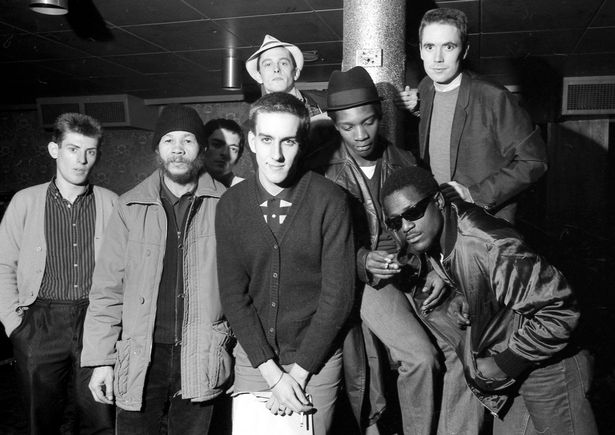 |
| Terry Hall, center, with The Specials and Rico (Image: Coventry Telegraph) |
The news of Terry Hall's death on December 18 at age 63 from pancreatic cancer landed like a sucker punch to the gut--and I've been wrestling with how to process and write about it ever since. Several wonderfully insightful pieces about Hall's music and life already have been published--including Alexis Petridis' "Terry Hall was the self-assured eye of the Specials storm" in The Guardian and Neil Kulkarni's "Coventry & A Spirit Of Unbelonging: Terry Hall Remembered" in The Quietus. And Billy Bragg summed up Hall's and The Specials' impact so incredibly well in 280 characters. So, I'm not sure what I can add (but I need to add something).
As I write this, the terrible news of Pelé's death is just sinking in. I had seen him play at Giants Stadium in the Meadowlands in 1977 when I was 11, during his final season with the Cosmos. I've always considered it to be one of the highlights of my life, to have witnessed the greatest soccer player of all time in action, even if past his prime. While I'm reluctant to admit it, it's hitting me harder than Hall's passing--and forcing me to realize that I've always held Terry Hall at a bit of a distance, though I shouldn't be.
Even though he was the phenomenal, irreplaceable voice of my beloved Specials, Hall's dour and perpetually acerbic (though often bitingly funny) public persona left me cold. He was someone who could put anyone in their place with a quick, cutting remark. A man of few words, but they always hit their mark. I've always been wary of and felt at a disadvantage interacting with people this quick and sharp. (I have to mull things over--and often take longer than I'd like to admit to sort out the truth of a situation and articulate my thoughts.)
Having said all that and without ever having met him, I can immediately relate to several aspects of Hall's life and death. For several years after college, I worked as a caseworker at a residence for people with chronic mental illness (much later in his life, Hall was diagnosed as suffering from bipolar disorder). About five years ago, I witnessed a friend of mine--only a few months younger than me--undergo grueling treatment and slowly die from pancreatic cancer. And I've been a devoted fan of The Specials ever since first hearing "Ghost Town" in 1981.
Hall's detached and dispassionate vocals--often delivered standing stock still while the rest of the band exploded in furious motion behind him (as Petridis points out, see the closing credits of Dance Craze)--and fuck-all attitude made him the perfect frontman for The Specials, whose songs were mostly about how adults and their institutions had largely failed their generation. His disaffection with the world was not a pose. Growing up, he was subjected to one of the most horrific betrayals of adult trust imaginable.
At age 12, Hall was kidnapped by a teacher on a school trip in France and sexually abused by a pedophile ring for four days before being punched in the face and discarded on the side of a road. The trauma Hall suffered triggered a deep depression, whose treatment left him addicted to Valium for years and housebound for months (he also dropped out of school when he was 14). Hall also likely experienced emotional numbing--an unconscious psychological defense/survival mechanism common to people who have been severely traumatized where the brain attempts to lessen the pain by dampening all emotions (leaving someone who seems distanced, detached, and unfeeling).
It's not a stretch to argue that this abduction and sexual assault--in addition to his experience of growing up in a decaying, unfashionable Coventry in the 1970s (see Kulkarni's piece above)--lent Hall's voice and stage presence a unique authority and authenticity. In his alienation, cynicism, and emotional remove lay his power as he sang about everything around him--endemic racism and racial violence; working-class youth denied opportunity, purpose, even a satisfying night of fun by a government that didn't give a damn about their future; and the shared constant dread of all life being wiped out in a nuclear war. But his detachment didn't mean that Hall didn't care deeply about how the litany of society's unaddressed and intentionally aggravated ills was impacting Britain's youth. He was just clear-eyed about their plight. And everyone loved him for it.
Two of The Specials' greatest songs that bookend the original band's brief existence--Dammers' "Nite Klub" and Hall's own composition "Friday Night, Saturday Morning"--are both about the inability to take pleasure in a night out on the town. In "Nite Klub," Hall's deadpan delivery of the lyrics "I'm a parasite/I creep about at night" is spectacularly ambiguous. Is this meant to be sarcastic, commenting on the establishment's view of working-class youth on the dole? Or has the narrator internalized mainstream society's low opinion of him and his lot? And the suddenly released white-hot anger in the last line of this verse is devastating: "I don't work/'Cause I don't have to/I don't have to work/There's no, no work to do!" How can you have fun (or be a productive member of society, for that matter) when your life's going nowhere?
The narrator of "Nite Klub" is still hitting the nightspots a few years later in "Friday Night, Saturday Morning," but the piss and vinegar in his belly is gone. It's all now bleakly rote. Hall's unembellished singing conveys the track's boredom, futility, and despair extraordinarily well. But this portrait of Britain's forsaken youth is drawn with great empathy, not self-pity or anger at the powers that be (though Thatcher's the subtle target). And Hall's song contains one of the most universally relatable--and bluntly heartbreaking!--lyrics in pop music history: "Wish I had lipstick on my shirt/Instead of piss stains on my shoes."
In a 2019 interview with Richard Herring’s Leicester Square Theatre Podcast, Hall stated:
While there's much to unpack here (the forgiveness, his resilience), Hall's observation that child sexual abuse is "like part of life" is shocking. But considering what took place in the Catholic Church worldwide for decades--and god knows in how many other institutions that dealt with children--he's not wrong, is he?"I find it quite easy to forgive and forget. It’s like, you know, going back to my abduction, it’s like you can let that eat away at you but then well you know it’s paedophilia and it’s like part of life really."It’s unfortunate it happened to me but you can’t just let it destroy your life, it’s not good."
Clear-eyed to the end.
+ + + +
I offer my deepest condolences to Terry Hall's family, bandmates, friends, and fans.
+ + + +
(Updated on 1/3/2023 to include information on emotional numbing.)
+ + + +
Sunday, September 18, 2022
40th Anniversary Reissue of The Selecter's "Celebrate the Bullet"/"The Lost Interview: Neol Davies of The Selecter"

If you need a refresher on this album, you can read my appreciation of Celebrate the Bullet from this 2010 post.
Also, below is a chapter relating to Celebrate the Bullet excerpted from my 2020 book The Duff Guide to 2 Tone:
"The Lost Interview: Neol Davies of The Selecter"
Back in 2015, I was planning to expand a post I had written several years earlier reappraising The Selecter's Celebrate the Bullet [which is included in The Duff Guide to 2 Tone] to book-length. Hoi Polloi skazine's John Vaccaro had been incredibly kind to send me several contemporary articles related to the album from Sounds, NME, and other British music publications from his extensive print archives for my research. I also managed to arrange a series of interviews with Selecter founder, guitarist, and primary songwriter Neol Davies, and intended to talk with other members of the band who had composed songs for the Celebrate the Bullet, including Pauline Black, Gaps Hendrickson, and Compton Amanor.
That summer, I spoke twice with Davies via Skype, but during each session, our video calls were plagued by technical issues: the audio would often go in and out and inevitably degrade to static. Davies was generous and gracious during our interviews—and quite eager to talk about an album that he clearly felt never received its due—but was increasingly frustrated and distracted by the audio problems. I digitally recorded both interviews, but much to my regret didn't have them transcribed at the time. I had planned to set up additional phone calls with Davies, but, unfortunately, didn't, due to demands of work and life.
While putting together The Duff Guide to 2 Tone, it struck me that excerpts from my interviews with Neol Davies would be perfect for this book, but I have been unable to locate the audio files, which I thought I had copied to an external hard drive. Unfortunately, the device I used to record the interviews died several years ago and was recycled. However, I do have the notes that I typed up after my conversation with Davies on 8/13/15, which are as follows.
The cover of Celebrate the Bullet, which was designed by Davies' late wife Jane Hughes and John "Teflon" Sims of Chrysalis' art department (who, along with David Storey, created much of 2 Tone's iconic imagery), featured a gloved hand of a person who couldn't be identified as a man or woman, or black or white—they represented everyone. The fuzzy TV screen on the UK version of the album was meant to convey that the music and message was not being broadcast or given airtime in the mainstream media, and also expressed a dread of nuclear annihilation (when all transmissions will cease). Davies commented that the band was "angry with the world."
Hughes also designed the new Selecter "dial" or "eyeball" logo (used on the paper label for the album and "Celebrate the Bullet" single). It was greatly influenced by Soviet constructivist artists and "fits nicely as a paper sleeve for a single or album—and allows for text, too." Davies noted that it was simple, but "not so easy to arrive at."
Davies stated that, in contrast to The Specials, which was "very much a dictatorship with Jerry in charge," The Selecter was a real democracy. Each member had an equal vote and they based all of their decisions on whichever options had the most support. The band voted down Davies on who should produce their debut album Too Much Pressure. Davies had wanted Roger Lomas, who had produced The Selecter's first few singles, including "The Selecter" and "On My Radio" b/w "Too Much Pressure." In the end, the band opted to go with Charley Anderson's friend Errol Ross, but Davies and others were very unhappy with the results. As a consequence, Lomas was recruited to produce "The Whisper" single and the Celebrate the Bullet album. (A few years prior to this interview, Davies thought he had tracked down the two-inch reel-to-reel tapes for Too Much Pressure with the idea of remixing the whole album for a re-release, but the boxes were empty.)
According to Davies, the track "Celebrate the Bullet" is "a direct descendent" of "The Selecter" instrumental. The song is about recognizing "the seduction of the power of holding a gun in your hand and being enthralled by the power of a gun—but also being very anti-gun." When I asked him about Chrysalis' reaction to the controversy surrounding the single [the BBC had quietly banned the track over misguided concerns that it encouraged gun violence; John Lennon had been murdered a few months earlier and an assassination attempt had been made on President Ronald Reagan around the time of the single's release], Davies noted that the label gave their "full support" to The Selecter.
Davies felt that the "Celebrate the Bullet" single "should have been our 'Ghost Town'"—The Selecter's #1 record. Like that Specials masterpiece, The Selecter's "art and music was in synch with real world events and the zeitgeist" of those turbulent times. Davies said that he found it "mystifying that an anti-gun and anti-violence record would be banned during a time when people were being assassinated."
+ + + +
Sunday, September 11, 2022
Duff Review: "Blue Beat Baby: The Untold Story of Brigitte"
 (Review by Steve Shafer)
Blue Beat Baby: The Untold Story of Brigitte, a new 30-minute video documentary by Joanna Wallace, does an excellent job of piecing together the largely forgotten story of Brigitte Bond, who inadvertently inspired the design of The Beat girl. While the average ska fan knows 2 Tone's Walt Jabsco was created by Jerry Dammers (and refined with help from Horace Panter and John "Teflon" Sims) and based on a photo of Peter Tosh from his early Wailers' days, far fewer are aware of the origins and background of The Beat girl.
In Blue Beat Baby, Wallace explains that Brigitte Bond was a popular Soho burlesque performer who showed up to welcome Prince Buster at Heathrow Airport in 1964 during his first tour of the UK (to promote I Feel The Spirit). In the process, she was photographed and filmed dancing with Buster in the terminal (most likely a calculated move to help generate press for her then forthcoming single and supporting gigs). A little over a decade later, one of these photos was re-published in Melody Maker in the spring of 1979 (see it above), just as 2 Tone started to rule the airwaves and charts. Cartoonist/graphic artist Hunt Emerson, who was tasked by The Beat to quickly come up with their logo (and later designed the covers of the first two Beat albums), spied the photo of the beautiful and fashionably mod Bond dancing with Prince Buster and modeled his striking--and now iconic--Beat girl illustration on her. Notably, neither Hunt Emerson nor anyone in The Beat was cognizant of Bridget Bond's claim to fame. Emerson was drawn to her elegant sense of style and the wonderful motion of her hips, arms, and legs captured in that phenomenal photo.
Employing archival newspaper clips, strip joint advertisements, and TV news footage, Wallace fills in as many blanks in Bond's story as possible in this compelling documentary. Her professional life on stage, in the press, and on the screen is well-covered here, but little is known of Bond's origins or fate (the trail goes cold in Italy in 1976). However, Wallace highlights several fascinating aspects of Bond's life, such as her (so-so) 1964 ska single on Blue Beat; the episode where she hijacked Billy Graham's attempt to minister/preach to the sinful denizens of Soho, which garnered her worldwide press coverage; and the fact that she is/was a gorgeous, transgender woman (which, refreshingly, didn't seem to be that big of a scandal in the UK at the time--many of her strip club patrons and admirers had no complaints!).
Both The Beat's Dave Wakeling and Emerson observed that after The Beat girl began to be featured on gig posters and Beat merchandise, the band's previously male-dominated audiences were flooded with female Beat fans (and there were far fewer fights at shows). Many girls even began to copy The Beat girl's style of dress. So, a crucial part of Bond's legacy is that her image helped welcome/make space for girls and women in the 2 Tone scene. (Then, as now, representation matters.) Perhaps the most significant unanswered question in all of this is whether Bond is/was aware of her consequential and celebrated place in 2 Tone history.
+ + + +
On a related note, ska author Heather Augustyn provided research assistance for this documentary and she wrote a chapter on Brigitte Bond in her forthcoming book Rude Girls: Women in 2 Tone and One Step Beyond.
+ + + +
Monday, June 6, 2022
Duff Review: Norwood, Angelo, and Chris Meet Eric Blowtorch and the Bodyguards "Too Many Dues" b/w Eric Blowtorch and the Bodyguards "Mercy"

Bopaganda! Records & Tapes
2022
(Review by Steve Shafer)
Fishbone's 1988 masterpiece Truth & Soul was largely an exposition on what it was like to be a Black American living in an unrelentingly racist America (see most of Truth & Soul's side two: "One Day," "Subliminal Fascism," "Slow Bus Movin' (Howard Beach Party)," "Ghetto Soundwave," and "Change"). When the album was recorded, a lot of the good that had resulted from the brutally hard work of the Civil Rights Movement and America's attempts at building an equitable and just Great Society was being rolled back during the regressive Reagan '80s. "Slow Bus Movin' (Howard Beach Party)," in particular, was written and recorded in response to the horrific 1986 death of New Yorker Michael Griffith, who was hit and killed by a car as he attempted to cross the Belt Parkway in Queens while fleeing a mob of white teenagers trying to attack him (acts of racial terror didn't only happen in the Jim Crow South). According to The New York Times:
"The events in Howard Beach began when Mr. Griffith, a construction worker, and three black companions traveled from Brooklyn to Queens to pick up his paycheck. Their car broke down late on Dec. 19 on a desolate stretch of Cross Bay Boulevard, and three of the four began walking into Howard Beach. As they were crossing the street, they were nearly bumped by a car in which several white teenagers were riding. Racial slurs were exchanged. The teenagers, joined by other young whites, confronted the black men outside a pizza parlor, New Park Pizza, and chased them.
Timothy Grimes, who was 18, escaped unharmed. Mr. Griffith was killed by a car on the Belt Parkway. Cedric Sandiford, who was 36, was beaten with a bat and other weapons...
...Jon Lester, Scott Kern and Jason Ladone were convicted of manslaughter and assault."
Flash forward 30+ years later and--while some things have changed for the better--much has not. Members of Fishbone (Norwood Fisher, Angelo Moore, and Chris Dowd)--plus Eric Blowtorch and the Bodyguards--still feel compelled to write and record songs about America's unrelenting racism and its abuse and murder of Black people. The terrific "Too Many Dues"--co-written by Eric Beaumont and Norwood Fisher--is an ironically chipper ska/jump blues cut that conveys some real anguish over the high profile murder of Breonna Taylor and permanent disabling of Jacob Blake (10% of the single's profits are being donated to Black Lives Matter). But it's also about the tragic inability of America to live up to its ideals and treat all people equally in every aspect of life--and under the law (we fought a bloody civil war over it and amended the Constitution several times in attempts to do so).
"Breonna Taylor was a healer, but the jailer
Just had to invade her, viciously assail her
Every, every day here to the cross we nail her
The great experiment is a failure
What does a brother have to do
To reap respect already due
To stop the spiteful spew
To not be turning blue?"
On the flip side is the excellent 2 Tone-ish ska track "Mercy," which is a plea for the salvation of humanity, a mantra for our thoroughly horrific times, particularly in these fragmented United States of ours: "Mercy in destabilizer stormtroop’s face/Mercy, mercy when your blood boils over/Mercy to the driver in the bulldozer." It's a mournful track, like something off the Ghost Town EP, but interspersed with joyous and hopeful funk-soul breaks in the choruses. And it's protest music that's not about casting blame, but searching for something that can heal what's broken inside of us, so we won't be at each other's throats, and might even be able to begin to start caring for one other again.
+ + + +
Wednesday, October 20, 2021
Duff Review: The Specials "Protest Songs 1924-2012"
 (Review by Steve Shafer)
The Specials' new album Protest Songs 1924-2012 (CD/LP, Island Records, 2021)--their follow-up to 2019's excellent Encore (read my review here)--is a strange beast. It manages to be both a powerful and beautifully realized concept album and a huge sod off to their fans. Anyone who has faithfully supported The Specials through its various incarnations and diminishing ranks of original members, lo these 40+ years, is not unreasonably expecting some ska. But Protest Songs adamantly delivers none, though there's folk, blues, spirituals, soul, skiffle, rock, and post punk (having said that, I did catch a bit of ska rhythm guitar in "Listening Wind!"). What's odd is that as you listen through the tracks, it's quite easy to imagine at least some of them recast as ska or reggae songs. So, for whatever reason, the band--Terry Hall, Lynval Golding, and Horace Panter (plus Nikolaj Torp Larsen, Kendrick Rowe, Steve Cradock, Tim Smart, Pablo Mendelssohn, Jim Hunt, Michael "Bammie" Rose, Tony "Groco" Uter, and Hanna Hu)--opted to go in this direction, surely well-aware that it would dash fans' expectations and piss many of them off mightily.
Before the pandemic disrupted everything, The Specials had been planning to record a reggae album in Jamaica--and then the world-wide George Floyd protests erupted in the wake of Floyd's horrific murder at the hands of the police. So, they decided to record a covers album of protest songs in response (and one imagines that the resurgence of white supremacy and worsening cold civil war between Americans and seditious, anti-democratic forces in the US played a part, too), the majority of them by American musicians, as an interim project and to force them out of a post-Covid lockdown creative rut.
Once you set aside your disappointment regarding the absence of ska sounds (though the fact that these are protest songs is very much on brand), you may find that The Specials' Protest Songs 1924-2012 is a terrific album. The choice of tracks (with lyrics that pack a wallop), their interpretations, and performances are uniformly excellent. Some of the songs are direct in their messaging: The Staple Singers' "Freedom Highway" and The Freedom Singers' "Ain't Gonna Let Nobody Turn Us Around" are potent, raucous US Civil Rights Movement-era anti-racist anthems; Rod McKuen's "Soldiers Who Want to Be Heroes" ("...number practically zero/But there are millions/Who want to be civilians") is an anti-war earworm written before Vietnam, but reissued at its height, and relevant countless times since then; Frank Zappa's "Trouble Every Day," written in reaction to the 1965 Watts riots and decrying both the violence/looting unleashed in that neighborhood and ubiquitous racism that led to the social unrest; and Bob Marley's "Get Up, Stand Up" is a general call for solidarity in support of universal human rights--though this quiet, acoustic version sung by Golding seems like something one would pull in on shortwave radio while hunkered down in some secret hiding place as in The Clash's English Civil War. While others are more oblique in subject matter or less-known for being protest songs.
Everybody knows that the dice are loaded
Everybody rolls with their fingers crossed
Everybody knows the war is over
Everybody knows the good guys lost
Everybody knows the fight was fixed
The poor stay poor, the rich get rich
That's how it goes
Everybody knows
Malvina Reynold's children's folk tune "I Live in a City" seems like a weird choice, but it's a strong endorsement of urban solidarity and multiculturalism: "Brown hands, yellow hands, white and black/All together built this town" (take that, rural MAGA-Again-heads!). And Reynold's proud rejection of American dog-eat-dog capitalism, "I Don't Mind Failing in This World," is positively punk rock in attitude, even if it's delivered via gentle folk song:
I don't mind failing in this world
Don't mind wearing the ragged britches
'Cause those who succeed are sons of bitches...
...I don't mind failing in this world
I'll stay down here with the raggedy crew
'Cause getting up there means stepping on you, so
I don't mind failing in this world
...I don't mind failing in this world
Some people ride in a car so fine
While others walk on a picket line, so
I don't mind failing in this world
One of the cruelest injustices that Black American GIs faced after fighting fascism during WW II in Europe was returning to the US and being subjected to racist Jim Crow laws in their own country (the Nazis based their Nuremberg Laws--their racial purity edicts--and their "Final Solution" on Jim Crow and the American eugenics movement). Blues musician Big Bill Broonzy first recorded his song "Black, Brown and White" in 1947 about this and the general Black American experience with white supremacy (wryly sung here by Golding):
I helped build this country
And I fought for it too
Now I guess that you can see
What a black man has to do
They say if you're white, should be all right
If you're brown, stick around
But if you're black, oh brother, get back, get back, get back
I win sweet victory
With my plough and hoe
Now, brother, you tell me
Whatcha gonna do 'bout the old Jim Crow?
The inclusion of Talking Heads' incredible "Listening Wind" (from Remain in Light and used in The Americans) is an unusual choice--it's a Cold War-era anti-American imperialism cut from the point of view of a African freedom fighter planting bombs to drive out the Yanks from his country (singer Hannah Hu takes lead vocals here). I'm a little surprised The Specials' didn't work in a little of John Holt's "Man Next Door" into their version of Jerry McCain's "My Next Door Neighbor" (essentially a long rant about someone driving you mad by always borrowing all your stuff). Perhaps the most Terry Hall-ish song ever, the country lullaby "Fuck All The Perfect People" by Chip Taylor of "Wild Thing" fame--about prison inmates who have no agency while they do their time ("To sing or not to sing/To swing or not to swing/Hell fills up the silence like chalk on the wall")--was chosen as it "rails against all those people who are So. Damn. Right." (Hopefully, it's not a message to you.)
My imported red vinyl LP included an exclusive and exceptionally good 7" single containing their "Vote for Me" and a cover of The Valentines' "Blam Blam Fever," recorded live at Coventry Cathedral during the 2019 Encore tour. Admittedly, this helped take the sting out of the lack of ska on Protest Songs, but also reminded me of what was missing. One of The Specials' brilliant strengths has been their ability to offer up songs that make you both think and dance--their medium, 2 Tone, is also the message. But Protest Songs, as great an album as it is, obliterates half of that formula and may turn off a good portion of their audience as a result.
+ + + +
Saturday, October 9, 2021
The Beat's Everett Morton Passes Away at 71
 |
| Everett Morton (photo by Adrian Boot) |
Terribly sad news comes via Lee Morris of 2 Tone--Before, During & After: The Beat's wonderful drummer Everett Morton died on October 8, 2021 at age 71. His use of complex rhythms and unique style of reggae drumming and percussion lent The Beat an immediately recognizable sound and firmly grounded their music in Jamaican ska, while also allowing the other musicians in the band to take a more unorthodox, punky, and often aggressive approach to the genre--all of which formed the brilliant signature Beat sound.
According to Malu Halasa's essential 1981 biography of the band, The Beat: Twist and Crawl, Morton came to the attention of the fledgling Beat via a friend through David Steele's day job at a Birmingham psychiatric hospital:
When The Beat were preparing to record "Tears of a Clown" for their debut 2 Tone single, it was decided that they needed some saxophone on the track, so Everett introduced them to Saxa, whom he had played with in bands around Handsworth. Of course, Saxa was recruited to join the band almost immediately and his sublime sax playing completed The Beat's classic sound."During one afternoon tea break, he [Dave Wakeling] was chatting with his black friend Paulette Sherley, telling her how difficult it was to find a drummer for his band. Band practice was every Saturday--that is when they could get it together. Paulette suggested a drummer she knew in Handsworth. The fellow, free since his last band had broken up, was considered an excellent reggae drummer, and had a van as well, which was what really sealed it. Steele phoned Everett Morton and invited him over to Andy's flat that weekend.
Tall and dark, Everett brought his mate Freddy to check out the mystery band in need of a drummer. While the two Daves and Andy [Cox] rendered "Click Click," "Two Swords" and "Twist and Crawl" on acoustic guitars, Freddy recorded them on his portable sound system. Afterwards, the five sat quietly together drinking tea and listen to the tape, which sounded oddly like The Beach Boys. They were unusually alright, agreed Everett, but it was little early to tell. With electric guitars and a couple of amps they could sound different. The band had arranged to practice properly in the upstairs room of a pub around the corner, The Yorkshire Grey, for a three quid rental fee. Morton promised to join them there on Tuesday night with his drum kit.
Tuesday's practice was a mess. The main problem was that the boys hadn't written any songs with a reggae beat, and Everett had been drumming in reggae and soul bands for some fifteen years. Without the bass and drums fitting together, there was little foundation for the music. Even the guitars seemed out of place. By the end of the evening the four of them, pissed and frustrated, decided to close with an early version of "Noise in This World," an extraordinary punk number. Somehow, it came together. Although vile and very noisy, they played for a long time, which for them determined if a song was any good. They decided to meet again the following week.
Everett had come to England from St. Kitts in the mid-sixties, working in a kettle-spinning factory and playing music in the evenings and weekends. He first learned the drums when his cousin asked him to join his band. After a stint at drum school at Yardley's in Birmingham, and practicing almost constantly on the settee and table in the house, Everett developed his own style and began playing around Handsworth [including Joan Armatrading's band]. He was the most experienced musician in the pack by far, and yet Steele and Wakeling wouldn't hesitate to tell him when songs went wrong.
"You're messing up, Everett. You're messing up." It was hopeless to talk about what the music should sound like. Dave and Everett talking about the same thing would describe it differently, and then end up in a vicious argument. In part it had something to do with Dave's current job at a building site in town. At twenty-three, he was an angry young man. If he offended someone, he expected them to put him right, but Everett didn't think he should have to do that. Strangers ought to have better manners."
One of my favorite Beat tracks is "Psychedelic Rockers" (about dread of nuclear war: "On a night like tonight, when I'm losing my hope/I pray for the best with my heart and soul/It is the hardest...At the edge of your nerves where the lights are pretty/A change in the weather and it smothers the city/Psychedelic, psychedelic, psychedelic war...Well, it's an atmospheric shock...")--which also happens to highlight Morton's fantastic percussion work.
I offer my deepest condolences to Everett Morton's family, friends, and fans. May he Rest In Peace.
+ + + +
Friday, September 24, 2021
Duff Review: Rude Girl Revue "Lioness" b/w "Unruly Ways"
 (Review by Steve Shafer)
By all accounts, Rude Girl Revue's debut performance at the recent Supernova Ska Festival in Virginia wowed everyone in attendance, and pretty much stole the three-day festival from all other contenders (the vast majority of them, ahem, male). This supergroup comprised of women ska musicians from 12 bands across the country (Kristin, Jade, and Tiffany from The Scotch Bonnets; Jenny from Hub City Stompers/Rude Boy George; Dunia from Dubistry; Dani from Soul Radics; Brittany from Catbite; Ali from Stop the Presses; Marcia and Katie from BowCat; Tara from Half Past Two; Lindsay from Thirteen Towers/The Skluttz; Emily from The Skluttz; Kat from The Pandemics; Tricia from Some Ska Band; plus Tara from the Checkered Cast podcast) was formed to stake their claim in a genre that's been heavily dominated by men; celebrate their role in the scene; and inject feminist messages into the ska mix.
Rude Girl Revue's excellent debut single (Digital, self-released, 2021) features the great rocksteady cut "Lioness" (written and sung by The Scotch Bonnets' Jade Tremba and Lady Hatchet) that both boasts of their prowess and calls for women's solidarity to combat the patriarchy ("To all the lady conquerers/We strike as one/And watch them fall"), while the extraordinary new ska anthem to women's empowerment "Unruly Ways" (written and sung by Jenny Whiskey) decries the ludicrous and sexist rules that society imposes on women, while men are free to do as they please ("Just to love yourself truly is a radical act/And we won't be holding back/It doesn't matter if you're the virgin or the whore/You only get two sides to divide/But you could be so much more!/So, be a bitch, be a slut/Be whatever the fuck you want/'Cause I love you, girl, for your unruly ways!").
While both '60s Jamaican ska and late '70s 2 Tone were often overtly political (addressing racism, economic inequity, and social injustice), American ska--with some very notable exceptions--has been largely apolitical. Perhaps, this marks a major shift in the scene with the women of Rude Girl Revue leading the way...
+ + + +
Sunday, August 15, 2021
The Specials to Release "Protest Songs 1924-2012" on September 24, 2021

The tracklist for Protest Songs 1924-2012 is as follows (with links to the original songwriter/performer's recording in parentheses):
1. "Freedom Highway" (The Staple Singers)
2. "Everybody Knows" (Leonard Cohen)
3. "I Don't Mind Failing In This World" (Malvina Reynolds)
4. "Black, Brown And White" (Big Bill Broonzy)
5. "Ain’t Gonna Let Nobody Turn Us Around" (The Freedom Singers)
6. "Fuck All The Perfect People" (Chip Taylor & the New Ukrainians)
7. "My Next Door Neighbour" (Jerry McCain)
8. "Trouble Every Day" (Frank Zappa with the Mothers of Invention)
9. "Listening Wind" (Talking Heads)
10. "Soldiers Who Want To Be Heroes" (Rod McKuen)
11. "I Live in a City" (Malvina Reynolds)
12. "Get Up, Stand Up" (Bob Marley)
The Specials have a short snippet of their cover of The Staple Singers' "Freedom Highway" up on their Facebook page (and it sounds quite good).
And you can pre-order the CD now from the Universal Music store (no word on when the LP can be ordered).
Friday, August 6, 2021
Duff Review: Jerry Dammers "At the Home Organ: Demos 1980-82 (Ghost Town & Theme from The Boiler)"

Issued in the UK as part of the second 2021 Record Store Day drop (cue the evergreen complaints about RSD), Jerry Dammers' At the Home Organ: Demos 1980-82 (10" vinyl single, 2 Tone/Chrysalis, 2021) is as advertised--these are his DIY instrumental demos of The Specials' "Ghost Town" and Rhoda Dakar with The Special AKA's "Theme from The Boiler" performed on his "home entertainment type organ." These recordings, mastered from their cassette originals (and which feature pretty good audio fidelity), are really for Specials completists, as there's nothing immediately revelatory here. Having said that, there's something wonderfully intimate and thrilling about hearing Dammers' playing this early, more muzak-y version of his masterpiece "Ghost Town" (think "Stereotype, Part 2"--yet it's also B-horror movie-sounding) that doesn't yet include the bright, major key "Do you remember the good old days before the ghost town?" bridge. We weren't ever meant to hear this--but it's fascinating to compare it to the studio recording and note how producer John Collins helped shape the extraordinary final product. And this demo of "The Theme from The Boiler" with John Shipley (The Swinging Cats, The Special AKA) on guitar is unexpectedly fleshed out and pretty fantastic. Since the bloodcurdling "The Boiler" was only meant to be heard once, this 45 is rarely pulled out to play. Which is a shame, as I've always thought that the studio version of "The Theme from The Boiler" is a superb and jittery dance floor-filling cut that should be spun frequently. Hopefully, this demo's inclusion will bring some renewed attention to this gem.
The paper label for At the Home Organ doesn't feature Walt Jabsco (the cardboard sleeve does), though it's designed to look worn and slightly mildewy, as if these faux demo-only singles were recently rescued from a forgotten box in a damp cupboard--a nice touch. As a Specials/2 Tone fan, I'm quite happy to have Dammers' At the Home Organ in my collection. Get 'em while you can.
+ + + +
Saturday, June 26, 2021
Duff Book Review: Lee Morris "2 Tone: Before, During & After"

After several decades marred by a dearth of tomes about 2 Tone apart from George Marshall's foundational and wonderfully opinionated The Two Tone Story (1990) and an extraordinary chapter about 2 Tone in Dick Hebdige's Cut 'n' Mix: Culture, Identity and Caribbean Music (1987), we're finally in a golden age of plenty. The spigot began to open in the late 2000s, with autobiographies from Horace Panter and Pauline Black, plus Paul Williams' superb biography of The Specials, You're Wondering Now. And more recently, we've seen coverage of 2 Tone in Heather Augustyn's terrific surveys of the genre, Ska: An Oral History and Ska: The Music of Liberation; amazing autobiographies from Ranking Roger (read my review) and Madness (read my review); and the best oral history of 2 Tone one could hope for in Daniel Rachel's Walls Come Tumbling Down: The Music and Politics of Rock Against Racism, 2 Tone and Red Wedge. (Oh, and I published The Duff Guide to 2 Tone in 2020, as well!)
To this crowded bookshelf, the discerning 2 Tone fan absolutely should add Lee Morris' book 2 Tone: Before, During & After (Paperback, Media House Books, 2020). Morris provides a comprehensive overview of every band that released music on the 2 Tone label (including the lesser-known, non-ska acts that were signed on the tail end of 2 Tone's existence, like Friday Club, The Higsons, and The Apollinaires), from their origins in the '70s up till the present day--and includes biographical sketches of all band members and key collaborators. (Plus there's a chapter on 2 Tone related bands, and if you ever make the pilgrimage to Coventry, info on the 2 Tone Trail.) Morris' book is crammed with details (and some welcome commentary) that help flesh out the entire 2 Tone story--and American fans, most of whom didn't have easy access to the British music publications breathlessly covering 2 Tone's rapid rise and prolonged flame out, will find it especially enlightening. I was particularly grateful for Morris' chapter on The Special AKA, since I knew too little of this band's history other than it's Phoenix-like rise from the post-Ghost Town ashes of The Specials; and that Jerry Dammers' perfectionism in crafting the magnificent In the Studio cost an ungodly sum, took forever to complete, and was so miserable an experience that Rhoda Dakar to this day has never listened to it.
2 Tone: Before, During & After is an essential and handy reference guide to the label--one that you'll be thumbing through for years to come (I certainly will be).
+ + + +
Friday, May 21, 2021
Duff Review: The Selecter "Too Much Pressure" Deluxe 40th Anniversary Reissue!

During their intense, year-long association with 2 Tone,* The Selecter always seemed to have been unfairly overshadowed in the press by their label co-directors and mates The Specials, despite that fact that The Selecter' original songs were as good (if not better) and relevant (addressing racism, street violence, alienation, and the "no future"/"nothing to do, nowhere to go" of Thatcher's England)--and their live performances just as incendiary. So, it's wonderfully fitting that of all the recent 2 Tone 40th anniversary releases, the deluxe reissue of The Selecter's debut 1980 album Too Much Pressure is by far the best.
The triple-CD deluxe edition of Too Much Pressure features the remastered version of the original album; a second disc of related singles, their 1979 John Peel session, and several previously unreleased recordings; a third disc of previously unreleased live tracks from two hometown concerts in Coventry from '79 and '80; and excellent, copious liner notes by Daniel Rachel (read my interview with him about this project), as well as track-by-track commentary by several members of the band (it should be noted that none of the other recent 2 Tone 40th Anniversary reissues were expanded and included unreleased material from the vaults). The heavyweight LP version of Too Much Pressure (mine is clear vinyl!) features a half-speed master, plus a copy of The Selecter's debut single "On My Radio" b/w "Too Much Pressure" (in the 2 Tone sleeve)--and if you ordered a copy from the 2 Tone store like I did, they included a 7" EP containing the four aforementioned live tracks from 1980 (the '79 concert will be released on vinyl during the second Record Store Day drop this summer). Die-hard Selecter/2 Tone fans will want--and be very pleased with--both editions.
The pairing of the Roger Lomas-produced "On My Radio" b/w "Too Much Pressure" single with the Too Much Pressure LP inadvertently underscores just how perfectly suited he was as The Selecter's producer. (First listen to the single and then the LP.) While Errol Ross did a very good job with producing the album, the tracks don't quite capture the power and punch of anything The Selecter recorded with Lomas (and there are many more examples of Lomas' work with them on the second disc of the triple-CD). At the time, according to Rachel's liner notes (and Neol Davies told me in an interview published in The Duff Guide to 2 Tone), the choice of Ross as producer was controversial within the band (Davies wanted Lomas, but more members of the band voted for Charley Anderson's friend Ross) and none of the band members were completely satisfied with the end results. So, Lomas was recruited again for "The Whisper" single and the band's sophomore LP Celebrate the Bullet--a very under appreciated album--read my write-up of it here. (The Specials had a similar issue with Elvis Costello's production for their debut album; he didn't quite capture the band's sound in the studio as well as Dave Jordan (More Specials) or John Collins (Ghost Town EP), which was evident when the bootleg Live at the Moonlight Club hit the streets prior to The Specials and the former made for a much better debut album--read my review of official 2 Tone/Chrysalis 2014 release of Live at the Moonlight Club here.)
Disc two of the CD set ("Singles, B-Sides & Rarities") contains a fantastic, previously unreleased, alternate (and more urgent) take of "Three Minute Hero" produced my Lomas for the band's lip-synched 1980 appearance on "Top of the Pops" (Errol produced the version released on the single). There's also an awesome, unreleased synth-washed version of "Cool Blue Lady" which was recorded by Lomas during "The Whisper" sessions (a second version of the track appeared on Celebrate). I learned from the liner notes that the superior version of "Street Feeling" on this disc that was included on the 12" of "The Whisper" was actually from the "On My Radio" b/w "Too Much Pressure" sessions (as Gaps said, "We recorded three songs and let the record company choose [what was on their first single]"). And rounding out the unreleased material on this CD is a brilliant medley/mash-up of Lee Perry's "A Live Injection," a bit of Tommy James and the Shondells' "Mony Mony," and "Too Much Pressure" recorded during a soundcheck in 1980. Plus, if you never got your hands on a copy of the "Ready Mix Radio" version of "On My Radio" done by Lomas and released as a freebie on flexi-disc for the first issue of Flexipop magazine in November of 1980, here's your chance to hear it (I have the flexi, but the track sounds loads better on CD).
The majority of live material on disc 3 of the CD set is from The Selecter's November 1979 concert at Tiffany's in Coventry, which was part of the UK 2 Tone Tour with The Specials and Madness. The Selecter had only been together for about six months at this point (and they were slated to start recording their debut album the next month), but their songs and performance are absolutely magnificent. Of course, it helped that most of the members of The Selecter previously had played together in other Coventry bands like Hard Top 22 and Neol Davies already had ace material that he written and performed ("On My Radio," "Out in the Streets," and "Street Feeling") with The Transposed Men (which included The Specials' John Bradbury and Desmond Brown). But still, it's extraordinary how good and confident and entertaining the band were so early in their existence.
One of the greatest stories revealed in Rachel's liner notes comes from their first recording session with Roger Lomas. The producer had seen them opening for The Ruts and knew that "On My Radio" was perfect for their debut single, but he didn't know the name of the track. When The Selecter played their set for him, but he didn't hear that hit song. So, Lomas asked if there was anything else and they responded "On My Radio," but they were reluctant to play it, because they thought it was like "a bloody Eurovision Contest song"!
This definitive edition of Too Much Pressure brilliantly documents The Selecter's enduring 2 Tone legacy. Get it!
+ + + +
(*They left 2 Tone for Chrysalis proper for "The Whisper" and Celebrate the Bullet releases.)
+ + + + +
Tuesday, May 11, 2021
Duff Guide to Ska Fast Takes: Danny Rebel & The KGB, Winds of Matterhorn!
 (Reviews by Steve Shafer)
In the "I still learn something new every day" category comes the great new trad-leaning ska single from Danny Rebel & The KGB that's a preview of their new album (!) Toss It Up, which is being released on Stomp Records on May 28th, 2021. It features five new songs and five corresponding dubs by Victor Rice (you can pre-order the digital album now; is it too much to hope that this will be issued on wax?). Employing a term for female genitalia that I've never encountered before, "Whispering Eye" is unapologetic in its direct and unadorned expression of lust ("We don’t need this love (I’ll save you the pain)...You don’t have to call (just call out my name)...All I really want is your whispering eye"). As one wry FB commenter replied to Danny about his new song: "rent a room!" (Danny Rebel & The KGB's most recent album was 2017's incredible Lovehaus (read my review of it here), which still needs to be released on vinyl, if there's any justice left in this world.)
Led by Swiss-Italian trombonist Mattbrass and producer Jackayouth, Swiss traditional ska band Winds of Matterhorn's superb new self-titled debut EP (12" vinyl/digital, Fruits Records, 2021) sounds like what one imagines the follow-up to Rico's incredible Jama Rico (with Jerry Dammers and Dick Cuthell again at the helm) would have been had all the stars aligned back in the '80s. This EP has the same wonderful vibe and sound (who knew the Swiss Alps were like the hills of Wareika?). Winds of Matterhorn's excellent original instrumentals are named after the four elements ("Earth," "Air," "Fire," and "Water") and lend this EP a theme that gives one's imagination a bit of direction when listening to these marvelous tracks. And while you're picking up Winds of Matterhorn's new EP, make sure to grab a copy of 2 Tone's vinyl reissue of Jama Rico (out this June), if you don't already have it!
+ + + +
Thursday, April 15, 2021
"Do You Remember the Good Old Days Before the Ghost Town?"
As you can see from the following videos, it was an amazing night of ska and reggae! Barbicide were terrific right out of the gate (it was their first show). The Twilights' version of Max Romeo and Lee Perry's "Chase the Devil" was epic! The Rudie Crew's "Radics in Space" tribute to the still very much missed Roy Radics really got the crowd going. And make sure to watch Beat Brigade's "Battle Cry" ("This is not a warning/This is not a test/Armageddon's coming...")--one of their newer (and brilliant) tracks--all the way through. Dave Barry and Ramsey Jones' performances in particular are mind-blowing.
These videos will whet your appetite for live shows. Hopefully, we'll start having them again later this year (go get your vaccine shot, if you haven't already!).
Monday, April 12, 2021
Rico's "Jama Rico" To Be Reissued on Vinyl for the First Time Since Its Release in 1982!

Here's an excerpt of what I wrote about Jama Rico from my book The Duff Guide to 2 Tone:
Recorded both at Joe Gibbs Studio in Kingston, JA and in London, with various tracks produced by Dick Cuthell and Jerry Dammers, Jama Rico featured some of the finest Jamaican and British musicians around, including Tommy McCook (tenor sax), Felix "Deadly Headley" Bennett (alto sax), Ansell Collins (organ), Winston Wright (piano, guitar), Earl "Chinna" Smith (guitar), Jah Jerry (guitar), Sly Dunbar (drums), Robbie Shakespeare (bass), and other top performers—plus several members of The Special AKA: Jerry Dammers (organ, piano), John Bradbury (drums), Sir Horace Gentleman (bass), and Dick Cuthell (cornet, flugel horns, funda drums).
Ska fans who love Rico and The Special AKA's "Jungle Music" will immediately take to the stunningly evocative ska and reggae of "We Want Peace," "Jam Rock," "Love and Justice," "Some Day," "Do the Reload" (which is a cover of Rico's dear friend and mentor Don Drummond' awesome "Green Island"), and "Easter Island" (written by Japanese saxophonist Sado Wattanobe)—all of which follow the expected song structures for this genre of music. Those open to more musical paths less traveled will enjoy the jazzier, looser experimental takes on Jamaican music on "Destroy Them," "Distant Drums" (with Rico on vibraphone and funda drums!), and "Java."
According to Paul "Willo" Williams in his fantastic biography of The Specials (and 2 Tone Records) You're Wondering Now: The Specials from Conception to Reunion, Rico's "Jungle Music" single and the Jama Rico album failed to gain any traction and climb the charts due to the rise of the New Romantics in the UK (Ultravox, Spandau Ballet, Duran Duran, etc.). It was all a matter of unfortunate pop-culture timing (one can't blame Rico's material or the performances, as they're brilliant). The UK record-buying public's massive infatuation with ska music was over by 1982."
2 Tone is also reissuing The Selecter's Too Much Pressure on April 23, 2021 (read all about that deluxe reissue here) and a half-speed remaster of The Specials' Ghost Town EP on June 4, 2021.
+ + + +
Thursday, April 8, 2021
New Single from Rhoda Dakar: "Everyday Is Like Sunday" b/w "Everyday Is Like Sunday (Dub)"!

During the dark early months of the Covid-19 pandemic, when everyone was struggling with the new reality of lockdowns, living in isolation, and trying desperately to avoid the virus (with even the hint of vaccines many months away), Rhoda Dakar, like many of us, sought out music that reflected the times and what she was feeling in response. One of the tracks that she found particularly resonant was Morrissey's "Everyday Is Like Sunday" (from his 1988 Viva Hate album; lyrics by Moz, music by Stephen Street), which is about longing for release from drab sameness, unending boredom, and loneliness.
While the original refers to being in a decaying seaside town in England on a Sunday when all the shops and diversions are closed, the emotions of the original were--and still are--painfully relevant to our pandemic times.
Everyday is like Sunday
Everyday is silent and grey
Hide on the promenade
Etch a postcard:
"How I Dearly Wish I Was Not Here"
In the seaside town
That they forgot to bomb
Come, come, come, nuclear bomb
Moz imagined collective deliverance from ennui through The Bomb--the very scary Cold War was still on back then--but our threat of armageddon is more personal. With this plague, we've been faced with the prospect of a never-ending line of individualized, isolated deaths on ventilators tended by medical staff in space suits. Goodbyes to loved ones said over cell phones held by nurses. Thankfully, our release from this nightmare can be found through trust in science and public health--getting a vaccine shot or two and wearing a mask. Not too much to ask to save yourself and everyone around you, is it?
Rhoda Dakar's really great reggae take on "Everyday Is Like Sunday" plus its dub version are being released digitally on April 21, 2021--and an already sold-out 7" single is being issued on Sunday Best Records on July 2. She's backed here by several of her LoTek Four collaborators (read my reviews of their terrific Volume 1 and Volume 2 EPs), including Lenny Bignell (Pama International, Sidewalk Doctors), who also produced the single and dub, and Terry Edwards (The Higsons, Madness).
And do make sure to take a closer look at the single's picture sleeve artwork by Pete McKee and note that the illustrated version of Rhoda is sitting in Pearl's Cafe--a nod, of course, to her duet with Terry Hall on the Dammers-penned More Specials track of that name, also about desperate loneliness: "It ain't easy when there's no one to lean on/It ain't easy when there's nobody there" (plus the song contains these immortal lines: "It's all a load of bollocks/And bollocks to it all!").
+ + + +
Wednesday, March 31, 2021
Duff Guide to Ska Fast Takes: Roddy Radiation with The Skabilly Rebels, Bailey Dee with The Kingston Affair, and Travelers All Stars!

The latest single from Chuck Wren's Jump Up Records, Roddy Radiation with The Skabilly Rebels' "Sea Cruise" b/w Bailey Dee and The Kingston Affair's "Sea of Love" (7" color vinyl single, Jump Up Records, 2021), is a throw-back of sorts that deftly underscores how Black American R&B and early rock 'n' roll directly influenced the birth of Jamaican ska music. Both "Sea Cruise" and "Sea of Love" were originally released in 1959--the same year that Laurel Aitken issued the Chris Blackwell-produced, R&B originals "Little Sheila" b/w "Boogie in my Bones"--and it makes complete sense that these marvelous ska covers by Roddy Radiation and The Skabilly Rebels and Bailey Dee and The Kingston Affair work so well, since these are from that peculiar time when the border between the established genre and its about-to-be-born descendant was blurred. For anyone who's a proud, card-carrying member of Gen X, it's likely that your introduction to Frankie Ford's 1959 rock 'n' roll hit "Sea Cruise" (written by Huey "Piano" Smith) came via Rico's cover of it on his wonderful 1980 2 Tone single (though according to 2-Tone.info, he's not backed by The Specials, despite the common misperception otherwise). This terrific version (has Roddy ever sounded happier?) comes from Roddy & The Skabilly's 2016 CD EP Fallen Angel, which also had been featured on a Jump Up freebie comp that was given out through mail-order. And most ska and reggae fans know likely Phil Phillip's classic (and only) hit "Sea of Love" via The Heptones' version. This marvelous take is by the awesome Chicago retro rock 'n' roll singer Bailey Dee, who is backed by The Kingston Affair, which features members of Deals Gone Bad, (who are, of course, referencing the original name of Neol Davies song recorded with drummer John Bradbury and t-bone player Barry Jones which became The Selecter's "The Selecter" and was released on the flip side of The Specials' "Gangster" single). If that rock thing doesn't work out for Ms. Dee, she certainly has a future in ska. This record comes in a variety of cool colors--mine is white--but whichever shade suits your fancy, just don't miss out on this top notch single.

+ + + +


