Showing posts with label The Duff Guide to 2 Tone. Show all posts

Sunday, September 18, 2022

40th Anniversary Reissue of The Selecter's "Celebrate the Bullet"/"The Lost Interview: Neol Davies of The Selecter"

The CD and LP of "Celebrate the Bullet" feature a TV displaying static, while a gloved hand adjusts one of the buttons.
It's a little late, but Chrysalis is finally releasing the 40th Anniversary of The Selecter's dark and superb 1981 sophomore album Celebrate the Bullet on November 11, 2022. The album is remastered from the original production tapes and being issued on heavyweight clear vinyl and in an expanded, triple-CD deluxe version, which features a 20-page booklet with notes from the band; the unreleased "Deepwater" single and its dub; the Celebrate the Bullet BBC sessions; and an unreleased live concert recorded at Birmingham's NEC in 1980. (Pre-orders can be made through Townsend Music in the UK and Amazon in the US.)

If you need a refresher on this album, you can read my appreciation of Celebrate the Bullet from this 2010 post.

Also, below is a chapter relating to Celebrate the Bullet excerpted from my 2020 book The Duff Guide to 2 Tone: 

"The Lost Interview: Neol Davies of The Selecter"

Back in 2015, I was planning to expand a post I had written several years earlier reappraising The Selecter's Celebrate the Bullet [which is included in The Duff Guide to 2 Tone] to book-length. Hoi Polloi skazine's John Vaccaro had been incredibly kind to send me several contemporary articles related to the album from Sounds, NME, and other British music publications from his extensive print archives for my research. I also managed to arrange a series of interviews with Selecter founder, guitarist, and primary songwriter Neol Davies, and intended to talk with other members of the band who had composed songs for the Celebrate the Bullet, including Pauline Black, Gaps Hendrickson, and Compton Amanor.

That summer, I spoke twice with Davies via Skype, but during each session, our video calls were plagued by technical issues: the audio would often go in and out and inevitably degrade to static. Davies was generous and gracious during our interviews—and quite eager to talk about an album that he clearly felt never received its due—but was increasingly frustrated and distracted by the audio problems. I digitally recorded both interviews, but much to my regret didn't have them transcribed at the time. I had planned to set up additional phone calls with Davies, but, unfortunately, didn't, due to demands of work and life.

While putting together The Duff Guide to 2 Tone, it struck me that excerpts from my interviews with Neol Davies would be perfect for this book, but I have been unable to locate the audio files, which I thought I had copied to an external hard drive. Unfortunately, the device I used to record the interviews died several years ago and was recycled. However, I do have the notes that I typed up after my conversation with Davies on 8/13/15, which are as follows.

The cover of Celebrate the Bullet, which was designed by Davies' late wife Jane Hughes and John "Teflon" Sims of Chrysalis' art department (who, along with David Storey, created much of 2 Tone's iconic imagery), featured a gloved hand of a person who couldn't be identified as a man or woman, or black or white—they represented everyone. The fuzzy TV screen on the UK version of the album was meant to convey that the music and message was not being broadcast or given airtime in the mainstream media, and also expressed a dread of nuclear annihilation (when all transmissions will cease). Davies commented that the band was "angry with the world."

Hughes also designed the new Selecter "dial" or "eyeball" logo (used on the paper label for the album and "Celebrate the Bullet" single). It was greatly influenced by Soviet constructivist artists and "fits nicely as a paper sleeve for a single or album—and allows for text, too." Davies noted that it was simple, but "not so easy to arrive at."

Davies stated that, in contrast to The Specials, which was "very much a dictatorship with Jerry in charge," The Selecter was a real democracy. Each member had an equal vote and they based all of their decisions on whichever options had the most support. The band voted down Davies on who should produce their debut album Too Much Pressure. Davies had wanted Roger Lomas, who had produced The Selecter's first few singles, including "The Selecter" and "On My Radio" b/w "Too Much Pressure." In the end, the band opted to go with Charley Anderson's friend Errol Ross, but Davies and others were very unhappy with the results. As a consequence, Lomas was recruited to produce "The Whisper" single and the Celebrate the Bullet album. (A few years prior to this interview, Davies thought he had tracked down the two-inch reel-to-reel tapes for Too Much Pressure with the idea of remixing the whole album for a re-release, but the boxes were empty.)

According to Davies, the track "Celebrate the Bullet" is "a direct descendent" of "The Selecter" instrumental. The song is about recognizing "the seduction of the power of holding a gun in your hand and being enthralled by the power of a gun—but also being very anti-gun." When I asked him about Chrysalis' reaction to the controversy surrounding the single [the BBC had quietly banned the track over misguided concerns that it encouraged gun violence; John Lennon had been murdered a few months earlier and an assassination attempt had been made on President Ronald Reagan around the time of the single's release], Davies noted that the label gave their "full support" to The Selecter.

Davies felt that the "Celebrate the Bullet" single "should have been our 'Ghost Town'"—The Selecter's #1 record. Like that Specials masterpiece, The Selecter's "art and music was in synch with real world events and the zeitgeist" of those turbulent times. Davies said that he found it "mystifying that an anti-gun and anti-violence record would be banned during a time when people were being assassinated."

(Written exclusively for this book on June 10, 2020.)

+ + + +


Monday, April 12, 2021

Rico's "Jama Rico" To Be Reissued on Vinyl for the First Time Since Its Release in 1982!

The album cover features a carved, wooden African mask.
As part of 2 Tone/Chrysalis's 40th Anniversary program, Rico's positively stellar Jama Rico LP is finally being reissued on 180 gram heavyweight vinyl on June 25, 2021 (pre-orders can be made through Dusty Groove in the USA or Juno Records in the UK, and elsewhere). This is the first time this relatively hard-to-find record has been reissued on vinyl since the album was originally released in 1982 (it was recently made available on CD via the Two Tone: The Albums CD box set, which I reviewed here). Rico's That Man is Forward is also being reissued by 2 Tone on the same day, though this great album has been easier to find, since Reggae Retro reissued it on CD and LP in 1998. 

Here's an excerpt of what I wrote about Jama Rico from my book The Duff Guide to 2 Tone:

"But on this day, the gods of vinyl were good to me. I snagged one of the rarest 2 Tone releases (at least, on this side of the pond)—a near mint copy of Rico Rodriguez's Jama Rico (1982), which is filled with phenomenally good vintage ska and reggae instrumental cuts. 2 Tone's parent label Chrysalis never opted to release this album in the US, and I wonder if any specialty shops here even bothered to import copies of it; in all my many years of digging through the crates, this is the first time I've ever seen it. There is also very little written about it, either online or in the reference books on ska and reggae in my bookshelves; even George Marshall's The Two Tone Story gives it short shrift. 2 Tone ska's flame-out in the UK, no doubt, had a lot to do with the album's scarcity and the dearth of info about it, but Rico and this brilliant album deserved much better.

Recorded both at Joe Gibbs Studio in Kingston, JA and in London, with various tracks produced by Dick Cuthell and Jerry Dammers, Jama Rico featured some of the finest Jamaican and British musicians around, including Tommy McCook (tenor sax), Felix "Deadly Headley" Bennett (alto sax), Ansell Collins (organ), Winston Wright (piano, guitar), Earl "Chinna" Smith (guitar), Jah Jerry (guitar), Sly Dunbar (drums), Robbie Shakespeare (bass), and other top performers—plus several members of The Special AKA: Jerry Dammers (organ, piano), John Bradbury (drums), Sir Horace Gentleman (bass), and Dick Cuthell (cornet, flugel horns, funda drums).

Ska fans who love Rico and The Special AKA's "Jungle Music" will immediately take to the stunningly evocative ska and reggae of "We Want Peace," "Jam Rock," "Love and Justice," "Some Day," "Do the Reload" (which is a cover of Rico's dear friend and mentor Don Drummond' awesome "Green Island"), and "Easter Island" (written by Japanese saxophonist Sado Wattanobe)—all of which follow the expected song structures for this genre of music. Those open to more musical paths less traveled will enjoy the jazzier, looser experimental takes on Jamaican music on "Destroy Them," "Distant Drums" (with Rico on vibraphone and funda drums!), and "Java."

According to Paul "Willo" Williams in his fantastic biography of The Specials (and 2 Tone Records) You're Wondering Now: The Specials from Conception to Reunion, Rico's "Jungle Music" single and the Jama Rico album failed to gain any traction and climb the charts due to the rise of the New Romantics in the UK (Ultravox, Spandau Ballet, Duran Duran, etc.). It was all a matter of unfortunate pop-culture timing (one can't blame Rico's material or the performances, as they're brilliant). The UK record-buying public's massive infatuation with ska music was over by 1982."

2 Tone is also reissuing The Selecter's Too Much Pressure on April 23, 2021 (read all about that deluxe reissue here) and a half-speed remaster of The Specials' Ghost Town EP on June 4, 2021.

+ + + +

Friday, February 26, 2021

Monday, November 30, 2020

Post-Punk Monk Reviews "The Duff Guide to 2 Tone"

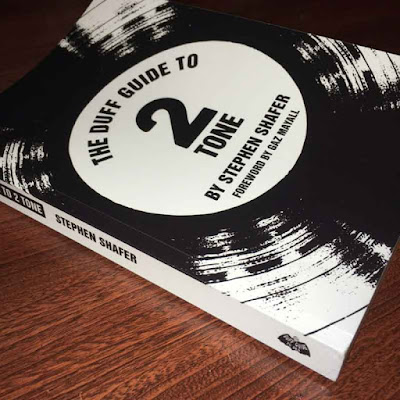
I'm thrilled to note that the The book cover features a vinyl record with the title and author name on the album's paper label.Post-Punk Monk has just published a review of my book The Duff Guide to 2 Tone. I've been a big fan of his for years, as he's written a lot about some of my favorite new wave-era acts (OMD, John Foxx, Heaven 17, Simple Minds, Japan, etc.).

Here's an excerpt of the review: "...Shafer has definitely not forgotten how socially conscious issues were at the root of Ska even from the beginning. He makes certain to thread the political issues that motivated the development of Ska throughout his narrative; painting a picture that took both the oppressive political environments and the often ecstatic musical content into account. And in that, he nails down for me what the enduring pull of Ska was to its many fans. Was there ever a more upbeat dance music that combined its boundless energy with a push for progressive social values and calling truth to power?"

You can check out the whole review here--and if you like the punk and new wave sounds of the late '80s and early '90s, keep an eye on the PPM's blog! 

+ + + + 

The Duff Guide to 2 Tone is available to purchase from Jump Up Records (USA), Copasetic Mail-order (Germany), 2 Tone Village Museum Shop (UK), and Amazon worldwide.

Tuesday, October 20, 2020

Stateside Madness Reviews "The Duff Guide to 2 Tone"!

This composite image features the cover of "The Duff Guide to 2 Tone" (which features the title on the paper label of a record), the Duff Guide logo (a take on the Batman bat logo), and Walt Jabsco and The Beat girl.
Composite image courtesy of Stateside Madness.
 Since Stateside Madness are our homegrown experts regarding all things Nutty Boys (they're the US affiliate of the Madness Information Service), I sent them a review copy of my book The Duff Guide to 2 Tone, which contains a pretty hefty chapter on Madness, and hoped for the best. Several weeks later, I'm thrilled to announce that they have just published a rave review of The Duff Guide to 2 Tone written by Donald Trull. 

Here's an excerpt: 

"The Duff Guide to 2 Tone is chock full of personal fan nuggets that elevate it above a mere collection of record reviews. I relish Steve’s finding of the exceptionally rare Rico Jama LP. I envy him for seeing Pauline Black and Rhoda Dakar play together in New York City in 2019. I admire his heartfelt reflections on the occasion of Ranking Roger’s passing. I relate to his interview with Roddy “Radiation” Byers, whom I myself had the pleasure of chatting with at length before a North Carolina gig a couple of years ago. I love that Steve mentions his favorite album by The Beat is Wha’ppen? No way, I think he and I must be the only two fans who share that oddball opinion! And indeed, his reviews have a thing or two to teach a crotchety old know-it-all like me – for instance, I had vaguely heard of The Specials’ Live at the Moonlight Club but never bought it. After reading Steve’s reverential praise for the 1979 bootleg-turned-legit release, I had to go grab it. I’m sure glad I did. Thanks, buddy."

And this is in response to my write-up of Madness' The Liberty of Norton Folgate: 

"Though it may seem anathema for someone with my obvious bias, I found myself especially enchanted with Steve’s confession that he was never the hugest fan of Madness. In his ranking of the top 2 Tone acts back in the day, Madness came in at number four, with The Specials/The Special AKA being his big favorite. He explains that he was drawn to the strong political views expressed by the Dammers crew from Coventry (as well as The Beat and The Selecter), moreso than the comparatively sunny pop sensibilities of the Nutty Boys. That’s fair enough, an opinion shared by many of my friends who have showed appreciation for British ska. Americans tend to deem The Specials the “coolest” band in the genre, I know. But when The Liberty of Norton Folgate came along in 2009, Steve had to reconsider his former assessment.

“When it seemed like their 2 Tone peers had run out of things to say,” he writes, “Madness were delivering the songs of great meaning that I had wanted from them in my youth – a concept album that promotes multiculturalism as the only path to real freedom, and the notion that the history of a place and its people has an extraordinary impact on making this possible.” This he follows with a thorough unpacking of “We Are London” and the epic title track, dissecting them with rigorous wonder. It’s some of the finest Madness analysis I’ve ever read."


Tuesday, October 13, 2020

2-Tone.info Spotlights and Reviews "The Duff Guide to 2 Tone"!

 As any knowledgable fan of 2 Tone will tell you, Jason Weir and Peter Walsh's 2-Tone.info is the best and most comprehensive website about the 2 Tone label and all of its affiliated bands. So, I'm incredibly excited to note that my new book The Duff Guide to 2 Tone is prominently featured on the home page of their website (see the screen grab at right), and highlighted at the top of their 2 Tone-related Books page (just above Daniel Rachel's Walls Come Tumbling Down, which contains a phenomenal oral history of 2 Tone from all of its major players). 

Here's an excerpt of Peter Walsh's review of The Duff Guide to 2 Tone: 

"I really enjoyed Stephen's book. He writes very well, with a personal touch and with great passion about the bands and releases while not shying away from being critical when he feels something is not quite up to scratch. One thing he does which I enjoyed a lot is give a lot of emphasis to the lyrics, something maybe we here at 2-tone.info are guilty of not doing.

The book is a guided trip through many of the 2 Tone and post-2 Tone releases which you can mostly check out as you read about them on Deezer or Spotify or wherever you stream your music from these days. As someone who hadn't checked out a lot of this music, Stephen's book was a great guiding hand and I found some very interesting music along the way.

In addition to the new music he cites, he drops lots of great titbits of info and anecdotes that even those of us who have been around the 2 Tone block will find new and interesting.

I've read a few 2 Tone related books this year and The Duff Guide to 2 Tone is right up there with them. Definitely one worth picking up."

+ + + +

The Duff Guide to 2 Tone is available from the following Amazon sites:

Amazon US
Amazon UK
Amazon AU
Amazon CA
Amazon DE
Amazon ES
Amazon FR
Amazon IT
Amazon JP

Also, copies of my book can be ordered through Copasetic Mail-order in Germany.

+ + + +

Monday, October 12, 2020

Do the Dog Skazine Reviews "The Duff Guide to 2 Tone!"

I'm both humbled and thrilled that Kevin Flowerdew of Do the Dog Skazine has reviewed my book The Duff Guide to 2 Tone in issue #107 (with Catbite on the cover) of his esteemed and long-running publication.

In case you have trouble making out the text in the photo, here's what Kevin wrote about my book: 

"An essential read is the superb new The Duff Guide to 2 Tone book by Stephen Shafer. Stephen runs one of the world's finest ska blogs, The Duff Guide to Ska, and was also Moon Records' director of promotions, marketing, and production back in the '90s. His new book boasts 254 pages packed with reviews of 2 Tone albums from all the main bands involved with the label, plus interviews with major players from the era and write ups of their more recent activities. Stephen's eye for detail is incredible and his love for 2 Tone oozes from each page. The Duff Guide to 2 Tone is available to buy online from Amazon. Make sure you snap up your copy sooner rather than later!"

+ + + +

The Duff Guide to 2 Tone is available from the following Amazon sites:

Amazon US
Amazon UK
Amazon AU
Amazon CA
Amazon DE
Amazon ES
Amazon FR
Amazon IT
Amazon JP

Also, copies of my book can be ordered through Copasetic Mail-order in Germany.

+ + + + 

Saturday, September 5, 2020

I'm Interviewed About "The Duff Guide to 2 Tone" by Charles Benoit of "Reggae Steady Ska"!

I recently had the great honor of being interviewed about my new book The Duff Guide to 2 Tone by the wonderful Charles Benoit of Reggae Steady Ska (he also plays tenor sax in Some Ska Band). Our relatively short (10 minutes or so) video is posted below. (See my pandemic beard in all of it's glory!)

Thanks to Charles for the thoughtful questions and taking the time to conduct the interview! It was fun!


+ + + +

Tuesday, August 18, 2020

"The Duff Guide to 2 Tone" Is Now Available Worldwide!

The cover features a vinyl record with the book title and author info on the record's paper label.In the mail today, I received the first copy of my new paperback book The Duff Guide to 2 Tone--and am thrilled to announce that it is now available worldwide through Amazon. So, while I'm cranking up the old Duff Guide to Ska marketing machine to promote the book and generate (hopefully positive) reviews, if you're inclined to just go ahead and purchase The Duff Guide to 2 Tone, here are the links to order it via the following international Amazon sites (and you can check out the table of contents, my intro, and Gaz Mayall's foreword through the "Look Inside" feature):

Amazon US
Amazon UK
Amazon AU
Amazon CA
Amazon DE
Amazon ES
Amazon FR
Amazon IT
Amazon JP

Also, he's some info that will give you an idea of what the book is about:

"The Duff Guide to 2 Tone features over 70 reviews of reissues of essential 2 Tone albums from The Specials and The Special AKA, The Selecter, The Beat, Madness, The Bodysnatchers, and Bad Manners, as well as write-ups of their more recent records, gigs, books, and movies—which no self-respecting fan of 2 Tone should miss! (This guide also features reviews of 2 Tone-adjacent releases that you need to know about.) Ska music writer Stephen Shafer was Moon Ska Records “director of propaganda” during the 1990s and played a significant, behind-the-scenes role in making the so-called American “Third Wave” of ska happen. With a foreword by Gaz Mayall (The Trojans, Gaz's Rockin' Records, Gaz's Rockin' Blues, and co-writer of The Bodysnatchers' "Ruder Than You"), The Duff Guide to 2 Tone draws from over 12 years of Shafer’s reviews from his Duff Guide to Ska blog—and this collection not only provides a critical overview of 2 Tone’s ever-growing body of work, it also documents the continuing and largely unwritten history of these bands, as well as 2 Tone’s lasting impact well into the 21st century."

In the coming weeks, I'll share reviews of the book as they come in, and certainly will appreciate reader feedback, if you're so moved (duffguidetoska@gmail.com).

+ + + +

Saturday, August 15, 2020

"1985: The Year American Ska Broke"

A mock-up of the cover of Wasserman's book "Ska Boom:
An Oral History About the Birth of American Ska and Reggae"
In addition to my forthcoming new book The Duff Guide to 2 Tone, I've written an introductory chapter to Marc Wasserman's superb and absolutely essential Ska Boom: An Oral History About the Birth of American Ska and Reggae (DiWulf Publishing) that's titled "1985: The Year American Ska Broke."

The thrust of my piece is that if three incredibly influential 1985 US ska releases--namely, The Untouchables' Wild Child, and Fishbone's and The Toasters' debut EPs--hadn't come out when they did, the nascent, 2 Tone-inspired American ska scene would likely have flamed out, and the massive 1990s "Third Wave" of ska in the US would never have happened. That's all I'm going to give up here--you'll have to read Marc's book to read my case backing up this claim.

Also, I'm working on putting together a companion book to Marc's Ska Boom that will contain reviews of the first releases from the bands whose oral histories are featured, including Beat Brigade, Mephiskapheles, The Toasters, The Hooters, Bim Skala Bim, Heavy Manners, The Untouchables, The Uptones, Skadanks, Gangster Fun, the NY Citizens, Second Step, Blue Riddim Band, The Scofflaws, The Boilers, The Box Boys, The Shakers, Kyber Rifles, and Let's Go Bowling. This book (tentative title: The Duff Guide to the Music of Ska Boom: An Oral History About the Birth of American Ska and Reggae) will be released by Duff Guide to Ska Publishing in paperback this fall/winter.

Lastly, I'd just like to note how groundbreaking and important Ska Boom: An Oral History About the Birth of American Ska and Reggae is. Marc sent me a draft of The Toasters' chapter for my feedback, and I found it to be incredibly compelling and informative--a really great read. I worked with The Toasters for almost a decade in the 1990s and came across many things I never knew about regarding the early history of the band, and (finally) heard from band members whose perspectives have never been previously documented. Anyone interested in ska music will need this book!

+ + + +