Showing posts with label Elvis Costello. Show all posts

Monday, April 25, 2022

Duff Review/Ska Singles Going Steady: Eric Blowtorch & The Bodyguards, King Kong 4, Smoke & Mirrors Soundsystem

(Reviews by Steve Shafer)
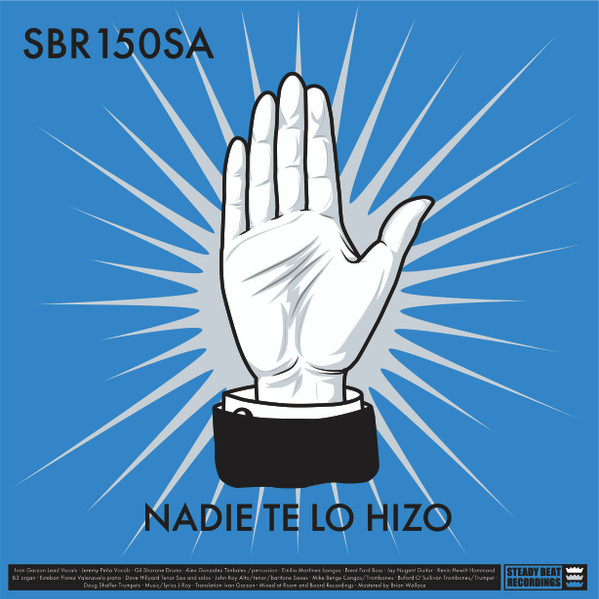
The cover features an illustration of the palm-side of a hand with light radiating from it.

Eric Blowtorch is always doing interesting and unconventional things out in his home base in Milwaukee. For the past decade or so, Blowtorch has been on my radar with incredible releases like 2018's 12" EP Horace Andy backed by Welders "Straight To Hell" and Big Youth backed by Welders "Pair of Dice" b/w Horace Andy v. Big Youth "Asylum Seekers" and Eric Blowtorch "Christmas in Ladbroke Grove" (read my review here) and 2021's triple LP (!) Quality Items (read my review here). But I feel like a dope for not realizing much sooner that I've heard his stuff going back to the '90s with his involvement with Highball Holiday (who released an album on Moon's Ska Satellite Records imprint that I ran and were featured on my comp Skarmageddon 3; and Highball Holiday are now back in action, by the way!).

With an opening guitar riff borrowed from Andy & Joey's "You're Wondering Now," Blowtorch & co.'s great digital single "Sanctuary City," is about welcoming refugees on America's southern border fleeing dictatorships and drug gangs ("Come one, come all/Lift your heart/Crack open the wall/Gunmen on the other side/But maybe love and amnesty, too/Sanctuary city opens/Millions of arms to you"). This track, released just weeks into Russia's appalling invasion of Ukraine, takes on even more significance with millions more people fleeing chaos, death, and destruction in their home countries. The question remains if America can ever find its bearings again to champion human rights and fully welcome and embrace large numbers of refugees from around the world, no matter what their color or religion. ("You're wondering how you should pay/For the way you did behave," indeed.) A portion of this single's proceeds is being donated to the International Rescue Committee, which was founded in 1933 at the suggestion of Albert Einstein (a refugee himself) to help people fleeing fascism in Germany, Italy, and Spain.

+ + + +

It's really heartening to see singer/songwriter extraordinaire Mitch Girio return with new music from his incredible King Kong 4. It's been two years since Punch It, KK4's brilliant compilation of singles, was released by Jump Up (read my review here), and during this period Girio suffered from a virus that caused some sort of brain injury. Thankfully, he's recovered and back in action. This time out, in his fantastically searing "Paper Sky" digital single, Girio sings about an embattled relationship where there's no shelter from the biting lyrics or the metaphorical bombs that rain from above (I can't help from associating this song with nuclear war with Putin's recent threats to use the bomb):

Here we go as we run for cover
Somewhere underneath a paper sky
Is there a place that's the same for lovers
Who never really try?

And you will give your word
Then try to break it


This ska-rock track--shades of Emotional Fascism (aka Armed Forces) era Costello--culminates with an unexpected and thrilling, kick-ass instrumental outro.

Girio also has contributed a hauntingly lovely cover of Umbrella Heaven's "Soulmate" ("Breaking my back for you/You never asked me to") to Perverted Pleasures, a new tribute album to this cult 1990s UK indie rock band. 

+ + + +

Smoke & Mirrors Soundsystem's quest for world dominance continues with a cracking new single released on Steady Beat Recordings. (If you don't believe me, check out the slew of records that have come out since their debut 2021 album Strength in Numbers--singles on Badasonic ("Second That Emotion" b/w "Mad World"--read my review here), Liquidator ("Mi Vida Sin Tu Amor" b/w "I'm a Man"--read my review here), and a forthcoming 12" on Jump Up Records featuring Roy Ellis and Monty Nesmith.) As Luis Correa's Steady Beat often focuses on Latin sounds, Smoke & Mirrors Soundsystem's new 7" picture sleeve single features two super crisp Spanish-language Latin ska cuts: John Roy's original "Nadie Te Lo Hizo" b/w a cover of Willie Colón and Hector Lavoe's 1973 salsa cut "El Dia de me Suerte." The theme running through this release is essentially that you should seize the day (side A's title in English is "Nobody Did It To You"; the flip is "My Lucky Day," a tale of passivity in the face of life-long woe: "Soon my lucky day will come/I know before my death/My luck will surely change"). With a never-ending pandemic, worsening global warming, and the looming specter of WWIII, it's probably time to lead your best life while you can. Everybody's got an expiration date.

+ + + +

Friday, May 21, 2021

Duff Review: The Selecter "Too Much Pressure" Deluxe 40th Anniversary Reissue!

A rude boy in a suit leans up against a wall with his head in the crook of his elbow. His pork pie hat is on the ground next to him.
(Review by Steve Shafer)

During their intense, year-long association with 2 Tone,* The Selecter always seemed to have been unfairly overshadowed in the press by their label co-directors and mates The Specials, despite that fact that The Selecter' original songs were as good (if not better) and relevant (addressing racism, street violence, alienation, and the "no future"/"nothing to do, nowhere to go" of Thatcher's England)--and their live performances just as incendiary. So, it's wonderfully fitting that of all the recent 2 Tone 40th anniversary releases, the deluxe reissue of The Selecter's debut 1980 album Too Much Pressure is by far the best. 

The triple-CD deluxe edition of Too Much Pressure features the remastered version of the original album; a second disc of related singles, their 1979 John Peel session, and several previously unreleased recordings; a third disc of previously unreleased live tracks from two hometown concerts in Coventry from '79 and '80; and excellent, copious liner notes by Daniel Rachel (read my interview with him about this project), as well as track-by-track commentary by several members of the band (it should be noted that none of the other recent 2 Tone 40th Anniversary reissues were expanded and included unreleased material from the vaults). The heavyweight LP version of Too Much Pressure (mine is clear vinyl!) features a half-speed master, plus a copy of The Selecter's debut single "On My Radio" b/w "Too Much Pressure" (in the 2 Tone sleeve)--and if you ordered a copy from the 2 Tone store like I did, they included a 7" EP containing the four aforementioned live tracks from 1980 (the '79 concert will be released on vinyl during the second Record Store Day drop this summer). Die-hard Selecter/2 Tone fans will want--and be very pleased with--both editions. 

The pairing of the Roger Lomas-produced "On My Radio" b/w "Too Much Pressure" single with the Too Much Pressure LP inadvertently underscores just how perfectly suited he was as The Selecter's producer. (First listen to the single and then the LP.) While Errol Ross did a very good job with producing the album, the tracks don't quite capture the power and punch of anything The Selecter recorded with Lomas (and there are many more examples of Lomas' work with them on the second disc of the triple-CD). At the time, according to Rachel's liner notes (and Neol Davies told me in an interview published in The Duff Guide to 2 Tone), the choice of Ross as producer was controversial within the band (Davies wanted Lomas, but more members of the band voted for Charley Anderson's friend Ross) and none of the band members were completely satisfied with the end results. So, Lomas was recruited again for "The Whisper" single and the band's sophomore LP Celebrate the Bullet--a very under appreciated album--read my write-up of it here. (The Specials had a similar issue with Elvis Costello's production for their debut album; he didn't quite capture the band's sound in the studio as well as Dave Jordan (More Specials) or John Collins (Ghost Town EP), which was evident when the bootleg Live at the Moonlight Club hit the streets prior to The Specials and the former made for a much better debut album--read my review of official 2 Tone/Chrysalis 2014 release of Live at the Moonlight Club here.)

Disc two of the CD set ("Singles, B-Sides & Rarities") contains a fantastic, previously unreleased, alternate (and more urgent) take of "Three Minute Hero" produced my Lomas for the band's lip-synched 1980 appearance on "Top of the Pops" (Errol produced the version released on the single). There's also an awesome, unreleased synth-washed version of "Cool Blue Lady" which was recorded by Lomas during "The Whisper" sessions (a second version of the track appeared on Celebrate). I learned from the liner notes that the superior version of "Street Feeling" on this disc that was included on the 12" of "The Whisper" was actually from the "On My Radio" b/w "Too Much Pressure" sessions (as Gaps said, "We recorded three songs and let the record company choose [what was on their first single]"). And rounding out the unreleased material on this CD is a brilliant medley/mash-up of Lee Perry's "A Live Injection," a bit of Tommy James and the Shondells' "Mony Mony," and "Too Much Pressure" recorded during a soundcheck in 1980. Plus, if you never got your hands on a copy of the "Ready Mix Radio" version of "On My Radio" done by Lomas and released as a freebie on flexi-disc for the first issue of Flexipop magazine in November of 1980, here's your chance to hear it (I have the flexi, but the track sounds loads better on CD). 

The majority of live material on disc 3 of the CD set is from The Selecter's November 1979 concert at Tiffany's in Coventry, which was part of the UK 2 Tone Tour with The Specials and Madness. The Selecter had only been together for about six months at this point (and they were slated to start recording their debut album the next month), but their songs and performance are absolutely magnificent. Of course, it helped that most of the members of The Selecter previously had played together in other Coventry bands like Hard Top 22 and Neol Davies already had ace material that he written and performed ("On My Radio," "Out in the Streets," and "Street Feeling") with The Transposed Men (which included The Specials' John Bradbury and Desmond Brown). But still, it's extraordinary how good and confident and entertaining the band were so early in their existence. 

One of the greatest stories revealed in Rachel's liner notes comes from their first recording session with Roger Lomas. The producer had seen them opening for The Ruts and knew that "On My Radio" was perfect for their debut single, but he didn't know the name of the track. When The Selecter played their set for him, but he didn't hear that hit song. So, Lomas asked if there was anything else and they responded "On My Radio," but they were reluctant to play it, because they thought it was like "a bloody Eurovision Contest song"! 

This definitive edition of Too Much Pressure brilliantly documents The Selecter's enduring 2 Tone legacy. Get it! 

+ + + +

(*They left 2 Tone for Chrysalis proper for "The Whisper" and Celebrate the Bullet releases.)

+ + + + +

Thursday, September 3, 2020

Duff Guide to Ska Bullet Points: King Kong 4, and The Red Stripes!

(Reviews by Steve Shafer)
  • After raving about their series of digital singles and EPs released over the past several years, I'm thrilled that King Kong 4--which features members of Canadian ska acts King Apparatus, Prince Perry, and Lo and the Magnetics, led by KA's Mitch Girio--have released Punch It! (Black or blue vinyl LP, Jump Up Records, 2020), a compilation that assembles all of these tracks on one knock-out slab of vinyl. If you've missed out on this band previously, King Kong 4's sound is 2 Tone plus power-pop, the dark ska tracks on More Specials meets the bite of This Year's Model, with songs that breathe life into stories about personal, everyday dramas (love, mostly), and some about matters that have more ominous implications for everyone. The lead-off (and best) track here is "Profile Of A New Elite," which is about the awesome power parents have to raise either good and decent human beings or menaces to society, while "Speaking for the Skeptics" (which features a new music video) is concerned with unrequited love with a telephone psychic (both are from the 2017 single More Than Just a Plateful, which I reviewed here). The spaghetti Western ska instrumentals "Going A Bit Mad in Our Own Way" and "To Lose Before You Start" were inspired by Nevil Shute's post-World War III/doomsday novel On the Beach, where the last bits of humanity in Melbourne, Australia wait for the the nuclear fallout to reach and kill them (these are from their 2017 EP There's Not Much That You or I Can Do About It, which I reviewed here). "Breaking My Heart Again" is about loving someone who's unavailable from a distance, and "Annabelle" is coming undone by mind-altering drugs and/or mental illness (both are from KK4's 2017 single You Lie Awake, which I reviewed here). "It's Quitting Time" celebrates the daily five o'clock whistle, "Taking Back the Ring" is about repeatedly forgiving a repeat cheater, the end of the night "Drink In Your Head" is about assessing what transpired while you were under the influence, and "Grenadine" is mean to you, but you love her anyway (all are from their 2018 EP Songs for Olly, which I reviewed here). And, even though I missed writing them up, "Lessons Learned" ("You promised to be my honey/Before you took all my money/Lesson learned and know I know/It's all for naught") and "All Those Wasted Days," which urges a friend to get out of the pleasant and easy, but soul-killing suburbs to fulfilling the longing for "someone or something, someplace else," are equally as excellent as everything else here (and are from the 2017 single If Those Rays Don't Kill You First). Can an album of tracks from several yesteryears be a contender for one of the albums of this year? I certainly think so.
    The cover features a collage of photographs of each band member performing.
  • Hong Kong's Red Stripes have released a terrific, free (or pay-as-you-wish) album titled The Live Sessions (Digital, Mod Sound Records, 2020), which features a healthy mix of tracks from the band's two albums proper, In the Ska East and Made in Hong Kong (read my reviews of them here and here). These recordings, captured live in the studio in front of an invited audience, are both warm and bright, and the band's performances are spot-on and spirited--proof positive that The Red Stripes have the goods in performance. While the song arrangements don't deviate much from their album versions, it is good to hear some of your favorite tracks out in the wild, so to speak (particularly "Made in Hong Kong," "Don't Build Twice," "Rude Rude Rude," "Innocent," and "Big Boss Man"). And it sure sounds like these were fun nights to be in the crowd.

Sunday, January 5, 2020

Duff Guide to Ska: Year of Reviews--2019--Part III: Babylove and the van Dangos, Catbite!

(Reviews by Steve Shafer)

Babylove and the van Dangos The Golden Cage (LP, self-released, 2019): The excellent sixth album from this Danish neo-trad ska/rocksteady/soul powerhouse of a band is a sharp critique of what it's like to live in a society where the accumulation of wealth, status, and power is everything--conveying great unease, ambivalence, sorrow, and indignation about the way things are through a collection of catchy and seemingly chipper tunes written mostly by vocalist Daniel Broman (that often sound like the singer is trying to woo a lady not decrying extreme income inequality or the spiritual emptiness of materialism). The record starts with one's end in "No God Above the Bottom Line" (think of how the sunglasses in the movie "They Live" reveal that "This is your God" is printed on all of those dollars) and that the ritual of publicly commemorating your own death is often the last opportunity to show off your deep financial resources: "It's the coins that we place on your eyes/And the check you write us to cry/The champagne you never get to taste/So, let's chuck another nugget on the scales and pray that we'll be fine/Because there's no god above the bottom line." "Golden Cage" points out the grievous damage that our unfettered capitalist system inflicts on the souls of the rich, the lives of the poor, and the very planet that sustains us ("Some may win but many must lose/I see dead eyes and expensive shoes... and when the sea's rising/and when the fields burn/What you gonna buy with the money you earn?"), while "Her Dress Is New" observes how women are confronted by a King Solomon-like choice between work and life when making a go of it in the corporate world ("She can't afford a boyfriend/To take time from her career/'Cause she's climbing up that ladder/And it's slippery up there"--shades of Perry/Romeo's "War Ina Babylon" in that last bit: "It sipple out deh"). One can't help but assume that "Lazy Little Me" is an autobiographical track--the singer can't fathom employing his talents "to write songs in a factory/Churning out generic bullshit for an industry/That's just looking for a hit..." He finds fulfillment and can eke out a living writing ska songs instead (rejecting capitalism's sirens' call to commodify his art), though not everyone has the luxury of opting out of the system in this manner (see the drug dealers and street kids depicted in "Cigarette Boy"). Of course, wealth's close companion is power (a currency of its own used to achieve/maintain wealth and social/political control). "Sledgehammer" addresses the Trumpian outrage machine that keeps manufacturing enemies and threats in order to manipulate followers for his own ends and prevent them from developing empathy for and solidarity with anyone outside the cult of MAGA dead-enders ("You've got to give the people what the people want/And keep their eyes off what it is they really need/You've got to keep them hungry, you've got to keep 'em mean/You've got to starve out compassion and keep feeding the greed..."). And the rise of authoritarian leaders around the globe is noted in "Old Man Trouble," which reminds the listener that the fascists are always with us, lurking, waiting for things to fall apart just enough so they can make their move ("It's the same old faces/In the same old lines/And the same old hatred/Trickling down through time/It's the same old bodies/In the same old graves/And the same old feelings/Making us their slaves/Oh and it's the same older leaders/It's the same old lies/And we say we won't forget/But my how time it flies..."). The Golden Cage also features love songs, mostly about relationships going bad ("The Cracks," "Bleeding Me"), but there's some happiness to be had (see "You Do, So I Do"), and several fine instrumentals (particularly, "Mexiskaner"). The choice of album cover artwork may be intended to remind one of the 1968 version of "Planet of the Apes" and all of its pointed commentary on humanity's tendency toward cruelty, selfishness, and self-destruction (much of it by Rod Serling). At the very opening of the film, as astronaut Charlton Heston prepares to return to Earth after they've been away six months but 700 years have passed on the planet, he wonders, "Does man, that marvel of the universe, that glorious paradox who sent me to the stars, still make war against his brother? Keep his neighbor's children starving?" (And later in the movie there's this passage read from the sacred scrolls of the apes: "Beware the beast Man, for he is the Devil's pawn. Alone among God's primates, he kills for sport or lust or greed. Yea, he will murder his brother to possess his brother's land. Let him not breed in great numbers, for he will make a desert of his home and yours. Shun him; drive him back into his jungle lair, for he is the harbinger of death.") If you like sweet-sounding ska music to pack a lyrical wallop and speak to what's going on in the world around us, then The Golden Cage is for you.

Catbite Catbite (Pink, yellow, or splatter vinyl LP/digital, Bad Time Records, 2019): On Catbite's debut album, they sport this incredibly appealing and melodic 2 Tone-New Wave-power pop sound that's both retro and completely fresh. I hear echoes of Blondie, Elvis Costello, The Specials, The Selecter, King Kong 4, King Apparatus, and others (and you'll bring your own set of bands to the table after listening to this record), but this set of songs is fully theirs. Just about all of the lyrics on Catbite are about one's oftentimes complicated feelings for others--and the music (as well as Brittany Luna's singing) does an ace job of expressing the range of emotions behind them. The record races out of the gates with "Come On Baby" ("...let's have some fun!"), which is about the blast of out-of-controlness that hits you when you fall for someone hard (""I'm scared of losing/Like I've lost my mind/That's how I feel whenever I'm not near you")--it captures the same intense, ragged desire/longing/euphoria as X's cover of Jerry Lee Lewis' "Breathless." "Amphetamine Delight" compares the joys of being with someone to the rush/high of speed. The brashly unapologetic "As You Will" is about using revisionist history as a coping mechanism ("'Till I change memories to what I want 'em to be/I'm not lying if I'm lying to me/Take it as you will/But that's how it's gonna be"). "Can't Give You Love," with all of its '60s girl group-like touches, is devastatingly beautiful in its sharp clarity and honesty: "Is it bad/That I don't think of you when I'm out with my friends?/I keep my thoughts to myself lately/And let them fill up my head/Wish that I could change/And be the flirt that you want/But it's not written in the stars for us/And I can't give you love." I bet Costello wishes he could still write such a hook-packed song like "Sneaky Feelings" that would fit right in with tracks from his late '70s glory days; and the conflicted-ness about where one's true emotions lie is pitch perfect ("I can't let those kind of feelings show/I'd like to get right through to the way I feel for you/But I still got a long way to go..."). Don't let Catbite pass you by--and make sure to keep an eye on what this wonderful band does next.

+ + + +

Thursday, September 26, 2019

Uncut's "The Ultimate Genre Guide: 2 Tone"

(By Steve Shafer)

Apart from the absolutely fantastic Selecter/Rhoda Dakar show that I caught recently here in NYC (read my review), I've been pretty disappointed at the general lack of 2 Tone 40th anniversary events, releases, etc.--and I'm sure I'm not alone in feeling this way (the half-speed remastered, billionth re-issue of The Specials' debut LP, along with the box set of re-issued 2 Tone 45s that most die-hard fans already have collected over the years are okay for newbies, but pretty thin gruel for anyone else). And, yes, we get it--a whole lot of people in these bands are still mad at each other for transgressions of varying degrees committed over the years and more than happy to continue to take public swipes at each other in the press. Perhaps it is too much to expect our musical heroes--who promoted things like tolerance, love, and unity back in the day--not to have clay feet like the rest of humanity. But in many ways, this anniversary isn't really about the 2 Tone bands and label, but the multitude of fans worldwide for whom this music is still incredibly relevant and treasured. The 2 Tone faithful would have been so happy and grateful if everyone still standing (RIP Rico, Brad, and Roger) could have temporarily put aside their differences, issued some previously unreleased music from the vaults, and played some reunion concerts in key cities around the world. You know, put some effort into it. They owe this to the fans.

+ + + +

One 2 Tone 40th anniversary-related release that is definitely deserving of fans' attention is Uncut's "The Ultimate Genre Guide: 2 Tone," which contains newly written/considered overviews of each band's career (though I take enormous issue with John Lewis' trashing of The Beat's Wha'ppen?, which is one of my favorite albums of all time), as well as reprints of late '70s/early '80s pieces and interviews with all the bands from Melody Maker and NME (which are worth the price of admission in themselves!), and new articles like "The Ska Roots of 2 Tone" and "The Best 40 Ska Singles." In short, this magazine is a 2 Tone 40th anniversary souvenir book of sorts--and something that I'll be keeping on the bookshelf to refer to over time, along with all of my other ska and reggae books.

+ + + +

Wednesday, February 20, 2019

Duff Guide to Ska Fast Takes: The Captivators, Do the Dog Skazine, The Frightnrs, King Kong 4, and Well Charged!

(Reviews by Steve Shafer)

The Captivators Need a Lift? (digital EP, self-released, 2018): While I'm not sure how lead track "Ass, Gas or Grass" from Washington DC's Captivators' debut EP comports with these Me Too times, it is pretty smart-ass and funny (it's based on an old bumper sticker that you'd used to see back in the '70s and '80s when hitchhiking was a pretty common thing: "Ass, Gas or Grass: Nobody Rides for Free"--which pretty much sums up the American ethos). And it gives you the correct first impression that The Captivators are all about being completely entertaining while having a blast--which they definitely do on this release (the band is Alex Daniels on drums, Bill Wade on vocals and t-bone, Charles Freedman on bass, Dan Hauser on guitar, Jaime Soto on sax, and Mark Allred on trumpet and keys). The recording itself is a serviceable DIY effort (made in a band member's basement), but the songs and performances are definitely there (their sound, attitude, and vision lurks somewhere between The Scofflaws and Gangster Fun). Key tracks include "Piltdown Man" (about a 1912 paleoanthropological hoax--someone claimed they found the "missing link": "The Piltdown Man/Was such a scam/Skull of a man/Jaw of orangutan/It makes me sad to hear that gadgeteer/Could gain such fame from such a claim/The crowd he'd awed with his defraud/That charlatan Charles Dawson"), "Poor Jimmy" (about an innocent kid chewed up by one of America's foreign interventions: "He had to see things he never should have seen/He had to do things he never should have done/And at the tender age of 19/They were through with Jimmy when the war was won"), and "The Inbetweeners" (a nod to those kids not cool enough to be cool, but not nerdy/freakish enough to be outcasts). After hearing this EP, you'll be jonesing to see them live.

Do the Dog Skazine (Printed skazine, monthly, Do the Dog Music): This longest running skazine continues to be the best and most comprehensive source for info about the global ska scene. Nobody does it better. It's only available via subscription (you receive printed issues in the mail!), but worth every penny.

The Frightnrs "Never Answer" b/w "Questions" (7" black or color vinyl single, Daptone Records, 2019): These two tracks from The Frightnrs' stellar, digital-only 12/21/12 EP (which we reviewed here) have finally made their way to vinyl. The Lovers Rock-ish/Sugar Minott tribute "Never Answer" is about the tension in a relationship that arises when others try to sow the seeds of mistrust in order to destroy it (the solution: ignore the haters and focus on what you've got). The flip side is a fantastic dub version by Victor Axelrod (cheekily titled "Questions"). This single is yet another testament to late singer Dan Klein's considerable talents--and reminds one how much he is missed on the scene.

King Kong 4 Songs for Olly (digital EP, self-released, 2018): The four cuts on this EP were originally written by Mitch Girio for his friend Oliver Will in the German trad ska/calypso/mento band The Loveboats, but they broke up soon after Girio demoed them back in 2011. Fortunately for us, Girio revisited and refashioned these winning tracks for his own incredible King Kong 4 (Brendon Bauer on bass, Andrew McMullen on drums, and Ronald Poon on organ). Given their genesis, these songs skew a little more toward trad ska than their typical late '70s Elvis Costello/Joe Jackson/2 Tone sound (which is in no way a drawback). Like most of Girio's compositions, these are fully realized, universally relatable, everyday dramas--someone desperate for the Friday five o'clock whistle to sound (but they're dreaming of leaving for good: "I've been here all week/I can't take one more/I'm itching to leave/I'm scratching at the door"); lying in bed after an evening of drinking and assessing/regretting all the dumb things said and done ("Drink In Your Head"); being in love with someone who's just plain mean to you ("Grenadine," which thematically seems so calypso); and repeatedly finding someone cheating on you, even after you keep forgiving them ("Taking Back the Ring"). This is yet another dynamite King Kong 4 release in an ever-growing string of them. Highly recommended.

Well Charged Lift Up Sessions EP (CD EP/digital, self-released, 2018): First off, you need to know that this debut release from Charleston, SC's Well Charged contains some seriously good vintage ska, rocksteady, and reggae (founding members Vasily Punsalan on bass and John Picard on drums did a long stint backing John Brown's Body's singer Kevin Kinsella and it shows; they recruited David Hillis on organ, Andrew Link on lead vocals and guitar, and NYC transplant Megg Howe on backing vocals; Agent Jay of The Slackers, mixed, dubbed, and mastered this EP). The two keyboard-focused instrumentals remind one of Jackie Mittoo Evening Time-era tracks, while two of the rocksteady vocal cuts sound like songs Phyllis Dillon would have covered. "A Dozen Roses" and its melancholy version "Red Roses" are about falling in and out of love--check out these lyrics from the latter: "Fall in love, you can, fall in love/Just look out the stem has thorns/If she's really lovely, find it necessary/Check out her head for horns." Make sure to keep your eye on this band.

+ + + +


Thursday, November 30, 2017

Duff Review: King Kong 4 "More Than Just a Plate Full" Single

Winterbeard Records
Two-track digital download
2017

(Review by Steve Shafer)

Given the unbelievably disastrous times we live in (at least here in America), it's hard for me not to think that the kids-learn-bigotry-at-home lyrics of King Kong 4's fantastic "Profile Of A New Elite" are anything but a blunt commentary on the current American president's pernicious and brazenly open cultivation of white supremacists, neo-Nazis, Islamophobes, and their despicable ilk ("Well, boys it's not unlike your father to be hateful/So, eat up because it's not polite to be ungrateful/Deep under every home there's buried a secret/Daddy's digging them out, should they think to keep it/Every member of every family is guilty/Oh, guilty/It's a guilt that is not allowed..."). Then again, it could just be about the awesome power parents have to raise either good and decent human beings or menaces to society.

"Speaking for the Skeptics" is a charming--if melancholy--song told through a paranormal lens about unrequited love with a telephone psychic ("The medium is love/The message is extrasensory/Because you won't even look at me /Clairvoyance has its charm, you said/So does telekinesis, my dear/Use it to let me know you're here/I have had enough/J.B Rhine, or Mirabelli/Well, they might have seen the time/or the love that I'm sending you/But then you won't read my mind/What's the word that I'm searching for/When it's you I want to find/Trying to make that connection/But you're always on the line"). It reminds me of a sticker on a lamppost I see every day on the way to work: "The only magic I still believe in is love."

These are incredible songs (think late 70s Elvis Costello/Joe Jackson meets The Specials) by a stellar band that many more ska fans should make a point to know (and will then love!).

+ + + +

Want more King Kong 4? Read The Duff Guide to Ska reviews of their There's Not Much That You or I Can Do About It and You Like Awake EPs.

+ + +

Monday, February 13, 2017

Duff Guide to Ska Fast Takes: King Kong 4 "You Like Awake"

(Review by Steve Shafer)

King Kong 4 You Lie Awake (digital single, self-released/Bandcamp, 2017): If you mention that Mitch "King Kong" Girio was a key member of early '90s Canadian ska act King Apparatus (which, of course, featured Chris Murray), most ska fans would know the reference, but some might not be aware that he's been the go-to songwriter and producer for a slew of mostly Canadian bands including The Planet Smashers, The Kingpins, One Night Band, Prince Perry, and more. His most recent work has been in service of Susan Cadogan (check out our review of her incredible Take Me Back EP; Girio co-wrote all the tunes, as well as performed, recorded, and produced them), but now he's just released a great digital single for his own Toronto-based group, King Kong 4 (which includes Brendan Bauer on bass, Andrew McMullen on drums, Ronald Poon on Hammond organ, King Kong Girio on vocals and guitar).

King Kong 4's sound is a cross between the late '70s New Wave angry young man songwriters Elvis Costello and Joe Jackson (both of whom recorded ska/reggae tracks early on in their careers) and the 2 Tone of The Specials, but this kind of sells Girio's songwriting short--he's got his own thing going and can compose hooks like mad. "Breaking My Heart" is about love from a distance--the singer with a crush on a girl in the audience who he can't quite compel to dance to his band's music, which would be kind of like them being together (but she's with her "dead weight of a boyfriend"): "So get your ass onto the floor, girl/You better shake those hips/So what you think we play this shit for?/Can’t you read my lips?/It’s time to make a move, so act now/You can do the Twist /Just a little bit of dancing/Then you can’t be wrong /Just a little bit of dancing/Dancing all night long." "Annabelle" might be about a girl losing herself on an LSD trip ("Your world has come undone/Quickly dissolving on your tongue") or to growing paranoia/mental illness ("With no one to absolve you/Because the problem still revolves around the fear/That’s floating in the atmosphere/That’s coming oh so near"). Whatever the issue is, she's worried about being forgotten: "When half the world is slumbering/You lie awake half-wondering/Who will leave something here for Annabelle?" Both songs have an undercurrent of longing and melancholy, but the music is wonderfully catchy and upbeat.

Don't let this terrific release from King Kong 4 pass you by!

+ + + +


Saturday, June 4, 2016

Duff Review: "Outside The Lines: Lost Photographs of Punk and New Wave's Most Iconic Albums"

Matteo Torcinovich with Sebastiano Girardi
Octopus Books
2016

(Review by Steve Shafer)

The subtitle of this beautiful collection of photographs is a bit of a misnomer, as the previously unpublished shots presented here are from the same photo sessions that produced many of the iconic punk and new wave album covers that we've come to know and love and were mostly just long forgotten in the photographers' archives. Rather, these are the contenders that, for whatever editorial and aesthetic choices were made at the time, didn't make the cut (maybe it would have been more punk rock to call these series of pictures the "rejected photos..."). Either way, it's a fascinating, "backstage" look at what might have been, had any of these alternative shots been used on these classic punk and new wave LPs.

A few years ago, Italian graphic designer and punk/new wave afficionado Matteo Torcinovich was looking at the LP cover for the Damned's debut album and wondered if there were other, associated shots from that session. So, he contacted the photographer Peter Gravelle and, to Torcinovich's surprise, they began a long correspondence, which resulted in Torcinovich getting his hands on the unused Damned album cover pictures, which fueled his desire to track down many more of these discarded cover shots. After combing through his own record collection, selecting 150 of his favorite punk and new wave records from 1976 to 1982, Torcinovich reached out to all of the photographers involved and the results (if the photographers were alive, cooperative, and hadn't lost the negatives to time) from 46 cover photo sessions (for bands like the Ramones, Ian Dury, Ultravox, Blondie, Elvis Costello, David Bowie, Lene Lovich, The B-52's, The Cure, PiL, John Foxx, Echo and The Bunnymen, Suicide, Bauhaus, and more) are presented in "Outside the Lines."

Ska fans and long-time readers of this blog, in particular, will want to take a look at Chalkie Davies' alternate shots for The Specials' debut record, one of which (the blue tinted shot) is pretty fantastic.

There are several essays that provide pop-cultural context for this musical era (the best is probably the one by Glenn O'Brien, known for his columns in "Interview," "Art Forum," "Spin"--and in one of Torcinovich's two essays, the biggest revelation is that he discovered who took the cover shot of Iggy Pop's The Idiot--it was always assumed to be Andy Kent, who took the Lust for Life photo--but was, in fact, a one-off, black and white Polaroid taken by Iggy's friend and collaborator David Bowie!), as well as short introductions to each series of photos related to these album covers. Some of the intros contain fascinating and insightful quotes from the photographers about their work (such as Martyn Goddard's recollections about shooting The Jam's In the City cover and Jim Rakete's on the Nina Hagen Band cover), but all too often you're left craving more details and factoids. Having said that, the images and contact sheets presented here are generally nothing less than stunning and will be eagerly sought out by new wave and post-punk fans (if you have "This Ain't No Disco: New Wave Album Covers" on your shelf, this book is for you!).

+ + + +

Monday, November 23, 2015

The Duff Guide to Post-Punk Gig Review: Public Image Ltd. at The PlayStation Theater, NYC, on 11/16/15!

John Lydon and PiL telling it like it is.
Editor's note: Forgive me that I'm breaking with my mission to cover ska here, but as you many have realized, I'm a massive fan of new wave and post-punk, and may occasionally cover a bit more of those genres here in the future. Yes, it muddies the waters a bit, but everything in my life is a bit messy. Ignore this post if you only want ska. 

"An Evening with Public Image Ltd."
PlayStation Theater, Times Square, New York
11/16/15

(Review by Steve Shafer)

Following the barbaric terrorist attacks on Paris just a few days earlier, it was probably prudent that the heavy security measures one had to go through in order to enter the Public Image Ltd. show had been enacted. Every concertgoer received 1) a full-body pat down, 2) had a metal detector run over their arms, legs, and torso, and 3) their bags, if any, were thoroughly searched (afterwards, I felt like I should have been locating my departure gate). But waiting that night on the long line to enter the venue with all of the graying and stout forty- and fifty-something PiL fans (and a smattering of young punks!)--with all of the Times Square tourists swirling around us (who had no idea who PiL were when they asked what we were queued up for)--and then going through the airport-style security, it all felt somewhat absurd and surreal, like we had lost our bearings (fear of possible attack wasn't usually part of the equation). We were gathered there for the music, perhaps a message, and certainly for a bit a fun with our friends (as were our compatriots at the Bataclan...). It never crossed my mind not to go see PiL, but the mass murder in Paris had imposed new meaning on attending their show that night. Yet, I doubt that it was anyone's primary intention for it to be an act of defiance (though, more on that later).

Did some of us feel guilt or shame to be participating in the same, seemingly innocent type of event that resulted in so many people being killed? Perhaps. (Guilt washed over me while I was waiting on line, watching the Times Square news ticker displaying the latest, horrific updates from Paris...) I suppose the indiscriminate slaughter of music fans and cafe-goers was meant to cow all of us in Europe and America into giving up the pleasure of going out with friends to a gig or for a drink and a bite to eat--the fun stuff that unites us and strengthens our bonds with each other. So, the only rational response for the average person living in a free society is to keep on doing these things--to ensure that they continue to be possible, even in uncertain times. And that's just what we all did, consciously or not.

The PlayStation Theater is in the sub-basement of an ugly, behemoth of an office building, which houses MTV and Viacom (and explained the music industry-types I encountered at the bar). When I descended the long staircase and entered the actual concert hall (which was comprised of two open, dance floor levels and a balcony with theater seating), it dawned on me that I'd been in this venue once before, when it was the former Loews Astor movie theater. The last time I had been there was in 1977, when I was eleven, to see "Star Wars" for the first time (shown on a 70mm print!). Mind blown, then and now.

There was no opening act for PiL, but plenty of fantastic dub reggae pumping out of the PA, no doubt selected by John Lydon (AKA Johnny Rotten), who's been a huge, very knowledgeable reggae fan since his teens. The 2,100-capacity theater was nearly full when Lydon and his PiL bandmates--Lu Edmonds (Mekons, Damned) on guitar, Scott Firth (Elvis Costello, The Spice Girls!) on bass, and Bruce Smith (Pop Group, Slits) on drums--hit the stage for two hours of completely blistering and mesmerizing post-punk/dance-rock. To be honest, I never expected it to have been this good.

Ever the sharp provocateur, Lydon--at almost 60 (!)--gave one of the most animated, funny, engaging, and compelling performances I've ever seen. Not one moment was phoned in; he gave it his all throughout the entire set, like it was the only gig that would ever matter (how exactly can his voice survive night after night of this?!). Madly gesturing, mugging, and making eye contact with seemingly everyone in the crowd, Lydon caterwauled, bellowed, spit out, and sang (as only he does) gleefully defiant songs challenging convention, power, and authority (more on that later), on tracks ranging from PiL's first single in 1978 ("Public Image") through key selections from their new 2015 album, What the World Needs Now... (released on their own PiL label). And it seemed like every song was presented in its expansive 12 inch version, long enough for us to fully inhabit it--to become transfixed by the rhythm section's Rock of Gibraltar-solid grooves and Edmonds' slashes of (what else?) angular post-punk guitar, so Lydon could have all the time he needed to convey his voluminous thoughts on a particular subject. ("Religion" must have been about 10 or 12 minutes long--I watched the first five minutes, then went off to empty my bladder, and returned in time for the last few minutes of the song and its theatrics: The very Jesus-like Edmonds was presented as the Son of God, while Firth played the Devil.)

Fairly early in the set, during a fantastic rendition of "This is Not Love Song," Lydon bitingly (and somewhat outrageously) commented (to loud cheers), "Sommme people cancel concerts--weeee never cancel concerts!" It was a cheeky piss-take on U2 and their cancelled Paris show, diminished a bit by the relative safety of our perch, way over on this side of the Atlantic. Nonetheless, it endeared PiL to the fans and was an acknowledgement of the unusual context of the evening (plus, it a was a tweak of Bono's nose!).

Almost half of their 15-song set was filled with new tracks from What the World Needs Now...--and in their live permutations, they fit in seamlessly with much of PiL's older hits. I particularly liked "Double Trouble," "Bettie Page" (about our repressed, but sex-obsessed American society), "Corporate," and a positively menacing "Shoom" (which was so much better realized live than on its recording). Of the tracks they performed from PiL's back catalogue, "The Body" (1987) was the ferocious highlight of the bunch, with the crowd singing along with the backing vocals, as Lydon wailed above us. (I've always thought "The Body" to be one of PiL's most perfect/catchy post-punk dance songs, one that recognizes society's oftentimes predatory sexual pursuit of women, but advocates responsibility--parents must raise children who will grow up to be good, decent human beings, which includes teaching them to use birth control--shades of "Too Much Too Young"--to avoid unwanted pregnancies and abortions!).

In particular, organized religion and tech/social media companies came under searing attack. The best line in "Religion" was, "Why should I call you father? You're not my Daddy!" And before "Corporate" began, Lydon sincerely (!) implored us to remember that, "Weeee are the one, all of us!" (as he pointed around the room in an inclusive, circular motion)--before ranting about how all of our devices and social media have effectively killed off ("Murderer!") real human relationships/interaction (and our capacity for empathy) and replaced communities with sham connections that serve to separate/divide us and bring out our very worst instincts ("Not global villages/But one globe/Not itty bitty little villages/of pity and learning how to/survive in the 21st century/And looking at World War III/Because all humans seem to hate humanity"). Indeed, the message between the lines this evening was that institutions are suspect, but that we do belong to--and have a responsibility for--each other (in the recent Vive Le Rock #30, Lydon states, "I like the idea of a caring society. Guess what? I became an American citizen because of Obama; he promised Obamacare and delivered on it.").

The final track before the encore was "Shoom," with its chorus of, "What the world needs now is...Fuck off!" and a fantastic, pulsing bass line (the chorus of the song is, presumably, a take on the 1965 Hal David/Burt Bacharach pop song "What the World Needs Now is Love," which was a hit for Jackie DeShannon that same year). It took us all a little while to catch on that Lydon wanted us to do the "Fuck off" part of the chorus, when he dangled the microphone and stand over the audience, like a mad boom operator. Eventually, we got it and heartily shouted our expletives (in a song chock full of them!). Lydon doesn't presume to have the answers to the host of global and personal problems that we're all facing. He most certainly thinks you should think up your own solutions. But he also firmly believes that you should call out anything and everything that is false--"bollocks"! (God forbid, you try to fool him: "Do you think that/You can play me/Do you think that/You can sway me...I'm working class, me/Right at the start/I'm horse and cart, me/Right in the heart/Four to the floor, beat/Grove in the heat/I'm always complete/I come from the street!")

The encore consisted of a spirited, yet somewhat ragged, "Public Image"--which elicited a massive roar of approval from the audience--and everyone sang along to the Irish blessing chorus of PiL's oblique but phenomenal 1986 anti-South African apartheid hymn "Rise." (It should be noted that the lyric,"Anger is an energy" is not a call to riot; Lydon also explains in Vive Le Rock #30 that after he contracted spinal meningitis as a young boy, the illness, "also took my memories for four years and that was a very long, slow process to regain my personality, to regain my life, and that's where the concept of "anger is an energy" comes from. The doctors were advised to not make life easy for me, to keep me angry, to spur the memories back...For me, "anger" has never been a violent thing, it doesn't represent hate or anything like that. Anger to me is a very positive force in my life. When I had the opportunity to use it the song "Rise," that is what I was trying to explain. But I never fully developed on it to an audience. I just hoped that people would pick up on it...It is an anthem. It's about hope. It's a hope-filled song. It doesn't preach violence or hate. It's odd that people think that. I've never preached those things. Unless it's against institutions; I hate them. Not people. There is a difference.")

When Lydon had sung his final, triumphant "Anger is an energy" and the lights came up, the crowd stayed put and applauded and cheered for at least a full five minutes, possibly more. What we had witnessed and experienced was so extraordinary, that we couldn't permit PiL to leave the stage so quickly. (Did we need time to process all that had take place--a moment to transition back to our normal lives?) Lydon was visibly touched by the reaction and thanked us all repeatedly. Before he finally exited the stage, Lydon waved his arm across the audience, pointed and stared at a wide swath of us, and slowly said, "I see all of you."

And I believe he did.

+ + + +

PiL's set list, New York City, 11/16/15

"Double Trouble"
"Know Now"
"This Is Not a Love Song"
"Bettie Page"
"Deeper Water"
"Corporate"
"Death Disco"
"The One"
"Disappointed"
"The Body"
"Warrior"
"Religion"
"Shoom"

Encore:
"Public Image"
"Rise"

+ + + +


Friday, September 11, 2015

Reasons To Be Cheerful, Part 3: More Tributes to Rico

Earlier this week, Jools Holland posted a lovely tribute to Rico on his website. This is the best part:

"He was an originator and a unique person in 20th Century music. He bridged the gap between early Jamaican music and modern British ska pop music. As a man, he was my friend and a great friend. I toured the world with him and spent as much time enjoying his company as his music. He had a great knowledge on many subjects from the Old Testament to horseracing; his personality and sound were as one and both adorable.

I know I speak for my whole band when I say I will miss him both as a friend and as a fellow musician."

+ + + +

Music industry "bible" Billboard published a fairly cursory obituary for Rico Rodriguez, which included tweets from Elvis Costello and Tony Kanal of No Doubt.

+ + + +

Public Radio International has a nice remembrance of Rico on their website.

+ + + +

If you happen to have a subscription to the London Times, I'm told they've printed an excellent half-page Rico obituary (you can only read the first two paragraphs until you hit the pay wall).

+ + + +

The Brooklyn Vegan notes (via Bim Skala Bim's Facebook page) that this evening, September 11, 2015, there was a Heritage of Ska event called "Honoring the Legends," which celebrated Rico's life and incredible career (he had been invited to it prior to his death). Here's what Bim had posted earlier this week:

"Rico's children and wonderful close friend, Rasta Larry, will be attending the special honorary show next Friday 11th Sept (planned since last year), at the 229 Club in London, where Rico was due to attend and receive an award accolade, from the Jamaican High Commissioner (along with Owen Gray and Prince Buster). The family will receive the award on Rico's behalf. The night will include a speech by Jerry Dammers and performance by The Neville Staple Band, plus other special guests.

Bless you Rico. Your legendary name and music will live forever."

+ + + +

This evening, I happened to pull out and listen to my bootleg single of Jerry Dammers' Spatial AKA Orchestra performing "Ghost Planet" and remembered that it included Rico performing/reprising his tremendous "Ghost Town" solo. So, here's the video...


+ + + +

Tuesday, August 12, 2014

Duff Review: The Specials "Live at the Moonlight Club"

This is not a bootleg.
2 Tone/Chrysalis
2014
Heavyweight 180 gm LP

(Review by Steve Shafer)

In the mid 70s, when I first started buying my own records at around age 9 or 10, information about bands and their releases was oftentimes ridiculously hard to come by in the pre-internet age. We were completely dependent on what was played on the radio (sadly, I was first introduced to Bob Marley via racist/xenophobe Eric Clapton's cover of "I Shot the Sheriff," which was played frequently on WNEW in NYC, instead of any of Marley's own recordings); whatever bits we could glean from the mainstream press when they covered pop music; TV appearances we made sure to catch (like the B-52s on SNL in 1980); word-of-mouth from one's peers (it's how I first found out about the B-52s' debut album); being in the right place and time (I first heard The Ramones' "I Wanna Be Sedated" at a middle school dance at a posh girls private school!); and whatever you happened to be lucky enough to come across in a record store.

Things improved considerably in high school (in the first half of the 1980s), when I discovered the brilliant WLIR on the radio dial--which introduced me to the best bands that the New Wave and post-punk era had to offer, including all of the 2 Tone acts--and I could track down copies of Trouser Press (the "bible of alternative rock"), see cool UK New Wave acts on MTV at my friend's apartment (he had cable in Inwood, we didn't), and was able to purchase imported LPs, 12" singles, and band promo posters (like my Echo and the Bunnymen Heaven Up Here poster) at Mad Hatters record store in Yonkers (though a lot of chain stores carried some New Wave, too--I bought The Smiths' Hatful of Hollow--an import, no less!--at Sam Goody's in the Cross County Mall). Despite my increased access to information and media, there was still so much music and so many releases from this time that I never knew about--and only discovered much later through the internet. (Over the past five or so years, my record collection has exploded, as I've been compulsively picking up used copies of LPs and singles from the late 70s and early 80s that either I didn't know existed (!) or didn't have the cash to buy new when they were originally released. As I'm dragged kicking and screaming into my late 40s, I suppose this might be how my middle age crisis is manifesting itself--but I also happen to believe that the New Wave/post-punk era produced some of the greatest music ever recorded!)

A good example of a record that I had no knowledge of until years after its release is The Specials' Live at the Moonlight Club. In 1992, I came across a CD of Live at the Moonlight Club at Tower Records on West 4th Street in Manhattan. It was a pricey import and I assumed that since I had never heard anything about it (and was pretty sure that I already had all of their official albums and didn't remember reading about it in any of the UK skazines) that it must be a bootleg released by someone wanting to cash in on the ska resurgence taking place in the UK, Europe, and in a few years, the USA (little did I know that it really was a legitimate 2 Tone release after being a boot for 20 odd years and one that deserves a proper place in The Specials' discography!).

Even now, in the midst of our glorious digital information age, the complete and true story of the recording remains somewhat unclear. What we do know is that on May 3, 1979--on the eve of the elections that would put the dreaded Margaret Thatcher in power (she was elected, in part, by co-opting the National Front's anti-immigrant language and stance)--The Specials played a phenomenal set at the Moonlight Club in West Hampstead, London. Their debut single "Gangsters" (b/w The Selecter's "The Selecter") had just been self-released in March as the debut record on 2 Tone (the first pressing of 5,000 copies was distributed by Rough Trade and, according to George Marshall's "The Two Tone Story," was sold out by May), which Elvis Costello soon declared on Radio 1's Round Table as "one of the best records he'd heard in the last ten years" (according to Specials' bassist Horace Panter in his book "Ska'd For Life") and they'd soon sign directly with Chrysalis in early June for a five-album deal, with an option for eight (and establish 2 Tone essentially as a subsidiary of Chrysalis--but under The Specials' and, to some degree, The Selecter's control, with its own budget and with the option to release up to 10 one-off singles by bands of their choice--the first single, of course, was a re-release of "Gangsters" on 2 Tone/Chrysalis in July). The Specials then recorded their extraordinary debut album that summer with Elvis Costello producing (The Specials LP was released on November 3, 1979). Roy Eldridge, A and R man for Chrysalis, was in the audience for the Live at the Moonlight show and, no doubt, The Specials' performance that night convinced him and, in turn, the execs at Chrysalis that they were very much worth signing and consenting to the unusual (for the time), semi-autonomous deal for 2 Tone Records. (Also in the crowd that night, according to Specials biographer Paul "Willo" Williams in "You're Wondering Now: The Specials from Conception to Reunion," were representatives from Warner Brothers, Island, A and M, and Virgin--as well as Elvis Costello, Chrissie Hynde, and Mick Jagger, who was considering the band for Rolling Stones Records; however, in the end, none of the other labels were willing to consider The Specials' terms for their 2 Tone label.)

Again, according to Panter's book, the bootleg Live at the Moonlight Club came into existence through a planned compilation album of live acts performing at that club (Paul Williams states that it was to be a charity album). The Specials didn't want any of their original material recorded for this comp (they were saving it all for their debut LP), but they had recently incorporated a raucous take on The Pioneers' "Long Shot (Kick De Bucket)" into their set and agreed for it to be recorded by the club (this cover, of course, would eventually be released on the live "Too Much Too Young" EP, on the "Skinhead Symphony" side, which had been recorded live at Tiffany's in Coventry). Decca Studios was right next door to the Moonlight Club, so cables were run from the studio's control room to the stage (which is why this boot sounds unusually good). Instead of one track, The Specials' entire May 3, 1979 set was recorded (and later mixed). The live Moonlight Club compilation never came out, but a bootleg release of The Specials' set did find its way into the shops later that year. Apparently, Live at the Moonlight Club sold as well as The Specials' debut album--and, according to Paul Williams, was sometimes receiving better reviews!

Panter has no insight as to who actually released the bootleg (other than they made an extraordinary amount of money off it) or as to how Chrysalis eventually assumed control over the recording ("I've often wondered how they [Chrysalis] came to get hold of the tapes, and whether anybody was prosecuted for releasing an illegal bootleg. Probably just regular music business business."). However it all occurred, one thing is certain, Chrysalis now owns the recording and isn't shy about protecting it (on the back of the album, it states, "The copyright in this sound recording is owned by Chrysalis Records Ltd.").

Whatever the album's provenance, it documents a phenomenal live performance by The Specials at a point in their career just before they and 2 Tone became white hot in England (and far beyond). And you can hear why the bootleg was so enthusiastically snapped up by fans--it captures The Specials' doing what they do best, bar none: playing live before an amped-up audience (I wouldn't have this great privilege until seeing most of them at their mind-blowingly good NYC show on a pier in the Hudson River in July 2013, but did see some of them during the Special Beat tour of the USA in 1993 at the Hammerstein Ballroom in Manhattan). While The Specials' brilliant debut studio album is an undeniable classic (and all time favorite album of mine!)--and perhaps it's a wildly unfair comparison--it doesn't quite capture the band's tremendous and thrilling live energy (though this has proven to be a formidable challenge for many a ska band--very few have been able to translate what happens on stage into the studio).

From a historical perspective, it's also amazing to note how absolutely ready the band is to lay down the tracks for their debut. The arrangements of their soon-to-be hit songs are so fully, powerfully, and confidently realized and essentially the same as those that they'll record in a few months in the studio (in two instances, I actually prefer the Moonlight Club versions of the songs to what's on The Specials--listen to "Too Much Too Young," which displays its roots in Lloyd Charmers' "Birth Control" a little more directly and "Nite Klub" has flourishes and textures in the guitar, keyboard, and bass lines that didn't make it onto the studio album). For those of us not fortunate to have been present for the rise of The Specials and 2 Tone, this album provides us with a taste of how magnificent it must have been witness and experience it all. And it's proof positive that The Specials deserved every bit of fame, glory, and praise that was to come their way for the next few (and all too brief) years.

+ + + +

If you've never heard Live at the Moonlight Club and just can't get enough of The Specials, then this is an essential purchase. And completists will definitely want this awesomely heavyweight vinyl edition with a new cover photo (from what might be a live shot of the band from the Moonlight Club show), though it sports the same (and very good) Adrian Thrills liner notes from the 1992 CD (which, oddly, never refer to the sketchy origins of this release). For me, Live at the Moonlight Club rectifies a long-standing deficit in my musical knowledge (and my record collection) and allows me to re-live a time when listening to a new record by one of your favorite bands was one of the sweetest and most sacred things that you could spend your precious time doing.


Thursday, June 19, 2014

Duff Review: Beat Brigade "Kings"

Buddahbug Records
CD/digital/planned LP
2014

(Review by Steve Shafer)

If you were part of the mid-80s NYC ska scene, or happen to own or have heard the spectacular and groundbreaking 1986 NY Beat! Hit and Run Moon Records compilation (also released as Ska-Ville USA in the UK) or The Toasters' 1987 "Talk is Cheap" split single, you know just how good Beat Brigade were (and still are!)--and that they were giving their contemporaries The Toasters a run for their money in terms of who was the top ska band in Gotham at the time. Like many of the first generation American ska bands, the multi-racial Beat Brigade were called to action by the sound and message of 2 Tone and were heavily influenced by The Specials and The Beat. But since they formed in the New Wave-era when the lines defining musical genres were especially fluid (check out all of the diverse ska sounds on NY Beat!), Beat Brigade also incorporated elements of calypso; 1950s rock, 1960s soul, and 1970s reggae; the socio-political awareness, outspokenness, and fury of The Clash; and the angry young man's verbosity and bite of a This Year's Model Elvis Costello or Look Sharp Joe Jackson (who happened to have produced The Toasters' Recriminations EP and Thrill Me Up LP, and sometimes played with the band at CBGBs). Sad to say, before the band was able to release an album or even additional compilation tracks, the ska band that was Beat Brigade fell apart, for many of the (stereo)typical reasons that cut down many a great band in their prime (though a radically different version of the band continued for a few more years, focusing more on funk and Latin sounds).

That would have been Beat Brigade's legacy--two killer tracks on vinyl and a ton of great memories stored in the gray matter of a bunch of now 40-somethings (had the planets properly aligned allowing Beat Brigade to reunite during the mid-90s ska-boom, they would have been huge!). But after some renewed interest in the band in the late 2000s (including interviews with guitarist/singer Carmelo DiBartolo and bassist Frank Usamanont by Marc Wasserman of the Marco on the Bass blog, and the NY Beat! 25th Anniversary Party at Dusk Lounge in Chelsea), original Beat Brigade members Carmelo DiBartolo, Jack Hoppenstand, Frank Usamanont, Erick Storkman, and Dave Barry, along with Ramsey Jones and Michael Kammers, decided to pick up where they'd left off just a few decades earlier (if you have a chance to catch one of their gigs, do it--they're an incredibly fun and dynamic live band!).

Beat Brigade likes to joke that Kings was 30 years in the making--but thank god it finally happened. This album fills in a significant gap in the recorded history of the early development of the US ska scene. Like The Toasters' modern ska classic Skaboom (1987), the equally essential Kings captures the fantastically gritty, aggressive, and ballsy sound of NYC ska in the second half of the 1980s, which influenced bands worldwide and launched the whole 1990s ska craze. And just like many of The Toasters' seemingly timeless songs from that decade, all of the super-charged tracks on Kings--most of which were written in the 80s (though some of the arrangements on the album are new)--sound as fresh, relevant, and powerful today as they did back in the latter half of the 80s.

Kings (a nod to Kings County--AKA Brooklyn--where many of the band hail from, as well as a playfully boastful reference to their status as ska elder statesmen) is a really terrific album, start to finish--and quite possibly is one of the best modern ska albums of the past 30 years (and certainly one of my favorites!). Since I like my music to have a message, I've always admired the 2 Tone tradition of addressing social, political, and economic injustice, which was honored and practiced by many of 80s-era NYC ska bands, including Beat Brigade. And they've got some great things to sing about here.

Beat Brigade's best-known song, "Armageddon Beat" is an incredible hymn of hope and resistance in the face of oppression and adversity that is lyrically inspired by The Clash's cover of Willie Williams' brilliant "Armagideon Time" and the 1976 Notting Hill Carnival riot that led The Clash to write "White Riot" (which Strummer hoped would incite white youth to riot for worthy causes, just like the black youth in the UK already had), as well as the 1981 UK riots that happened to coincide with release of The Specials' apocalyptic bulletin from the front lines of Thatcherite England, "Ghost Town." ("Armageddon Beat" is revamped a bit here, so it's now more of a ska song with calypso overtones, though they still play it as a calypso tune live!):

Do you remember the riots of Brixton?
Well, have you heard about the ghettos of Kingston?
Well, how much will it take to make you see?
One man's gold is another's misery

One by one, they'll come on down
From Notting Hill to Eglinton
Oh the time is come for a revolution
To free young minds from this persecution

You think it's over
But it's just begun
Listen to the rhythm of the conga drum
Dancing to the music, sweating to the heat
Armageddon beat
Armageddon beat

Dancing to the music of the Mighty Sparrow
Forget about your worries and leave them till tomorrow
Smoking up collie with a rastaman
Tell everyone and mash down Babylon

Junkie's dropped, just let him be
He's too filled up to know he's free
The time's ripe for revolution
So free young minds from this persecution

You think it's over
But it's just begun
Listen to the rhythm of the conga drum
Dancing to the music, sweating to the heat
Armageddon beat
Armageddon beat

Oh, these are not the Coptic times
You can't do the time, don't do the crime
A bullet flies, a word is spoken
Can't stand up when your back is broken

Sledgehammer sound blaring out the beat
Reggae music fills the street
Haile Selassie was the great defender
Many may fall, but he won't surrender

You think it's over
But it's just begun
Listen to the rhythm of the conga drum
Dancing to the music, sweating to the heat
Armageddon beat
Armageddon beat


Written at a time when there were American-funded/trained death squads operating in El Salvador and Honduras and illegal arms-for-American hostages deals, like Iran-Contra; the PLO, IRA, ETA, and many other groups (some state-sponsored, like Hezbollah) were still actively involved in bombings, shootings, hijackings, and hostage-taking; and shocking political assassinations (Egyptian President Anwar Sadat) and attempts (Pope John Paul II and President Ronald Reagan), the hard-charging "Another Cause" decries the use terrorism and violence to forward one's political or ideological agenda. And posits that it's a senseless waste of lives that accomplishes little to nothing:

People's lives are in a mess
Used like pawns in a game of chess
Why must you cause so much grief and pain?
When there's so little for you to gain? 


Another cause
Another nation
Another sticky situation
Another bullet
Another head
Another person winds up dead!


"401 Kill" is one of the best and most pointedly furious songs I've heard about the 2008 Wall Street financial meltdown/scandal (and all of Wall Street's deceit, massive fraud, and rapacious greed that created the crisis in the first place--which ended up swallowing up about $2 trillion in average Americans' retirement accounts):

Now, when they blew up Wall Street
You thought it was really obscene
They say, "We're treating them like pinatas!"
I say beat 'em 'till they bleed

Where is all the candy?
Where is all the wealth?
I thought it was kind of understood
We all need some fiscal health...

...Here come the pitchforks and the class whores
Let's get started
Here come the civil wars
Don't tell me that the party's over
When it's only just begun!

You're trying to make 'em angry
Tying to get 'em riled
Just wait and see what happens
When the taxes are all filed

Well, they ain't got no health care
They ain't got no government checks
Just tell 'em who they're working for
And they can pay the rest

Foreclosing all our homesteads
De-funding all our schools
Don't be crying for skilled mechanics
When you've raised a bunch of goons

Well, don't say we didn't warn you
Don't say it isn't true
Just take a look in the mirror
And tell me that it wasn't you

Sadly, none of the pitchforks and torches stuff came true (though I loved the idea of Occupy Wall Street and how it kickstarted a national conversation about income inequality, I was disappointed that it didn't organize to do anything to bring about any real, lasting change). Apart from some fines that some of the banks paid for their malfeasance and (good-intentioned, but) watered-down financial reforms, no one ever went to jail for their crimes. The stock market is doing better than ever, income inequality is at record levels, and much of Washington is in big business' pockets. (I'm all for capitalism, but let's have well-regulated markets, banks following laws instead of trying to circumvent them, and a general adherence to ethical behavior instead of greedily rigging things to screw over the their fellow citizens, making massive amounts of money off other people's misery--subprime mortgages, anyone?)

The reggae lament "Has the Fire Died" wonders what happened to all of the progressive ideals and activism of the Civil Rights and Anti-Vietnam War movements in the 1960s that allowed the Reagan, right-wing, yuppie go-go 1980s to gestate, emerge, and flourish. (I used to collect stamps as a kid and have all of these US Postal Service issued stamps from the first half of the 1970s that celebrate family planning (!), collective bargaining and organized labor (!), solar power, energy conservation, the UN, clean water, air, and land, registering to vote--things that have been almost demonized by conservatives in the US since the Reagan years and that could never be printed on stamps today without all sorts of ridiculous outrage.)

What are we fighting for?
I know not why
We try and try
For no reason

Keep on using that same old line
"We're different now"
Well, I said, "What have we done?"

At the parties and discos
It's all the same
No real difference, all very lame
The same look in everyone's eyes
and has the fire died?
(Can we still keep it alive?)

We all had purpose once
A better place
Was it all a lie?

But we seep right into oil their works
Was it a grave we built ourselves?
Because here I lie
And has the fire died?


The fire, will the flames grow?
Will they grow higher in the children's eyes?

Teach the children well...


The stellar "Keep Still Dark" is a sleek, dramatic Ian Fleming-inspired spy piece that transcends the standard 007 ska fare with its songwriting (there's no hint of Monty Norman's surf guitar riff--but there is an effective "Cool Jerk"-like horn and drum attack throughout) and sharp lyrics ("Some say diamonds are forever/I don't know about it/Should I live and let live?/Or should I make my move?/Clandestine arrangements in the dark/Show me the secrets/Tell me, will I play the ace of spades?/Or can I play the queen of hearts, my dear?/So what say, hush, hush, my dear?/Turn out the lights...").

The rest of Kings is filled with love songs that are about some aspect of being driven crazy--good or bad--by someone else. "Bitter Sweet" is a sax-propelled, sing-along ska track about being rejected by the one you love (and most reminds me of American ska circa 1985--like something off The Untouchables' Wild Child or Fishbones' debut EP--before punk and hardcore hyphenated the scene and trad ska bands countered with their authentic 60s sounds). The distressing "All the Lights Have Gone Out" is about discovering a loved one who has committed suicide (yikes!), while the manic "Try and Try Again" (reprised from their 1987 split single with The Toasters) is about two people who are nuts about each other and just can't get it right, but keep right on at it (and includes one of my favorite 80s signifiers of being enthusiastic about someone, "I'm hanging off the ceiling," as well as this inspired bit: "Post-modernism, impressionism/They're just pictures on a paper/Let me pose you one more time/And smile when you've had enough!"). The joyful calypso/high life-influenced "Lori" (which sounds like something off my fave Beat album Wha'ppen?) and the surprisingly tender (and smooth and jazzy) "One More Time" relieve all of the coiled-up tension of the rest of the album with songs about the pleasure of anticipating being with that special someone again soon.

It's a shame that Beat Brigade were gone for so long, but it's amazing--a gift, really--to have them back in action. For those unfamiliar with the current incarnation of Beat Brigade, it would be a mistake to assume Kings is an exercise in nostalgia. Yes, Beat Brigade have (finally!) made the album that they should have recorded in 1988, but it's not one that's trapped in amber. The band is alive, and vital, and organically moving forward. They're in it for the love of music, certainly not the money or glory (not much of that around in the ska scene, is there?). Kings is an album that's fiercely making up for lost time (the band already has additional tracks in the can and plans already are in the works for a second album!), but one that Beat Brigade took absolute care to get done right.

I can't recommend this album enough. Buy it now!

(Listen to all of the tracks on Kings at their Bandcamp page.)