"Everything Crash" is the fantastic second single released in advance of Prince Fatty's forthcoming In the Viper's Shadowalbum, which will be issued on October 4, 2019 and can be pre-ordered now (the first single off this record was "Get Ready," which we reviewed here). This track, of course, is a cover of The Ethiopians' 1969 hit (inspired by public worker strikes during an economic crisis in JA in '68: "Firemen strike/Water men strike/Telephone company, too/Down to the policemen, too...What gone bad a-morning/Can't come good a-evening, whoa/Every day carry bucket to the well/One day the bottom must drop out"), but in this version--featuring the always brilliant Big Youth and wonderfully mellifluous George Dekker (The Pioneers)--the concern is about global environmental collapse due to humanity's incredibly poor stewardship/outright abuse of the planet. Big Youth impassionedly chats: "People need to take a check and look at what we do/Take a likkle stop and look at what we do/Leaders of government/Leaders of war...We need to take of our nuclear waste/We need to find a better place/Global reasoning/This is global argument/There's so much emission in the air..." (he goes on to decry fluoride in the water, though that seems pretty low on the list of extraordinary damage we've done to the land, air, and other living things, but his point is still well-taken--the water's not pure and clean). With this track, Prince Fatty, George Dekker, and Big Youth have created an "Armagideon Time" of sorts for our man-made global warming Anthropoceneera. As always, this is a top Prince Fatty production and signals just how great his In the Viper's Shadow is likely to be...
Prince Fatty featuring Big Youth and George Dekker "Get Ready" b/w "Get Ready Dub" (7" vinyl single/digital, Evergreen Recordings, 2019): This extraordinary 1966 Smokey Robinson-penned and produced track for The Temptations--one of the defining songs of the 1960s (and for Motown)--has a brilliant, menacing edge to the bass and horn lines that belies the subtext to the chorus, "Get ready, 'cause here I come," which (apart from the double-entendre) was clearly a message of black empowerment and support for the civil rights movement (and probably a nod to Curtis Mayfield's "People Get Ready" of a year earlier). The white radio and TV powers that be--and many white teenage Motown fans--took the love song lyrics at face value (and for most of the '60s, Motown head Berry Gordy didn't want any overtly controversial lyrics getting in the way of record sales), but there was another nation of receptive ears receiving the signal loud and clear. Prince Fatty's take on this soul classic (which follows recent covers of Roy Ayers' "Everybody Loves the Sunshine" and William DeVaughn's "Be Thankful for What You've Got") with the amazing George Dekker singing Eddie Kendrick's falsetto lead and Big Youth augmenting it all with his head-over-heels DJ chatting ("Maybe we could settle down/If you have children/I've got some/But we could have some more...10 to 10/This love will never really end/10 to 10/You'll never fall in love again") presents it as a straight-up love song--and he gives it the usual, fantastic Prince Fatty production. But given the times, perhaps it would have been even better if Big Youth had emphasized the hidden anti-racist aspect of the original and chatted about combating white supremacy to make the world a better place for his woman and kids...
Ska fans in the NYC area should take note that there will be a single screening of the new Trojan Records documentary "Rudeboy" on Wednesday, November 14, 2018 at 9:15 pm at the SVA Theater in Chelsea. The film is being shown as part of the DOC NYC film festival. (I've bought my tickets already and if you're interested, you should purchase them in advance now.)
"Rudeboy: The Story of Trojan Records" includes interviews with Roy Ellis, Lee "Scratch" Perry, Derrick Morgan, Pauline Black, Don Letts, Ken Boothe, members of The Pioneers, Marcia Griffiths, Bunny Lee, King Edwards, Dandy Livingstone, Lloyd Coxsone, Neville Staple, and Dave Barker.
Trojan Records is releasing a soundtrack to the film on both CD and LP; the CD is available now, while the LP will be issued on 11/9/18 (both can be ordered now through Amazon in the USA). Long-time fans will have the majority of these (classic) tracks, but new converts to the cause will have an incredible collection of reggae music to feast on.
Lastly, make sure to watch this preview of the movie that was broadcast on BBC News recently. If this doesn't convince you to go see "Rudeboy," I don't know what will!
The Trojan 50 box set (priced at $135 in the USA and containing six CDs, four LPs, two 7" singles, and some label merch) is quite beautifully designed and contains a veritable treasure trove of Jamaican ska, rocksteady, and reggae; but unless you're new to the genre (and if you are, by all means buy this, since you'll own some of the greatest music ever recorded) or an obsessive Trojan collector that has to have everything, you already possess the majority of these songs. Being a sucker for vinyl and picture discs (and Trojan vinyl can be hard to come by in the states--on a recent trip to New Orleans, I picked up a pretty beat up copy of the phenomenal 1969 Reggae Chartbusterscompbecause it was the first copy I'd ever seen in all my many decades of crate digging and it contains Dandy Livingstone's awesome "Reggae in Your Jeggae"; fortunately, the surface noise doesn't distract too much and I paid less than $10 for it!), I'm pretty pleased with my purchase.
The selection of tracks on the Trojan 50th Anniversary Picture Disc--all UK top 10 chart hits back in the day--is unquestionably spectacular. Of all the late '60s/early '70s Trojan classics here (Desmond Dekker and The Aces' "Israelites," The Pioneers' "Let Your Yeah Be Yeah," Harry J All Stars' "Liquidator," Ken Boothe's "Everything I Own," The Upsetter's "Dollar In The Teeth," John Holt's Kris Kristofferson cover of "Help Me Make It Through the Night," Althea and Donna's "Uptown Ranking," Susan Cadogan's "Hurt So Good," Dave and Ansel Collins' "Double Barrel," Bob and Marcia's "To Be Young Gifted and Black," and Nicky Thomas' "Love of the Common People"), the only cut I was unfamiliar with (and am glad to have) is Sophia George's relatively late (1985) but great top #7 UK hit, "Girlie Girlie." This is a record you can put on at house party and just let it play.
As part of its celebrations, Trojan is releasing new music again through its new imprint Trojan Reloaded (the first 7" dancehall single on this label is "Real Reggae Music" from Reggae Roast Soundsystem, featuring Tippa Irie, which is available in the US on August 10, 2018--and their excellent digital Murder EP is out now). Here's hoping that this move creates lots of opportunities for some new reggae classics to be born...
Editor's note: Shots in the Dark spotlights ska releases that should have been massive hits on the scene but, due to bad timing, poor luck, or a fickle record-buying public, were lost in the fray. (By Steve Shafer) The Release: Desmond Dekker'sBlack and Dekker(Stiff Records and Stiff America, 1980) The Band: The UK-basedDesmond Dekker was backed by an array of top musicians, including The Pioneers (which included Dekker's half brother, George Agard), Jackie Mitoo, The Rumour (who often backed pub rocker Graham Parker), The Equators, and The Akrylykz (featuring a certain Roland Gift on sax, who would later join Andy Cox and David Steele of The Beat to form Fine Young Cannibals). The Sound: Black and Dekker contains many of Dekker's instantly recognizable rocksteady and skinhead reggae hits of the late 60s and early 70s (plus some really fine new tunes)--all dusted off, revved-up, and purposefully fashioned to appeal to the 2 Tone ska fans of 1980. The Album: As the first batch of 2 Tone singles commandeered the UK charts in 1979 (The Specials' "Gangsters" b/w The Selecter's "The Selecter" reached #6; Madness' "The Prince" b/w "Madness" topped out at #16; The Selecter's "On My Radio" b/w "Too Much Pressure" rose to #8; The Specials' "A Message to You, Rudy" b/w "Nite Klub" made it to #9; and The Beat's "Tears of a Clown" b/w "Ranking Full Stop" grabbed the #6 spot), other labels were left scrambling trying to figure out how to capitalize on the 2 Tone craze that had so swiftly captivated Britain's youth. Dave Robinson, the maverick head of gonzo indie Stiff Records--who had already signed Madness and was starting to reap the rewards of that hit single-generating act (which would help keep the label afloat for years to come), as well as the Birmingham-based Equators, who were playing 2 Tone-like ska before The Beat and The Specials (and ended up heavily influencing LA's The Untouchables--another Stiff signing a few years later--when The Equators performed in California in 1981)--wanted a bigger piece of the action and was willing to bet that Desmond Dekker's great popularity with the late 1960s/early 1970s mods, skins, and pop fans (in 1967, "007 (Shanty Town)" hit #14 on the UK charts; in 1969, "Israelites" hit #1 in the UK and #9 in the USA; in 1969, "It Mek" reached #7 in the UK; and his cover of Jimmy Cliff's "You Can Get It If You Really Want" went to #2 in 1970, two years before The Harder They Come film soundtrack was released) could be fairly easily replicated in the 2 Tone-era. The climate was certainly right. (Robinson wasn't the only label head interested in promoting an authentic 1960s ska star during the 2 Tone years. Secret Affair's Ian Page signed Laurel "Godfather of Ska" Aitken, another artist very popular with late 1960s/early 1970s mods and skins, to his I-Spy label soon after Dekker went with Stiff; Aitken, backed by The Ruts, toured the UK and enjoyed his one 2 Tone-era hit, "Rudi Got Married"--#60 on the UK charts--in 1980.)
After all, the late 70s ska revival was steeped in overt references to 60s ska and skinhead reggae, even though 2 Tone was clearly an organic evolution of the genre's sound/attitude--a hybrid of the rebel music cousins of reggae and punk. The 60s references gave the late 70s' ska scene a foundation and context--acknowledging 2 Tone's roots and close connection to the Jamaican immigrant community in the UK, while tacitly--and later, explicitly--endorsing racial/cultural diversity and tolerance. The 2 Tone bands clearly revered the 60s ska originators (and Dekker was Jamaica's first international ska/early reggae star, well before Jimmy Cliff or Bob Marley) and had grown up hearing their songs (many of which had topped the UK charts) alongside the sons and daughters of Jamaican immigrants, and felt a deep connection to the artists (leading The Specials to collaborate with Rico Rodriguez, who had worked with The Skatalites, and The Beat to ask Saxa, who had played with Prince Buster, to join their band). In tribute to--and to honor the legacy of--their musical forefathers/mothers, The Specials, Selecter, Madness, The Beat, and The Bodysnatchers all performed and recorded ska and early reggae hits of yesteryear (the 60s JA ska musicians often covered contemporary pop songs themselves, sometimes renaming them in the process--see The Skatalites' "Independence Anniversary Ska" AKA The Beatles' "I Should Have Known Better" or Prince Buster's/Yusef Ali's "Uganda" AKA Don Drummond's "Green Island," etc.). One suspects that, at times, this compensated for a dearth of original material (indeed, that was one of the great criticisms of the late 70s ska revival), though the 2 Tone bands often redeemed themselves by repurposing the covers--imbuing them with new meaning for the present day and following the tradition of 60s ska of decrying social/political injustice. Lloyd Charmers' naughty "Birth Control" was transformed by The Specials into "Too Much Too Young," which disparaged teen motherhood and advocated the use of diaphragms and, one would assume, condoms; The Selecter borrowed The Pioneers' "Time Hard," renaming it as "Everyday" ("...thing are getting worse"), to comment on Thatcherite England; and Andy and Joey's "You're Wondering Now" in The Specials' hands became an ominous warning to the racists and National Front supporters lurking in Britain's shadows: "You're wondering how/You will pay/For the way you did behave..."
Co-produced by Coxsone Dodd's cousin Syd Bucknor (who learned his trade at Studio 1), Black and Dekker starts out promisingly (and safe) enough with a brisk and jaunty--if, um, a little stiff--ska version of Dekker's "Israelites." Stiff also released this song as a single, paired with the phenomenal new track "Why Fight?," which marked the third time "Israelites" was issued as a single. In 1969, it hit #1 on the UK charts and was the first Jamaican reggae single to crack the Top Ten in America, and when it was re-released in 1975, made it back into the UK Top Ten. The 1980 ska version of "Israelites" failed to chart in the UK, though it made it to #15 in Belgium, according to Richard Balls' "Be Stiff: The Stiff Records Story" (what a punk rock name: Dick Balls!). Dekker's unmistakable and incredibly sweet falsetto is in terrific shape on the album and The Pioneers provide gorgeous and impeccable backing vocals and harmonies (as they do throughout). It also should be noted that The Pioneers were a favorite of The Specials, who covered "Long Shot Kick De Bucket"--The Pioneers' 1969 best-seller produced by Leslie Kong (who also was Dekker's sure-fire hit producer, until Kong's early death in 1971)--during their "Skinhead Symphony" on The Special AKA Live! EP, which was a #1 single in the UK in 1980.
"Israelites" is a potent sufferer's lament with an explicit reference to Rastafarianism (Rastas believe that they are one of the lost tribes of ancient Israel, something that I can't imagine most Americans in 1969 were aware of when they snatched up that single). Since the lyrics are often misheard, they're worth printing here:
"Get up in the morning, slaving for breads, sir
So that every mouth can be fed
Poor me, Israelite
Wife an' ma kids, dem pack up and a-leave me
Darling, she said, I was yours to receive
Poor me, Israelite
Shirt dem a-tear up, trousers a go
I don't wan' to end up like Bonnie and Clyde
Poor me, Israelite
After a storm, there mus' be a calming
You catch me in ya palm, you sound ya alarm
Poor me, Israelite
I'm wandering I'm working hard, too
A poor, a poor, a poor
Me, Israelite
I look a-down on a-me, sir"
Of all the new tracks, "Why Fight?" (with Jackie Mittoo on piano!) is the obvious hit to this listener--and one has the feeling that Stiff knew this too, but hedged its bets by pushing "Israelites" as the first single from the album and appending "Why Fight?" to its b-side. For all of Stiff's eagerness to reach the 2 Tone fan base, they seem to have been completely oblivious to how "Why Fight's" message was very much in line with what The Specials, The Beat, The Selecter, et al were propagating--that the racial hatred, violence, and discriminatory political/social/economic policies directed at Britain's non-white population had to end--and had the track been given Stiff's promotional push, it would have been well-received by the late 70s ska fans, who appreciated the very relevant messages that often came with the music:
"People all over the world
Why fight?
When we should unite
Right from the start
We're part of creation
So, why can't we all
be one nation?
Why fight?
People all over the world
Why fight?
When we should unite
When we should unite...
we fight
People all over the world
It's a shame to know
That we are the most intelligent
of all animals
And it hurts so bad
to know that we are acting
like cannibals
This a world is a beautiful world
Nothing all wrong with it
But a man know a try
to change it and rearrange it
I know that we understand
how to make peace upon this land
And we can
Peace
And we can
Yes
Why fight?
People all over the world..."
After "Israelites" failed to chart and became the albatross around "Why Fight's" neck, Stiff chose the undeniably catchy and lighthearted "Please Don't Bend" (backed with the terrific new tune "Work Out") as the follow-up single (another in a string of Dekker's songs to admonish women for their dress or behavior): "Girl, the dress you are a wearing/Is a bit too short/Don't misunderstand me/I'm not an astronaut/Girl, whatever you do/I said, please don't bend/Girl, if you do/We're gonna see rear end!"
Stiff records had been producing promotional films for their bands years before the advent of MTV in 1981 (according to Ball's book, Robinson had always believed "pop music and short films as being complementary"). By the time Black and Dekker was released, Stiff had shot short films for The Damned's "New Rose,"Ian Dury and the Blockheads' "Sex and Drugs and Rock and Roll,"Lene Lovich's "Lucky Number,"Madness' "One Step Beyond," and many others, in addition to live footage of the Stiff package tours. Instead of a funny or subversive take on the lyrics, the video for "Please Don't Bend" is dunderheadedly and embarrassingly sexist--full of leering men ogling a woman in a very short dress, with multiple shots of her derriere. The video makes it plain that Dekker doth protest too much: Please bend away, ladies!
Despite its theme of corporeal punishment (the singer begs his mother to intervene with his father, who has been beating him so severely that he's developed some sort of nervous hiccup), "Lickin' Stick" becomes an incredibly upbeat (and almost joyful) song in The Equators' hands--they help transform this track and "Hippo"--two of Dekker's skinhead reggae-era favorites--into modern, 2 Tone ska songs (and make one wonder why the powers that be just didn't have The Equators back Dekker for the whole album, instead of this rotating cast of dozens of musicians--though The Rumour do a very good job on "Problems" and "Rude Boy Train").
In fact, most of Dekker's reworked hits for the 2 Tone era on Black and Dekker--"It Mek," "Hippo," "007," "Problems," "Rude Boy Train," "Pickney Gal," and even his soulful cover of Cliff's "Many Rivers to Cross" (which was released as the third Stiff single, backed with "Pickney Gal")--sound good to pretty great. But from the consistent high quality of new material on the album ("Why Fight?," "Work Out," "Please Don't Bend," and the US-only "Juliet"), it's clearly evident that Dekker's songwriting was as strong as ever and makes one wish that there were additional new tunes (and fewer re-worked ones). And with the ready availability of the beloved original versions of Dekker's late 60s/early 70s hits (on Trojan compilations like 1978's Dekker's Sweet 16 Hits)--and their treasured place in the hearts of ska and reggae fans everywhere--it's questionable as to why they were re-recorded in the first place.
The Ugly Reality: It's a sticky proposition to tinker with one's own legacy. Dekker's late 60s/early 70s skinhead reggae hit singles were practically sacrosanct to legions of mods and skinheads--and still very well-known to many 2 Tone fans of all ages in the UK. By re-recording his hits, Dekker and Stiff risked alienating the very same crowd they intended to reach. Stiff and Dekker hoped that the perceived nostalgia/demand for 60s ska during 2 Tone would carry the day for Black and Dekker (instead of trusting Dekker's prodigious songwriting skills to produce new hits). But it was such a weird approach for such a renegade label--trying to have Dekker recapture past glories instead of creating new ones (which may have struck some as inauthentic and a calculated grab for cash).
It also suggests that Stiff and Dekker didn't really grasp why the old ska covers were being re-worked and incorporated into the 2 Tone bands' sets and recordings. It wasn't about nostalgia. The original ska and skinhead reggae songs were being appropriated in order to lend context and connection to what The Specials et al were doing with the ska genre in the late 70s/early 80s. The covers usually were supplementing/secondary to the incredible original material that the 2 Tone acts were creating and promoting. And, unlike Dekker, the 2 Tone artists' covers weren't retreads of their own material.
On balance, Black and Dekker remains a great album and it certainly deserved the love and attention of ska fans in 1980 (indeed, listening to it many decades later, much of it holds up quite well and makes one wonder why it wasn't a bigger success). According to the liner notes by John Reed for the 2013 Cherry Red/Pressure Drop reissue, sales of Black and Dekker were decent enough for Stiff to have reason to bankroll a second album (this time, of all new Dekker material), to be recorded at Island Records label head Chris Blackwell's studio in the Bahamas with Robert "Addicted to Love" Palmer producing (and Sly Dunbar and Robbie Shakespeare on rhythm section). Unfortunately, this pairing of producer and artist/genre was disastrous (according to Jo-Ann Greene's review in the All Music Guide, Dekker's material is great, but virtually every production choice Palmer made was flat-out wrong and killed the album in the studio) and, apart from a few so-so albums of reggae covers for Trojan in the 1990s (including one with several members of The Specials), Compass Point marked the ignoble end of Dekker's mostly stunning recording career.
Editor's Note: As the end of the calendar year sneaks up on me--as it always does, since the fall is always so damn busy!--I always scramble around to put together my "best of" lists of the ska singles, albums, reissues, books, etc. that I really enjoyed over the past year and want to highlight for all the ska fans out there. But I also thought it might be interesting to feature some other opinions, so I approached a diverse group of ska musicians, bloggers, DJs, and label heads to find out what their favorite ska things were in 2012. And thus the "2012: The Year in Ska" series was born! Thanks to everyone who is taking the time to participate--I really appreciate it! Jason Lawless runs the extremely informative Lawless Street blog, as well as the excellent Moondust Record label.
2012: The Year in Ska - Jason Lawless (Lawless Street/Moondust Records) Top 5 Favorite Ska Releases
Jason Lawless and Doreen Shaffer
1) Skatalites - Walk With Me: This was released in the UK last year, but we just got around to getting a US release out. I think this collection is so tight and is one of their best modern collections. The band is still making tunes better than neary every other band in the land that say they play ska. Just so far ahead -- I mean they have been playing for a few years, right?
3) Western Standard Time - A Big Band Tribute to the Skatalites: This goes without saying. The lineup in this band is unparalleled. A full orchestra doing Skatalites tunes with big band arrangements. It's just sublime.
4) The Lions - This Generation: This group of LA musicians is simple sublime. A true all-star collective that is making such sweet, sweet musical gems. The album isn't yet out, but it will be a real highlight of 2013 and take these guys to another level (http://reggae-steady-ska.com/the-lions-the-joy-music-brings/).
5) Los Granadians - Reggaelatico: These cats are doing the most exciting new music in the world right now. Everything they do is well thought out and fun. They make the music seem effortless, but there is a lot of depth and experimentation in their songs that is pushing the music forward. And yet it still seems classic. Love this album (http://www.lawless-street.com/granadians-new-album-reggalactico-is-out-now/).
Top 5 Ska Shows
I didn't go to too many actually, unless you count all The Skatalites dates I did this year! That and all the amazing LA shows we've had! WOW.
The whole tour with The Skatalites, Sammy Kay, and The Delirians in April was the best time I've ever had. Hands down, the number one most important thing I've done in my career. I was so happy and blessed to be a part of that tour. You can see a bunch of updates from that tour at the Echoes of Kingston site: http://www.echoesofkingston.com/.
There were so many legends that came through this year it's hard to say which ones were better than the others. They were all amazing. Here were a couple favorites:
I continued to pick up every book that I could related to the music. I've got a pretty good collection, but there are a couple choice publications still missing (I'm looking at you "Studio One Covers").
The biggest get was one of the first run of the updated version of the now very rare and expensive "Boss Sounds" book. The updated version has a full color all new layout with tons more info than the first. I'd still like an original copy for my collection, but the new one is beautiful. If you love early reggae at all, this is a must have book. There were limited quantities of the first run and the next batch will take some time, but it's def worth it. This is a must have.
It's been great that it's the 50th anniversary of JA independence, 'cause so many things have been happening and with the celebration of 2 Tone the last couple of years, there has been a lot of looking back.
Top 5 Ska Regrets
There is only really one regret of the last year and it's a big one. That I can finally make good on a few things that I've had to put to the side this year due to health and financial issues that I've been dealing with. I've let the label fail on more than a few levels and I am very sad about that. I really want to make sure we do positive things and keep it moving forward. That's a promise.
1) More bands getting out and touring, recording, and releasing music. This has to happen to remain vital and exciting. We need to get new blood into the music and the scene.
2) More legends getting a chance to perform before the specter of time catches up to them. Every month someone else passes away and getting a chance to see these great artists that have brought so many great tunes into the world is precious.
3) Getting to the London International Ska Fest again.
4) Echoes of Kingston Tour 2013 is even bigger than it was this year. This is very personal to me to create a tour that brings that sounds of vintage ska and rocksteady to to the masses.
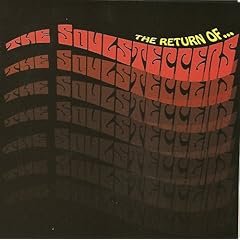
Editor's note: Jump Up just released a 10" vinyl version of this incredible gem of an album, so we thought it would be a service to The Duff Guide to Ska readers to re-post this review of "The Return of the Soulsteppers" that we ran a few years ago...
(Review by Steve Shafer)
Ever since 2 Tone was tagged as a "ska revival" movement in the late 70s, each subsequent wave of ska has been burdened with this albatross around its neck. While it probably didn't help that so many of the 2 Tone acts expressed their sincere love of their influences so prominently in their set lists and on their LPs, people like Jerry Dammers, Mike Barson, and Dave Wakeling heard Prince Buster, Laurel Aitken, and many more extraordinary JA musicians as they grew up along side the sons and daughters of Jamaican immigrants. Ska and reggae had become an integral part of the empire of British pop culture, as England absorbed the music and styles of the peoples of its former colonies--so questions of legitimacy or cultural appropriation were never an issue (particularly when many of the 2 Tone bands were multi-racial and The Beat could boast of Saxa in their ranks).
Respect was due to the originators, even as their songs were being transformed by the fury of the times and the power of punk. Yet an over-reliance on (admittedly brilliant) ska covers on all of their debut LPs--which helped launch the bands to the Top of the Pops--left the 2 Tone bands open to accusations of creative shortcoming in the songwriting department (something that certainly was not an issue on follow-up albums by The Specials, The Beat, and Madness). So, yes, 2 Tone may have started out as as a ska revival, but a lot of distance was covered from "A Message to You, Rudy" to "Ghost Town"--and at by end, the sound and style was all their own.
But this informed and nuanced view of 2 Tone never made it across the Atlantic whole. Most mainstream music critics in the US have been all too willing to sneeringly dismiss the scene as somehow illegitimate--failing to see that 2 Tone, the third wave of the late 80s and 90s, and whatever we want to call what is going on today as the organic evolution of this genre of music, developing in new ways as it is re-interpreted by successive generations of musicians around the world. Interestingly enough, the questions of musical authenticity or musical/cultural appropriation generally don't dog rock bands using/exploring/recycling blues riffs or punk bands doing the Class of '77 ad nauseum. But ska is shunted off to its own musical ghetto--and maybe its better this way. Most people don't know what to do with it.
Perhaps because those in the current ska scene are somewhat touchy about questions of ska's lineage (though their affection and respect are never in doubt), many traditional bands are almost fanatical about authentically re-creating the particular style of Jamaican music they love. While I'm generally more intrigued by acts which bring something new to a specific musical form, the groups with the talent and skills to faithfully realize a specific vintage ska sound and compose new songs in that style--without succumbing to shoddy imitation or parody--are really worth hearing.
A fairly recent album by a band in this category (that seemed to slip under the radar) is Return of the Soulsteppers by Bakersfield, California's The Soulsteppers, who are remarkably similar in sound and quality to the cream of the skinhead reggae crop: The Upsetters, Laurel Aitken, Harry J All Stars, Dave Barker and Ansell Collins, Clancy Eccles, Lloyd Charmers, Symarip, and The Pioneers, among others. After first listening to The Return of the Soulsteppers, I was also reminded of the two King Hammond records that Bad Manners' Nicky Welsh lovingly created (if, at times, a bit tongue in cheek), Revolution 70 and Blow Your Mind, in the late 80s/early 90s (the story goes that when the debut King Hammond album was released, they actually passed some of them off to unsuspecting record store owners as a long-lost skinhead reggae classic--it's that good). Indeed, The Soulsteppers are in good company.
While this mostly instrumental album is simply excellent from start to finish, highlights include (and note the extraordinary attention to detail in the production of the album--the instruments used, the recording process--it sounds like a 60s-era gem) "Warhead," with its choppy, propulsive Hammond organ and human-made groans and roars; the bass-heavy, orgasmic (le petit mort?) "Death Comes"; the ethereal flute melody floating through "Soul Step"; the soulfully sung love song "The Feeling is Real"; the jaunty "On That Evening"; "Last Laugh's" lazy, dubby trombone line contrasting with its frenetic guitar and melodica; the amazing steel drums featured in "Basson"; "Mars Invasion's" updating of "Skinhead Moonstomp"--"Cause they've already gone to the Moon/So the skinheads are going to Mars"; the sweet, romantic-sounding sax of "The Park"; and the electric piano melody leading the rhythm section forward on a march through "Death Valley"--with a reverb-y sound effect that's the aural equivalent of the sun baking your brain in your skull. Cool stuff!
The album's sparse liner notes indicate that the tunes here were composed between 2002-2008 (and several tracks were previously released on 7" singles on the European Lava and Conquering Ruler labels) and from what is captured on The Return of the Soulsteppers, it was clearly worth the wait! The rest of the world might not know what to make of The Soulsteppers--or skinhead reggae, for that matter--but if you're in the know, you'll definitely want this record.
Following on the heels of the wildly successful 2011 London International Ska Festival, Sean Flowerdew is presenting the 2012 London International Ska Festival this May 3 through 6 at the O2 Academy Islington, O2 Shepherds Bush Empire, and the Islington Metalworks.
DJs slated to appear include Jerry Dammers (The Specials), Don Letts (Big Audio Dynamite), Gaz Mayall (The Trojans), Andy Smith, Gladdy Wax, Tighten Up Crew, Count Skylarkin, Steve Rice (Downbeat Melody), Tim Wells (Zoot!), Dreadzone Soundsystem, Mark Barrett (Pressure Drop), Amma, Dave Walker (Thursday Night Fish Fry), and 3DJ (Funkdub).
Click on the image at right to find out which bands/DJs are playing where and when; tickets may be purchased here.
For all of the latest news on the festival, make sure to like their Facebook page.
If London is anywhere near you, make sure to be a part of this incredibly unique and mind-blowing ska experience! And if you have the extra scratch and time to fly in from points much further afield, what are you waiting for--book your flight!
+ + + +
Breaking news from the festival concerns the two limited edition 7" vinyl singles being released in conjunction with this year's LISF. They are four fantastic new cuts by classic and contemporary artists, including a superb new track from one of 2 Tone's greatest musicians and songwriters--the man who wrote "On My Radio," "Missing Words," "3 Minute Hero," "Celebrate The Bullet" and more--Mr. Neol Davies. More details to come soon!
Montreal's The Beatdown offer up a potent blend of punky skinhead reggae, vintage ska, and soul on their excellent self-titled debut (think The Clash meet The Pioneers with King Hammond at the controls). The Beatdown contains a tremendous mix of aggressively upbeat, sing-along-with-the-chorus originals (see the awesome, should be massive hits "It's Alright" or "Tell Me Why"), choice covers (The Temptations' "Get Ready," which takes on an almost menacing edge here, while Delroy Wilson's "I Want Justice" is cheerfully defiant, considering the lyrics; it should be noted that Wilson also recorded "Get Ready" himself), and grooving keyboard-driven instrumentals.
Lyrically, The Beatdown are chiefly concerned about relations with significant others ("One Night," "Let Me Take You Out," "Number," or "Today"), trouble in the streets ("Hooligans"), or standing up for oneself ("Try to take me/take me down/And you'll see what I'm made of," from "Beatdown"). You know, feelings and experiences common to all of us. One of the best cuts ("Tell Me Why") challenges a friend to explain what's causing their depression: "I know you feel like/you only get what you deserve/Your life's a mess/You're nothing but a zero...You've come a long way/Got a lot more to say/Still have a long long way/So you better tell me why/tell me why/You better tell me why." This is music therapy of the best kind.
The Beatdown grew out of Alex Giguere's (vocals, guitar) and Pascal Lesieur's (bass) other dirty reggae group, One Night Band (which is on hiatus?). So the quality control is high here--the songwriting, performances, production, and results are outstanding.
The Beatdown is a record that will pick you up when you're down and fill the dance floor when you put it on--two things you can always count on first-rate music to do. This is definitely an album to add to your collection.
Ever since 2 Tone was tagged as a "ska revival" movement in the late 70s, each subsequent wave of ska has been burdened with this albatross around its neck. While it probably didn't help that so many of the 2 Tone acts expressed their sincere love of their influences so prominently in their set lists and on their LPs, people like Jerry Dammers, Mike Barson, and Dave Wakeling heard Prince Buster, Laurel Aitken, and many more extraordinary JA musicians as they grew up along side the sons and daughters of Jamaican immigrants. Ska and reggae had become an integral part of the empire of British pop culture, as England absorbed the music and styles of the peoples of its former colonies--so questions of legitimacy or cultural appropriation were never an issue (particularly when many of the 2 Tone bands were multi-racial and The Beat could boast of Saxa in their ranks).
Respect was due to the originators, even as their songs were being transformed by the fury of the times and the power of punk. Yet an over-reliance on (admittedly brilliant) ska covers on all of their debut LPs--which helped launch the bands to the Top of the Pops--left the 2 Tone bands open to accusations of creative shortcoming in the songwriting department (something that certainly was not an issue on follow-up albums by The Specials, The Beat, and Madness). So, yes, 2 Tone may have started out as as a ska revival, but a lot of distance was covered from "A Message to You, Rudy" to "Ghost Town"--and at by end, the sound and style was all their own.
But this informed and nuanced view of 2 Tone never made it across the Atlantic whole. Most mainstream music critics in the US have been all too willing to sneeringly dismiss the scene as somehow illegitimate--failing to see that 2 Tone, the third wave of the late 80s and 90s, and whatever we want to call what is going on today as the organic evolution of this genre of music, developing in new ways as it is re-interpreted by successive generations of musicians around the world. Interestingly enough, the questions of musical authenticity or musical/cultural appropriation generally don't dog rock bands using/exploring/recycling blues riffs or punk bands doing the Class of '77 ad nauseum. But ska is shunted off to its own musical ghetto--and maybe its better this way. Most people don't know what to do with it.
Perhaps because those in the current ska scene are somewhat touchy about questions of ska's lineage (though their affection and respect are never in doubt), many traditional bands are almost fanatical about authentically re-creating the particular style of Jamaican music they love. While I'm generally more intrigued by acts which bring something new to a specific musical form, the groups with the talent and skills to faithfully realize a specific vintage ska sound and compose new songs in that style--without succumbing to shoddy imitation or parody--are really worth hearing.
A fairly recent album by a band in this category (that seemed to slip under the radar) is Return of the Soulsteppers by Bakersfield, California's The Soulsteppers, who are remarkably similar in sound and quality to the cream of the skinhead reggae crop: The Upsetters, Laurel Aitken, Harry J All Stars, Dave Barker & Ansell Collins, Clancy Eccles, Lloyd Charmers, Symarip, and The Pioneers, among others. After first listening to The Return of the Soulsteppers, I was also reminded of the two King Hammond records that Bad Manners' Nicky Welsh lovingly created (if, at times, a bit tongue in cheek), Revolution 70 and Blow Your Mind, in the late 80s/early 90s (the story goes that when the debut King Hammond album was released, they actually passed some of them off to unsuspecting record store owners as a long-lost skinhead reggae classic--it's that good). Indeed, The Soulsteppers are in good company.
While this mostly instrumental album is simply excellent from start to finish, highlights include (and note the extraordinary attention to detail in the production of the album--the instruments used, the recording process--it sounds like a 60s-era gem) "Warhead," with its choppy, propulsive Hammond organ and human-made groans and roars; the bass-heavy, orgasmic (le petit mort?) "Death Comes"; the ethereal flute melody floating through "Soul Step"; the soulfully sung love song "The Feeling is Real"; the jaunty "On That Evening"; "Last Laugh's" lazy, dubby trombone line contrasting with its frenetic guitar and melodica; the amazing steel drums featured in "Basson"; "Mars Invasion's" updating of "Skinhead Moonstomp"--"Cause they've already gone to the Moon/So the skinheads are going to Mars"; the sweet, romantic-sounding sax of "The Park"; and the electric piano melody leading the rhythm section forward on a march through "Death Valley"--with a reverb-y sound effect that's the aural equivalent of the sun baking your brain in your skull. Cool stuff!
The album's sparse liner notes indicate that the tunes here were composed between 2002-2008 (and several tracks were previously released on 7" singles on the European Lava and Conquering Ruler labels) and from what is captured on The Return of the Soulsteppers, it was clearly worth the wait! The rest of the world might not know what to make of The Soulsteppers--or skinhead reggae, for that matter--but if you're in the know, you'll definitely want this record.
Joan Verges, the drummer for the extraordinary ska/soul band The Pepper Pots, which is fronted by three terrific female vocalists--Adriana Prunell, Marina Torres, and Merce Munne--recently took the time to do a short e-mail interview with The Duff Guide to Ska, just after the band's tour of Texas, Arizona, and California in support of their second album, Shake It! (on Megalith Records in the USA).
For the uninitiated, Shake It! contains a wealth of stellar original ska and rocksteady tunes, including the wonderfully uplifting "Stay on Your Way" (with guest vocals from Dr. Ring Ding), "Lucky Girl," and "Forget the Rules," but the album really shoots sparks when the band cranks up the soul, like on the Motown-y cuts "My Heart Belongs to You" and "I Can Feel It." Really hot stuff.
Shake It! also features a reverential cover of The Pioneers' "Starvation" with The Pioneers still sounding great on lead vocals ("One Unity" is the Dr. Ring Ding version of this track), as well as the band's take of The Ronettes "Be My Baby" (Estelle Bennett died at 67 this past February--an article in the New York Times revealed that her post-Ronettes life was marked by struggles with mental illness and homelessness) and Baba Brooks' arrangement of "Duck Soup" with the French ska instrumental band ASPO.
(It's interesting to note that "Starvation" was also covered by a ska supergroup of the same name consisting of members of Madness, General Public, The Specials, UB40, and The Pioneers for a charity record--released in 1985 on Madness' label--to raise money for Oxfam and Doctors without Borders to help the victims of war and famine in Ethiopia; the project was overshadowed by Bob Geldof's "Do They Know It's Christmas" Band Aid project, despite the fact that the "Starvation" recording was conceived before Saint Bob's--but he had the pop superstars and backing to get the record out the door first. After breaking out the Starvation 12", I decided to take a listen to the other great ska-related 'cause' record of that time, The Special AKA's "Free Nelson Mandela," which now sounds even better to these ears than it did back in 1984--and I loved it then!)
+ + + +
The Duff Guide to Ska:How did your first U.S. tour go? Were there any surprises--good or bad?
Joan Verges: We are very happy with all the gigs and organizers on this tour. The public received us with open arms everywhere we went and we really enjoyed every show.
We are specially grateful to Jeremy from Megalith Records for all the well-done job, he made all the tour run smoothly.
DGTS:Which show was your favorite and why?
JV: We have good regards from all and each of the US shows, but if we had to mention one or two it must be the SXSW and the Houston one.
The SXSW was a big challenge for us, for what it means for us to play in such a big festival and for the audience response.
Houston was the first place we played in the US and everything was new and exciting for us. We were surprised when we realise that almost everybody speak Spanish there! It was a very special night, together with the local band Los Skarnales we had an amazing ‘welcome party’.
DGTS:What was SXSW like for The Pepper Pots?
JV: Well, as I told you before, it was one of the most special events. We had a huge acceptance from the audience. We could only see people and more people from the stage and everyone was dancing, singing and enjoying our music! We really didn’t expect this hit, bearing in mind the size of the festival where is impossible to see more than a 5% of the shows that take place. It’s by far, the biggest fest we have ever played in.
DGTS:How would you compare the U.S. ska scene with what is happening right now in Europe and Japan?
I think that US is very big and we found different scenes depending on the state where we were. California, for example, has a more classic ska scene, similar to the one you could find in Europe. However, in Texas or Arizona the public seemed more ska-punk, like in Japan.
DGTS:Bucket seems to have taken the band under his wing--when and where did you first meet him? Did you just run into him in Spain?
Bucket has been into this scene for years. We have coincided several times in some concerts with the Toasters and we knew him for a long time. Besides, he’s living in Valencia (Spain) for years. He and Megalith Records made possible the release of our album “Shake It!” in the US.
DGTS: Is there a particular sound or concept your have in mind for your next album, "NOW"? And what has it been like to work with your producer, Binky Griptite?
Now! will be quite different from the other two albums. We just follow the natural evolution of the band and it has brought us to Soul.
JV: Working with Binky Griptite has been an unforgettable experience. He’s very clear about the “old school” sound and it’s captured in every theme of this new album.
We are also recording a “making of” video which includes all the details about the managing and production of this new album from the first day till its release… Something we though had to be seen to understand better this job. A present for all the people that follow us from the beginning and we already consider them our family.
DGTS:Since you are doing some of the recording and mixing in New York City, will the band be performing a gig there sometime soon (please)?
JV: Last touches of the album and mixes has been done in New York, but it was impossible to play there at the end of the tour, because we had no time enough.
But we are looking forward to come back to New York, and we hope that after the release, we have soon the chance for launching there the new album “NOW!”
We fell in love with this country, we’ll come back, for sure!
DGTS:Thanks for taking the time to do this interview!
JV: Thank you so much to you. It has been a pleasure.
What They're Saying About My Book "The Duff Guide to 2 Tone"
“An essential read…Stephen's eye for detail is incredible and his love for 2 Tone oozes from each page.” — Kevin Flowerdew, Do the Dog Skazine
“Written with a personal touch and with great passion about the bands and releases while giving a lot of emphasis to the lyrics, Stephen’s book is a great guiding hand to navigating your way to some great new music.” — Peter Walsh, 2-Tone.info
“It's some of the finest Madness analysis I've ever read.” —Donald Trull, Stateside Madness
“Steve's own story would make a great book, but instead he's written The Duff Guide to 2 Tone, a 250+ page collection of 2 Tone-related pieces from his blog. There are reviews of original pieces, but the book's real purpose is to show how the 2 Tone sound and—more importantly its ideals—carry on today...Get this book right away!" — Charles Benoit, Reggae Steady Ska
"...Shafer has definitely not forgotten how socially conscious issues were at the root of Ska even from the beginning. He makes certain to thread the political issues that motivated the development of Ska throughout his narrative; painting a picture that took both the oppressive political environments and the often ecstatic musical content into account. And in that, he nails down for me what the enduring pull of Ska was to its many fans. Was there ever a more upbeat dance music that combined its boundless energy with a push for progressive social values and calling truth to power?" —Post-Punk Monk
"...[The Duff Guide to 2 Tone is a] chatty, informative and knowledgeable work, one that you can either sit down and read or use as a reference source..." —Nik Skeat, Scootering Magazine
"During the reading of the book it is dangerous to have a screen open next to you with Discogs. I have found lots of ‘new music’ via the stories in The Duff Guide to 2 Tone which I must have." -- Peter Vrakking, Blue Beat & Ska
In the mail today, I received the first copy of my new paperback book The Duff Guide to 2 Tone --and am thrilled to announce that it is now...
About Your Duff Guide
Steve Shafer/The Duff Guide to Ska For most of the 1990s, I was the promotions, marketing, production guy for Moon Records (RIP). It was one of the best jobs I ever had. Seriously, I miss it badly. During 1999/2000, I ran 7 Wonders of the World Music, the first digital download-only ska label that was too ahead of the curve for its own good (RIP).
I filmed and edited this Toasters video for $2,500, which made its debut on MTV's 120 Minutes. I also put together these compilations for Moon: the first three Skarmageddons; Ska United: A Global Ska Sampler; Skank Down Under; This Are Moon Ska I, II, and III; and Moonshot!
Here's an old interview with Adam Monkey from Read Magazine that covers my days at Moon and 7 Wonders. I also did a somewhat more recent interview with Read Junk.
I've been interviewed about ska music and Moon Records for The New York Times, Heather Augustyn's "Ska: The Rhythm of Liberation," Aaron Carnes' "In Defense of Ska," Kenneth Partridge's "Hell of a Hat: The Rise of '90s Ska and Swing," and Marc Wasserman's "Ska Boom: An American Ska & Reggae Oral History" (I also wrote the introductory chapter "1985: The Year American Ska Broke" for Wasserman's book).
And I'm the author of "The Duff Guide to 2 Tone," which can be ordered from Amazon--and is available in the US from Jump Up Records, and in Europe from the 2 Tone Village Shop (Coventry, UK), Champion Sound Records (Hull, UK), Aggroshop (Nijmegen, Netherlands), and Copasetic Mailorder (Hamburg, Germany). Plus, my book was on sale in the museum shop for the "2 Tone: Lives & Legacies" exhibition (May 28 - September 12, 2021), curated by Simon Reynolds, Cory Barrett, Pete Chambers, Jennifer Otter Bickerdike and Daniel Rachel, at the Herbert Art Gallery Museum in Coventry, UK.
I'm now working on my next book, "Calling All the Rude Boys: The Duff Guide to The Toasters, 1981-1992," to be published in 2023.
If you have a ska or reggae release that you'd like me to consider reviewing, please send an e-mail to Steve at duffguidetoska@gmail.com. You should know that I am old school and prefer music in tangible formats (plus I might use your music when I DJ ska events). I'd also appreciate any news or tips you may have about bands.
All reviews and interviews posted on The Duff Guide to Ska are copyrighted and are the sole property of Steve Shafer. Please contact me for permission to reproduce anything on this blog.
Search This Blog
See Live Ska Bands in NYC!
Check out the NYC ska shows I co-host and co-DJ with Ryan Midnight!
While I was poking around the internet looking for info on an upcoming "Shots in the Dark" posting I'm writing on the Japanese...
Visit The Duff Guide to Ska Video Channel!
Check out The Duff Guide to Ska Video Channel for footage of ska bands in action in clubs around NYC, as well as unusual and rare ska videos from the 90s! Bands featured include The Toasters, The Bluebeats, The Forthrights, Across the Aisle, The Caroloregians, The Moon Invaders, The Rudie Crew, Tip the Van, Hey Stranger, Beat Brigade, Bigger Thomas, King Chango, The Scofflaws, UB40, The Hard Times, Jah Love and the Valentinians, The Shifters, Rudies Don't Care, Big Audio Dynamite, Stranger Cole and Patsy with Crazy Baldhead, Queen P of Ocean 11, King Hammond, The Snails, King Django, Doomsday! The Ultimate Tribute to Mephiskapheles Consisting of Former Members of Mephiskapheles, Destroy Babylon, The Frightnrs, The Pandemics, Los Skarroneros, The Bullbuckers, The Scofflaws, The Reggay Lords, The Copacetics, Rude Boy George, Dave Hillyard and the Rocksteady 7, Tokyo Ska Paradise Orchestra, The Specials, Roddy Radiation and Lynval Golding, The Ladrones, Chris Murray, Radio Riddler, UB40 featuring Ali Campbell, Astro, and Mickey Virtue, Barbicide, The Twilights, Bim Skala Bim featuring John Bunkley (Gangster Fun), The Pomps, and more!

 (Review by Steve Shafer)