Showing posts with label Lee "Scratch" Perry. Show all posts

Friday, June 10, 2022

Duff Review: Victor Romero Evans "At the Club" b/w The Detonators "Lift Off" reissue

The paper label indicates the song title, band, and label (Special Request)
12" vinyl single
Special Request
1980 (2022 reissue)

(Review by Steve Shafer)

Remastered and reissued for the first time since 1980, the John Collins-produced/co-written 12" single featuring Victor Romero Evans' "At the Club" and The Detonators' "Lift Off" should be of interest to Specials' fans, as it's forever linked to their most brilliant release--the Ghost Town EP.

Back in the day, after the Evans/Detonators record was played on Radio One's "Roundtable" program and favorably reviewed (it also was #1 on Black Echoes' reggae chart at the time), Collins received a late-night call from Jerry Dammers asking him if he might be interested in producing The Specials' next recording. The band was very impressed with Collins' production (recorded on a four-track in the front room of his house and released on his own label) and, in the wake of More Specials' not completely welcome excursion into muzak/lounge and the hi-tech 24-track studio it had been recorded in (that offered Dammers too many choices!), The Specials wanted to capture a more authentic reggae sound for these new songs in a much simpler fashion. And they believed Collins was their man.

When The Specials' met John Collins, they didn't expect him to be white. Lynval Golding and Neville Staple told him, "We were expecting someone like Lee Perry; a wild rasta smoking ganja." Indeed, the seductive Lovers Rock of "At the Club" and mysterious outer space dub of "Lift Off" seem as if they could have come from the mixing desks of Dennis Bovell or Mad Professor, two of the top UK reggae producers back then--and now. (Trainspotters will be interested to know that Victor Romero Evans also played the part of Lover in Franco Rosso’s stellar 1980 film Babylon--an updated Thatcher-era The Harder They Come shot in South London, with a boss reggae soundtrack by Bovell, Yabby U, I-Roy, Cassandra, Aswad, Vin Gordon, and Michael Rose.)

Of these two tracks, the wonderful dub instrumental "Lift Off" is clearly the sonic blueprint for what Dammers wanted for "Ghost Town." It sports a clean, warm, roots reggae sound with electro percussion and trippy synth effects (shades of every B 1950s sci-fi film you've ever seen)--and features the same ghost synth that is later used to open and close "Ghost Town." (To these ears, John Bradbury's drumming on "Ghost Town" and "Friday Night, Saturday Morning" sounds like its programmed, even though it's not; but I think it's a combination of how Brad is drumming--reportedly influenced by Gregory Isaacs' "Night Nurse"--and how Collins recorded him.)

Specials' completists will want to snap up a copy of this (I ordered a copy through Juno.co.uk), but the Victor Romero Evans "At the Club"/Detonators "Lift Off" 12" is worth having in its own right. It's a fantastic slice of early '80s UK reggae that stands the test of time. 

+ + + +

Tuesday, May 24, 2022

Duff Review: Horace Andy "Midnight Rocker"

The cover features Horace Andy in profile with grey dreadlocks.
Vinyl LP/CD/digital
On-U Sound
2022

(Review by Steve Shafer)

Like his superb collaborations with Lee "Scratch" Perry before his death (Rainford and Heavy Rain, which I reviewed here and here), Adrian Sherwood's latest effort with Horace Andy yields another masterpiece. Midnight Rocker is easily one of the finest albums in Andy's catalogue and certainly one of the best new roots reggae records you'll hear this year.

At 71, Sleepy's seemingly ageless voice remains in top form--always wonderfully expressive, whether conveying empathy for those suffering or passing along Jah's unyielding judgment on the wicked. He's backed by an all-star band, including Gaudi, George Oban (Aswad), Skip McDonald (Sugar Hill Records house band, Tackhead, African Head Charge), Douglas Wimbish (Sugar Hill Records house band, Tackhead, Living Colour), Horseman (Prince Fatty, Mungo's Hi-Fi, Mad Professor), and more. And Sherwood's virtuoso production--his first for Andy(!)--bathes everything in crisp warmth and life, and leaves plenty of space for Andy to do his thing.

Midnight Rocker contains a mix of new tracks and re-worked versions of Andy classics, some surely chosen for their heightened relevance today. The album opens with a fantastic rendition of Andy's plaintive "This Must Be Hell" (first released as a Tapper Zukie-produced single in 1978), Things may have been bad in the late '70s, but they have nothing on our everyone's-always-at-each-other's-throats times. This more sparse take on "Materialist" (which was originally produced and released by Niney the Observer in 1977) still packs a punch: "Material comes first in this society/You can't afford a car or a house, no one knows you" (and the track also warns of giving into vanity and acquiring too much). Andy's 1976 reggae lullaby "Rock to Sleep" is beautifully and hauntingly updated with cellos. And even Sleepy's much-revisited, Studio One/Coxsone Dodd-produced single "Mr. Bassie" is given a great new spin with this tightened-up take. (If you compare all of these versions to their originals, you'll be pleased to find that Andy has much more control of his singing, and his voice is arguably stronger and more nimble than ever.)

Like the reworked classics, Andy's new cuts are like late-night, pirate broadcasts of hope and warning--a rebel counternarrative for these entropic times. "Easy Money" (penned by Jeb Loy Nichols and Sherwood) is a melodica-driven sequel of sorts to his 1975 Phil Pratt-produced single "Root of All Evil" (key lyric: "It make friends/It break friends/Judas betrayed Christ for it!") that is an oblique critique of our capitalist way of life: "Tell me why/Did I ever start/To make money money/You did me wrong/You been cheating me/My whole life long." The stately "Today is Right Here" (by Sherwood/Nichols/Oban) reminds one that life is tenuous and fleeting, so you need to enjoy/be in the right now ("See that old black bird flying/See that fox on the run/They don't think about tomorrow/'Cause it might never come"). Despite its topic, "Careful" (by Leigh Stephen Kenny/LSK and Sherwood) is a bright and jaunty track about the pernicious disinformation we're swimming in daily ("All that glitters is not gold/All that's written is not so/Pictures, scriptures always told through the eyes of victors, all I know"). With all the turmoil, dangers, and moral quandaries to navigate these days, Andy pleads to Jah--over a Lover's Rock cut (written by LSK/Gaudi/Roydel Johnson aka Congo Ashanti Roy)--to "Watch Over Them." We need all the protection we can get.

One of my favorite tracks on Midnight Rocker is the cover of Massive Attack's "Safe from Harm" from Blue Lines. For all of Andy's past work with Massive Attack, this song from their 1991 debut--inspired by Martin Scorsese's neo-noir nightmare Taxi Driver (it's about Travis Bickle expressing his compulsion to protect the teenage prostitute Iris)--was originally sung by Shara Nelson. Yet hearing Andy singing it in this urgent, slightly futuristic dubstep-reggae setting (that rumbling bassline is ominous!), you don't think of Jodie Foster, but rather whoever means the world to you and you'd be devastated to lose: "But if you hurt what's mine/I'll sure as hell retaliate/You can free the world, you can free my mind/Just as long as my baby's safe from harm tonight."

While Midnight Rocker immediately appealed to me from first play on the turntable, I've been listening to it on and off for weeks now--and still don't think the album has fully revealed itself to me yet.

+ + + +

Friday, March 4, 2022

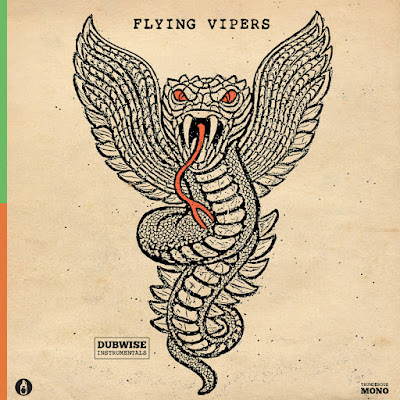
Duff Review: Flying Vipers "Green & Copper: The First Two Tapes"

The cover features an illustration of a viper with wings and its forked tongue sticking out.
Vinyl LP (green or copper vinyl)
Jump Up Records/Music ADD Records
2022

Editor’s note: Since the Flying Vipers’ first two cassette-only releases were just issued on colored vinyl for the first time by Jump Up Records and Music ADD Records, it seems like a good idea to revisit my reviews of each of these tapes! 

(Reviews by Steve Shafer)

[The Green Tape; review originally published September 21, 2015] 

Brothers John and Marc Beaudette (the former on bass, guitar, and melodica; the later on drums and percussion) from Boston's mighty roots reggae outfit Destroy Babylon have teamed up with keyboardist Zack Brines from Pressure Cooker for a new dub project titled Flying Vipers--which is inspired by the incredible analog dub reggae of the 1970s and early 1980s produced by Lee "Scratch" Perry, Keith Hudson, King Tubby, Dennis Bovell, Scientist, and many others.

In seeking to capture that spirit, sound, and vision for their own original tracks, Flying Vipers recorded their instrumentals on an old-school, Tascam 8-track cassette console (and performed using vintage drums, bass, and keyboards). The final dub mix (by Jay Champany of Truth and Rights) was recorded live on the same Tascam deck, utilizing classic dub techniques and effects--and the results are really pretty phenomenal (and having Kevin Metcalfe, who has worked with David Bowie, The Clash, Lee “Scratch” Perry, Dr. Alimantando, UB40, Dennis Brown, Black Uhuru, Prince Far I, and others, master the final mixes certainly must have helped!).

Flying Vipers' The Green Tape contains six fantastic tracks of tangibly warm, vibrant, and crisp dub instrumentals with great melodies--earworms, really--that will move your body and elevate your mood. My favorite cut here, "Beacon Street Version," features a lilting, very Rico-like trombone melody on a song that sounds like it could have been off Warieka Dub. Other great touches abound throughout the tape--from the jazzy, bell-like sound of the Fender Rhodes on the lovely "Bell Crickets," to the haunting melodica lines on the slow spooling of "Tape Hiss," as well as the urgent and slightly dangerous "Dragon Snout," to the trippy, wah-wah pedal effects on the guitar line of "Cannabaceae" (which is a family of small flowering plants including Cannabis and Humulus, or hops), and the tension on display between the relaxed sax and the hyper, almost martial percussion in "Coffee Kush" (yes, apparently a strain of coffee-flavored marijuana now exists--does one have the Pavlovian jolt from the taste of coffee, but then mellow out when the THC kicks in?).

My only complaint about this release is that I want more of it. For now, hook up your dad's old tape deck to the stereo or bid on a used Sony Walkman on eBay--and then have someone over forty show you how to insert the cassette (and enjoy)!

[The Copper Tape; review originally published on April 2, 2017] 

This is the second release from Boston's mighty Flying Vipers, which is comprised of members of Destroy Babylon and Pressure Cooker, who specialize in '70s-sounding instrumental roots reggae and dub recorded on analog equipment that reminds this reviewer most strongly of Dennis Bovell's output. The Vipers create incredible, mesmerizing dub tracks that never quite deconstruct things to the point where the tune is entirely lost--melody is everything here (like on all Bovell productions). I love this whole tape (eight cuts on the cassette), but standout tracks for me include the sublimely ethereal "Smoke and Dagger" (paging Jackie Mittoo!), the Western reggae-ish "Heady Topper Headon" (of course, named after The Clash's phenomenal drummer), and the mysterious Lee Perry-like "Return of the Living Zero" (which rely on organ, melodica, and clavinet respectively to carry each song's tune). You may think me bold, but Flying Vipers' The Copper Tape is most likely the best new dub release you'll hear all year.

+ + + +

Tuesday, August 31, 2021

Lee "Scratch" Perry RIP

Perry sits on a throne with a crown on his head and holds a globe and a scepter in his hands.
The Upsetter
As others have commented, Lee "Scratch" Perry was so full of life and boundless, crazy genius-level creativity and talent that it seemed like he would be walking this Earth forever. So his death on Sunday, August 29, 2021 at 85 feels like a sucker punch to the head (forgive us for taking you for granted, "Scratch").

His musical legacy as producer, songwriter, dub master, and performer is almost unparalleled in the history of reggae music. And the vast body of work he leaves in his wake--surely a daunting endeavor to consume in its entirety--is a magnificent gift that will keep on giving to anyone exploring or rediscovering his music for eons to come (the 1997 3xCD compilation Arkology, which collects the top cuts he recorded at his Black Ark studio, is an amazing place to start).

I'm certainly not alone in thinking that Perry's greatest productions were The Congos' Heart of the Congos ("Children Crying" is one of the most brilliant reggae cuts ever recorded) and Max Romeo's War Ina Babylon (ditto for the title track). I'm also partial to The Upsetters' Super Ape (1976), Perry's Roast Fish, Collie Weed & Corn Bread (1978), and his collaboration with Adrian Sherwood and the Dub Syndicate Time Boom X De Devil Dead (1987).

I reviewed a fair number of Scratch's recent releases and reissues for this blog, which are linked below. While his output in his later years may not have matched the heights of the Black Ark years, it was still incredibly good and often extraordinary. All of these releases are worth checking out.

Lee "Scratch" Perry: Heavy Rain LP (2020)

Various Artists Black Ark Days: Play On Mr. Music LP (2020)

Max Romeo Revelation Time reissue (2020)

The Upsetters with Vin Gordon Musical Bones reissue (2020)

Lee "Scratch" Perry: Rainford LP (2019)

Lee "Scratch" Perry with Peaking Lights and Ivan Lee Life of the Plants EP (2019)

Lee "Scratch" Perry: "Big Ben Rock" 7" (2019)

Lee "Scratch" Perry: The Black Album LP (2018)

Lee "Scratch" Perry: Game of the Throne EP (2018)

Lee "Scratch" Perry and Subatomic Sound System: Super Ape Returns to Conquer LP (2017)

Various Artists: Sound System Scratch: Lee Perry's Dub Plate Mixes 1973-1979 LP (2010)

If you need a refresher on Perry's life and musical career, make sure to read the excellent Perry obituaries in The Guardian by Peter Mason and New York Times by Jon Pareles.

Play on, Mr. Music!

+ + + +

Wednesday, June 30, 2021

Duff Review: The Scofflaws "The Scofflaws"

The band members are dressed in suits and the band's name is in the foreground.
(Review by Steve Shafer)

At some point in the latter half of 1990, the bottom fell out of the NYC ska scene. The packed March 26, 1990 "NYC Ska Craze" show at the now long-gone Cat Club on 13th Street and Fourth Avenue in Manhattan featured the best Gotham had to offer at that time—The Toasters, The Scofflaws, The NY Citizens, Bigger Thomas, Skinnerbox, Skadanks, and The Steadys—but instead of positioning NYC ska for success in new decade, it ended up being the last hurrah of the 1980s scene. The show yielded the excellent NYC Ska Live LP (read my review of it), but a planned Dance Craze-like film, which would have documented all of these New York bands for the world to watch and envy, fell through when the director Joe Massot pulled out at the last moment (Toasters/Moon Records main man Rob “Bucket” Hingley dubbed it "a fiasco"). In the months that followed, ska shows gradually became rare events and didn't draw like they had just a year before, and several of the groups big on the scene went dark (and others moved into other musical territory, like soul and funk). Some of this was due to demographics--many of the NYC ska groups in the '80s were made up of high school and college-age kids; by 1990, most were faced with navigating the stark adult world of 9 to 5 jobs and paying rent. But it was clear that it was in severe decline.

It didn't help that the band spearheading the NYC scene almost didn't survive 1989 and was still struggling to find its footing in 1990-1991. Even though The Toasters had managed to regroup and soldier on after the sudden, body-blow departure of the Unity 2 in the midst of promoting their superb second album Thrill Me Up (trombonist Ann Hellandsjo and alto saxophonist Marcel Reginatto also left in their wake), the band's future seemed tenuous. Since CBS/Sony had been courting The Toasters, they crafted a record full of pop-leaning ska songs—This Gun for Hire—that turned out to be "too commercial for the fans and not commercial enough for the majors," Bucket later admitted to George Marshall in Skinhead Times in August 1993. (CBS/Sony passed on the band and album.) More worrisome was the fact that this iteration of the band couldn't hold a candle to the Thrill Me Up-era band on stage. I saw The Toasters several times in 1990 and 1991 at CBGBs, The Cat Club, and SOB's, and while they put on a decent show, they just weren't the same and some of the new material strayed far from their patented "East Side Beat" sound. I always left a bit disappointed. The other dominant NYC ska/Moon Records act of that time was the NY Citizens, who released the excellent Stranger Things Have Happened EP on Moon in 1990, their terrific follow-up to their 1988 debut On the Move, but then seemed to go quiet for a few years.

The good news in the midst of all this was that after a series of near-disastrous independent distributor failures in the late '80s (that almost swallowed up entire pressing of Moon compilations like Ska Face: An All-American Ska Compilation and NYC Ska Live) and seeing Celluloid/Skaloid going under without paying any royalties for Thrill Me Up or Skaboom! (which had sold a very respectable 12K copies at that point), Bucket was more determined than ever to make Moon Records a viable indie label. And one that would not only represent the NYC ska scene, but the American one.

It’s worth noting/remembering that back in the late ‘80s and early ‘90s, recording, pressing, distributing, and promoting an independent album was an expensive and often daunting endeavor. It was the primary reason there were relatively few American ska releases in the 1980s. Without a label fronting the cash to print albums/singles/EPs that also had a connection to reliable and honest independent distributors who could actually get your release in the shops and then pay you for your product, you had very little chance of recouping any of your expenses (at the time, the major labels had control of their own distribution systems for their records and CDs which excluded independent releases). The Toasters’ first two albums had been licensed to Celluloid/Skaloid as a hedge against Moon’s ongoing cash flow and distribution problems, but they were still burned in the end when that label went bankrupt, with no royalties from either album ever making it into The Toasters’ pockets (and later in the ‘90s, the new owner of Celluloid flooded the market with bootleg copies of Thrill Me Up and the unauthorized Ska Killers on the Celluloid imprint Esperanto, which consisted of Skaboom! and Thrill Me Up).

While The Toasters’ This Gun for Hire may have been too much of an artistic shift from Thrill Me Up for the fans (I struggled to like it in 1990, but now think it’s a really great pop-leaning ska record), Bucket was able to secure distribution through IRD and the album sold 10k copies, earning the band and Moon Records a tidy profit. In turn, this allowed Bucket to start licensing albums from other ska acts (the deals back then were straightforward one-page agreements wonderfully free of legalese), since he had the capital to invest in pressing CDs (which was the format preferred by distributors and shops in the ‘90s) and could start growing the label’s roster in earnest.

In 1991, a rejuvenated Moon Records released two highly influential debut records that would help lay the groundwork for the 1990s ska boom and signaled the label's ambitious goal of establishing itself as the premier American independent ska label. Both bands had been perfecting their sound, songs, and live performances in the ‘80s (and were featured on Moon’s first-ever American ska comp Ska Face in 1988—read my review of it), and Bucket and The Toasters had been on many bills with each act. These albums, of course, were Let’s Go Bowling’s Music to Bowl By (read my review of it) and The Scofflaws’ The Scofflaws. Notably, they represented one of the directions that a segment of the US ska scene was taking beyond the new wave/2 Tone ska of the ‘80s—it was a new, distinctly American take on retro/1960s ska that incorporated a slightly off-kilter, modern outlook and an adventurous variety of influences. To give these groundbreaking albums context, the few 1991 ska releases similar in sound to Music to Bowl By and The Scofflaws were Jump With Joey’s Ska-Ba and Tokyo Ska Paradise Orchestra’s World Famous and Live albums.

Huntington, LI’s Scofflaws started out in the early 1980s as The New Bohemians and mostly played a mix of '60s R&B and TV theme songs. But as the ‘80s progressed, they incorporated more and more ska into their set. In 1988, Geffen Records bought their name for Edie Brickell, who wanted the rights to call her band the New Bohemians (and had a big hit with “What I Am”). They rebranded themselves The Scofflaws and bought new instruments and gear with Geffen’s cash. Later that same year, they burst into the national ska consciousness with their raucous, celebratory, and anti-racist Rude boy anthem "Rudy's Back" on Moon’s Ska Face comp, which helped all the scattered ska fans on the fringes of the underground scene feel like we were part of something bigger and something great.

Rude boys! Are coming out tonight
They got the rhythm and they’re feeling alright
Hey, boy! Where have you been going?
I’ve got to water a little herb that I’ve been growing
Rude boys! Causing trouble downtown
The police don’t like them hanging around
Hey, now! I want to play my horn
Rocksteady, that’s why I was born

Some say that rudies have all gone away
But that’s just jive talk, I know they’re here to stay
Why do we do it, well it ain't for the dough
It’s cause we’re ska’d for life, man! Okay, boys, let’s go!

Rude boy! Collie in hand
He likes to party, likes to skank with the band
Rude girl! She’s all on the scene, yeah
She’s hanging out by the record machine
Skinhead! They like to stomp their boots
They dig that rhythm, ‘cause the rhythm’s got roots
DJ! Play it one more time
I don’t care if the lyrics don’t rhyme

Oh, dig that rhythm…I man got the beat…Can’t keep from dancing…
I got to move my feet…rocksteady, ska, blue beat, soul…
If you got the rhythm, you will never grow old!


Rude boy! Yeah, he’s misunderstood
The coolest guy in his neighborhood
Hey boy! Where have you been going?
Don’t you want a little herb that I’ve been growing?
Rude boys! They’re causing trouble downtown
The police don’t like them hanging around
Hey now, I want to play my horn
Rocksteady, that’s why I was born

It doesn’t matter if you’re black
It doesn’t matter if you’re white
‘Cause we’re The Scofflaws, rude boy
And we’re going to rocksteady tonight!


I first experienced The Scofflaws live at The Pyramid Club in Manhattan’s Alphabet City in May of 1989 with The NY Citizens (my friend and I were the only non-skinheads in the sweaty back room) and it remains one of the best live shows I’ve seen (both bands were on fire!), and took every opportunity possible to see The Scofflaws perform (their musicianship was off the charts and more than evident in all their solos—and they were always dressed to the nines in their two tone suits, skinny ties, pork pie hats, and shades—Victor Rice even wore a fez when he played the upright bass!). In October 1991, just before The Scofflaws was released, I reviewed one of their shows for the Bakersfield, California-based skazine Roughneck Business:

“New York City offers few bargains, but catching NYC’s finest ska band—The Scofflaws—for a mere four bones makes me realize why I pay almost half my wages in rent…When The Scofflaws opened for Bad Manners last year, Buster proclaimed them NYC’s best band. I’d take it further; The Scofflaws great original songs and their brilliantly tight live performances would give The Skatalites a run for their money any day—they’re that good. As The Scofflaws performed such soon-to-be classics as “Pee Wee’s Big Adventure,” “William Shatner,” and (what I think is called) “The Beer Song” [most likely “I Can’t Decide,” which was released years later on Record of Convictions], the skin/rudie crowd that filled the floor was packed for non-stop skanking and shuffling…Moon Records will soon be releasing The Scofflaws’ debut album—it should be one of the best ska records to flow out of the ska pipeline.”

Jump Up Records’ 2021 release of The Scofflaws marks the first time this album has been released on vinyl. Moon Records originally issued it on CD and cassette (when I first started doing promotions for Moon in late '91—that review above had caught Bucket’s attention—I was sending out review copies on cassette) and it’s a nice touch that the LP’s back sleeve prominently acknowledges that the album first came out on Moon.

Most of the originals on The Scofflaws were co-written by Richard “Sammy” Brooks and Mike Drance, who had a Lennon & McCartney-like push/pull between them that made everything work so magnificently (Victor Rice and Drance also contributed their own instrumentals to the album). Brooks’ knowing campiness/wackiness (he’s Macca in this equation) was balanced by Drance’s artistic aspirations and efforts at authenticity ("one foot in the door, the other one in the gutter,” as The Replacements so aptly put it).

The album opens with Drance’s moody instrumental “Daniel Ortega” (a nod to the leftist Sandinista who helped lead the Nicaraguan Revolution that overthrew the US-backed Somoza dictatorship and became leader of that country from 1979-1990; The Clash wrote “Washington Bullets” partly about this revolution and named their 1980 triple-album in support of it), followed by a more polished re-recording of “Rudy’s Back” (I prefer the rawer one on Ska Face, but maybe that’s because it’s the first Scofflaws song I heard and fell for). “Ali-Ska-Ba,” which the band always played at breakneck speed live—practically daring the dancing crowds to keep up, is a slightly Middle Eastern sounding romp, while “Going Back to Kingston” was a sincere (though winkingly awkward and intentionally white-boy cliched) expression of longing to return to/be accepted by the land of ska’s origins (“I’m going back to Kingston/Just like Haile Selassie…I’m goin’ up on the mountain with that Rasta voodoo man…and when I get there man, every ‘ting will be irie”). Rice’s “Guru” is a fantastically mysterious, slow-burning track centered around his bass line.

Like “Rudy’s Back,” “Paul Getty” is another take on the rude boy record, though this one is about the experience of being a down-and-out, outcast ska fan struggling to get by in a typically square American suburb:

My name ain’t Paul Getty
And I’m living on spaghetti
Potatoes, rice and beans
I’m a rudie, not a skin
I like Ital, I drink gin
I live my life to extremes

I got everything I need
A black suit and a bag of weed
I got a pork pie hat
A smile like a Cheshire cat
My landlord wants to evict me
He wants the judge to convict me
Just because I live my life
The way I do

It’s a total culture shock
I’m the only rude boy on the block
Got any ganja, Rasta man?
My boss said, “take a sabbatical”
He said, “boy, you’re just too radical”
Now I gotta go out and find another job, again!

I’m going to go down to the unemployment office
I gotta stake my claim
Gonna go there on Monday
Gonna sign my name


The Paul Getty referred to here was the extremely wealthy founder of the Getty Oil Company, who was named the world’s richest private citizen in 1966 by the Guinness Book of World Records. In contrast, during the 1990s Brooks paid his bills by driving a school bus in the Long Island suburbs.

There are a fair number of covers on the album (they’re in good company, The Skatalites covered many pop standards!), but they make them their own and, boy, what great and sophisticated selections they made from the classic jazz repertoire and American songbook. The Scofflaws do Art Blakely ("Moanin'"), Henry Mancini ("A Shot in the Dark"—also famously covered by The Skatalites), Elmer Bernstein ("The Man with the Golden Arm"—which has some real menace and bite in the bottom end—the movie is about heroin addiction, after all), George Gershwin (a sublime version of "An American in Paris”)—and they even make Danny Elfman fit in quite well with this esteemed bunch (with a manic take on “Pee Wee’s Big Adventure”).

James “Red” Holloway’s phenomenal 1959 R&B sax stomper “A La Carte” (where he shouts out odd items to eat off the menu during the musical pauses: “Grasshopper toes…liver-flavored ice cream…and baboon eyeballs…Hmm, somebody give me the baking soda quick!”) is given an amazing reading by The Scofflaws (and is a perennial fan favorite live)—but they substitute types of sushi (“Tamago!…Uni!”) and Japanese atomic age movie monsters (“Godzilla!...Rodan!”) for Holloway’s gross-out choices. And even though Earl Bostic’s “Night Train” is well-trod territory (weirdly, The Toasters were playing a version around the same time and included it on their 1992 New York Fever album), The Scofflaws’ take is just brilliant and includes an unexpectedly wonderful tribute to their (and what should be your) musical heroes in the opening bars: “Ken Boothe…Desmond Dekker…Prince Buster…Toots Hibbert…Lee “Scratch” Perry…Don Drummond…Coxsone Dodd…Sir Lord Comic…You are the greatest!”

No offense to later iterations of the band, but this version of The Scofflaws really was the best. In addition to Brooks on tenor sax and vocals and Drance on bari sax and vocals (he also went on to form the awesome rocksteady-centric Bluebeats in ’94), the group included Paul Gebhardt on alto sax, Victor Rice on bass, Kerry Lafferty on piano, Brian Lavan on guitar, Tony Mason on drums, and Buford O’Sullivan on t-bone. Much of this extraordinary talent performed with numerous NYC-area groups later in the ‘90s and beyond, including NY Ska Jazz Ensemble, The Toasters, Stubborn Allstars, Version City Allstars, Crazy Baldhead, Easy Star Allstars, Brooklyn Attractors, and many more.

I’m forever thankful that I was able to see them perform numerous times and that everything in this small corner of the universe aligned so they could record what has become a true classic of ‘90s American ska. If you’re old now and loved The Scofflaws back then, it’s time to pick up this beautiful heavyweight LP—and if you haven’t heard this album before, what are you waiting for?! I’ve just spilled about three-thousand words raving about it!

+ + + +

Tuesday, December 22, 2020

Duff Guide to Ska: Year of Reviews 2020

Two rude boys with pork pie hats and sunglasses are shown wearing surgical masks.
(Apologies to John "Teflon" Sims)
Despite the fact that 2020 has been a truly awful year for humanity, one small silver lining is that it turned out to be a pretty great year for recorded ska music. As proof, I offer the links below to all of the fantastic singles, EPs, albums, books, and films I managed to review over the past year (and I still have a good number of releases still to write up, and will be adding them here over the next few weeks as they become available). Thanks to everyone who's followed The Duff Guide to Ska over the past year, and picked up a copy of my book The Duff Guide to 2 Tone (I'm working on a new Duff Guide tome in 2021). I wish everyone Happy Holidays and hope we all have a better year in 2021. Stay safe out there. -- Steve Shafer 

Los Aggrios: "Alcohol" b/w "Manten La Fe" (7" vinyl single/digital, Steady Beat Recordings, 2020)

Laurel Aitken: En Español (LP reissue, Liquidator Music, 2019)

The Archives: Carry Me Home: A Reggae Tribute to Gil Scott-Heron and Brian Jackson (2xLP/CD, Montserrat House, 2020)

The Attractors: Love Bombs (LP/CD/cassette, Jump Up Records, 2020)

The Bakesys: "Rainy Day Dub" (Digital single, Do the Dog Music, 2020)

The Bakesys: "Rich Boy Rude Boy" (Digital single, Do the Dog Music, 2020)

Erin Bardwell: Interval (CD/digital, Pop-A-Top Records, 2020)

The Bartenders: "Tańcz I Klaszcz" b/w "Cebron" (7" vinyl single, Bad Look Records, 2020)

The Big Sound: "Have Mercy" b/w "Jerk Chicken Dub" (7" vinyl single, Smack It Flat, 2020)

The Bionic Rats: Alive in Dublin (Digital, self-released, 2020)

The Blackstones and The Officinalis: "Change of Plan" b/w The Officinalis "Santantonio Special" (7" vinyl single/digital, Aloe Vera Records, 2020)

Eric Blowtorch and the Bodyguards: "Mercy" (Digital single, self-released, 2020)

Eric Blowtorch and the Bodyguards: "Take You Away" (Digital single, self-released, 2020)

Dennis Bovell Dub Band: "Get Up Stand Up" (featuring I-Roy) b/w "Stand Tall" and "Versatile Violin" (featuring Johnny T) b/w "Dangerous" (Digital singles, Old School, 2020)

Brixton Sounds: "Sonidos de Brixton" b/w "Me Perdi" (7" vinyl single/digital, Steady Beat Recordings, 2020)

Capitol 1212 featuring Earl 16: "Love Will Tear Us Apart" b/w "Version" (7" vinyl single/digital, Happy People Records, 2020)

The Caroloregians: "From the Congo Square" b/w "You Got to Be a Man" (7" vinyl single/digital, Happy People Records, 2020)

Rhoda Dakar and The Dub Pistols: "Stand Together" (7" vinyl single/digital, Sunday Best Recordings, 2020)

The Dendrites: Lunchin' with The Dendrites (CD EP/digital, self-released, 2020)

Detroit Riddim Crew: "Fight for Your Rights" b/w "Fallen Down" (7" vinyl single/digital, Abbey Productions, 2020)

Detroit Riddim Crew/The Skapones: "Do Something" b/w "The Girl Inside" (7" vinyl single/digital, 2020)

Detroit Riddim Crew and Friends: Detroit Riddim Crew and Friends (LP/digital, Abbey Productions/Jump Up Records, 2019)

Dr. Ring Ding: The Remedy (LP, Jump Up Records, 2020)

The Dreamlets: "Sunny" b/w "My Heart is Crying" (7" vinyl single/digital, Happy People Records, 2020)

The Equators: "Nice to Be Nice" (Digital single, self-released, 2020)

The Far East: New York Is For Lovers (12" vinyl EP/digital, Names You Can Trust, 2020)

Flying Vipers: Cuttings (LP/cassette/digital, Music A.D.D./Jump Up Records, 2020)

Flying Vipers: Dub Fader Cuts (7" vinyl single/digital, Happy People Records, 2020)

Flying Vipers: "Nervous Breakdub (Pandemic Version)" b/w "PMA Calling" (Digital single , Music A.D.D., 2020)

Flying Vipers: "Two Twenties Clash" (Digital single, Music ADD Records, 2020)

The Georgetown Orbits: "The Ska-Jazz Single" (Digital single, self-released 2020) 

Girls Go Ska: "Quédate" (Digital single, self-released, 2020)

The Go-Go's: The Go-Go's (Documentary film, Polygram Entertainment, 2020)

Vin Gordon: Way Over Yonder (LP reissue, Studio 16, 2020)

Green Torrejas: "Green Torrejas" b/w "The Prisoners" (7" vinyl single, Canana Records, 2020)

Jah Jazz Orchestra: Introducing Jah Jazz Orchestra (LP/CD/digital, Brixton Records, 2020)

The Juks: Way Back (LP/digital, J-Beat Records, 2020)

King Kong 4: Punch It! (LP, Jump Up Records, 2020)

The Lions: "The Loser" (7" vinyl single/digital, Names You Can Trust, 2020)

Madness: Before We Was We: Madness by Madness (book, Virgin Books, 2019)

The Man on the Bridge: Million Miles Away (CD/digital, Pop-A-Top Records, 2020)

Mato: "Also sprach Zarathustra" b/w "Maiden Voyage" (7" vinyl single, Stix Records, 2020)

Me, Mom, and Morgentaler: "Racist Friend" b/w "Racist Friend 2020 Dubmatix Dub" (Digital single, self-released, 2020)

Mento Buru: East Bakersfield Christmas (Digital EP, self-released, 2020)

The New Normal Collaboration: Quarantined on Easy Street (LP/digital, self-released, 2020)

Night Owls: "Gossip" b/w "Whatcha See Is Whatcha Get" (7" vinyl single, F-Spot Records, 2020)

No Sports: Stay Rude, Stay Rebel (7" vinyl EP reissue, Black Butcher Classics/Mad Butcher Records, 2020)

Pama International: "I Can't Get No (Satisfaction)" b/w "Feel Like Jumping" (7" heavyweight vinyl, Happy People Records, 2020)

Park Rangers: "Smells Like Teen Spirit" b/w "Summer Madness" (7" vinyl single, Parktone Records, 2020) 

Perkie and The Co-operators: "Concrete, Steel and Stone" (7" vinyl single/digital, Happy People Records, 2020)

Lee Perry: Black Ark Days: Play On Mr. Music (CD/LP, Rock A Shacka, 2020)

The Players Band: SKAMÖRGÅSBORD (CD/LP/digital, self-released, 2020)

Prince Buster: Africa - Islam - Revolution (CD, Earth Sound Records, 2019)

Prince Buster: Roll On Charles Street (CD/2xLP, Rocka Shaka, 2020)

Prince Fatty featuring Shniece Mcmenamin: "Black Rabbit" b/w "Black Rabbit Dub" (7" vinyl single/digital, Evergreen Recordings, 2020)

Prince Fatty featuring Shniece Mcmenamin: Disco Deception (7" vinyl EP/digital, Evergreen Recordings, 2020)

Prince Fatty featuring Shniece Mcmenamin: "Funkin' for Jamaica (N.Y.)" (Digital single, Evergreen Recordings, 2020)

Prince Fatty featuring Shniece Mcmenamin and Horseman: "The Model" b/w "The Model Dub" (7" vinyl single/digital, Evergreen Recordings, 2020)

The Prizefighters: "The Prizefighter Beat" b/w "A Fistful of Credits" (Digital, self-released, 2020)

Pyrotechnist: Fire Crackers (LP, Badasonic Records, 2020)

Danny Rebel and the KGB: For Babylon's Head (Digital EP, self-released, and lathe cut single, Revolution Vintage; both 2020)

The Red Stripes: The Live Sessions (Digital, Mod Sounds Records, 2020)

The Red Stripes: Made in Hong Kong (CD/LP/digital, Mod Sound Records, 2020)

Victor Rice: Drink (LP, Easy Star Records, 2020)

Roger Rivas: "Heavier Rock" b/w "Cold Damage" (7" vinyl single, Happy People Records, 2020)

Rocker T with Maddie Ruthless/Banda Rebel: "Fiyah Pan Racism" b/w "You've Got to Learn" (7" vinyl single/digital, Channel Tubes, 2020)

Max Romeo: Revelation Time (CD/LP reissue, VP Records/17 North Parade, 2020)

Rudebeard: "20-20" (Digital single, F&J Records, 2020)

Rudebeard: As You Walk Away (Digital EP, F&J Records, 2020)

Rudebeard: Disgrace (Digital EP, F&J Records, 2020)

Rude Boy George: Lies and Alibis (Digital, self-released, 2020)

Sir Jay & the Skatanauts featuring Lorraine: "Joy to the World" (Digital single, Tip-A-Top Records, 2020)

The Ska Contenders: "What Does It Take" b/w "Siempre Conmigo" (7" vinyl single, Canana Records, 2020)

Ska Jazz Messengers: Introspección (LP/digital, Liquidator Music, 2020)

The Skapones: "Rude Boy Rude Girl" b/w "Skapones A Go Go (Live)" (7" vinyl single/CD single/digital, Cosa Nostra Records, 2020)

Smiley and The Underclass: The Way to the Bomb (Vinyl EP/digital, Timeless Records, 2020)

Some Ska Band: "American Dublines" b/w "Forty Dubs" (Digital single, self-released, 2020)

The Soul Sauce meets Kim Yulhee: "(Who Knows) Swallow Knows" b/w "Swallow Dub" (Digital single, Eastern Standard Sounds, 2020)

The Specials: "Gangsters ('Clangsters' Dub)" b/w "Too Much Too Young (Piano Instrumental)" and "Why (Dub)" (10" vinyl EP, 2 Tone/Chrysalis Records, 2020)

Steady Social Club: Take One (LP/digital, self-released, 2020)

Stop the Presses: "Dub the Presses" b/w "Hugo Dub" (Digital, self-released and lathe cut single, Revolution Vintage; both 2020)

Carroll Thompson: "Feel the Magic" b/w "Feel the Magic Instrumental" (7" vinyl single/digital, Happy People Records, 2020)

Tokyo Ska Paradise Orchestra: Skapara's Intro (LP reissue, Great Tracks/Sony Music Direct, 2019)

Top Shotta Band featuring Screechy Dan: Spread Love (LP, Liquidator Music, 2020)

The Upsetters featuring Vin Gordon: Musical Bones (LP reissue, Studio 16, 2020)

The Uptones: Get Out of My Way (CD, Liberation Hall Records, 2020)

Various Artists: 007 Licensed to Ska: James Bond and Other Film Soundtracks and TV Themes (5x7" vinyl single box set, Soul Jazz Records, 2020)

Various Artists: 2 Tone: The Albums (8xCD box set, 2 Tone/Chrysalis Records, 2020)

Various Artists: 415 Records: Still Disturbing the Peace (CD, Liberation Hall Records, 2020)

Various Artists: Blue Beat Is Back in Town: The Sixty Year Celebration Album (LP, Blue Beat Records, 2020)

Various Artists: Mashin' Up the Nation (LP, Razorbeat Records/Harvard Square Records, 1989)

Various Artists: Scorcha! Skins, Suedes and Styles from the Street, 1967-1973 (10x7" singles, Trojan Records/BMG, 2020)

Various Artists: Ska Against Racism (2xLP/digital, Bad Time Records, 2020)

Various Artists: This Is Jamaica Ska (LP/CD reissue, Rock A Shacka/Studio One, 2020)

Western Standard Time Orchestra: "Bedouin Ska" (Digital single, self-released, 2020)

Western Standard Time Orchestra: "Tunnel Vision" (Digital single, self-released, 2020)

Joe Yorke and The Eastonian Singers/Eeyun Perkins: "Judgement Tree" b/w "Drayman's Special" (7" vinyl single/digital, Happy People Records, 2020)

Kim Yul-hee and The Soul Sauce: "(Who Knows) Swallow Knows" b/w "Swallow Dub" (Digital single, Eastern Standard Sounds, 2020)

Zen Baseballbat: You Won't Get Paid (CD EP/digital, self-released, 2020); "Place Like This" (digital single, self-released, 2020)


Saturday, December 12, 2020

Duff Review: The Attractors "Love Bombs"

Artwork by Danny Rebel 
Jump Up Records
CD/LP/Tape
2020

(Review by Steve Shafer)

"Say E for Evil," the first track on The Attractors' stellar third album Love Bombs, opens with a sound clip (that I initially thought came from V for Vendetta!) of the British writer/academic Alan Watts--who was famous for interpreting and promoting Buddhism, Taoism, and Hinduism for Western audiences--talking about the symbiotic relationship between good and evil: "All conflict, Jung was saying, all opposition has its resolution in an underlying unity. You cannot understand the meaning of 'to be' unless you understand the meaning of 'not to be.' You cannot understand the meaning of 'good' unless you understand the meaning of 'evil.'" Essentially, good and evil each define the other, and are not fully understood on their own without an awareness and understanding of the other (the dualism found in ying and yang). To be good, you have to know and embrace your dark side, which helps you delineate the parameters of what is good. (Interestingly, in the Genesis creation myth, when Adam and Eve ate from the Tree of Knowledge of Good and Evil, some interpretations are that it was less about the Fall of man/original sin, but more symbolic of humanity's acquiring the "knowledge of duality/opposites/separateness as opposed to pure, unaware consciousness where there is no self and other.")

So, it only follows that Love Bombs has a "Good Side" and an "Evil Side," as noted on the LP's paper labels. But the songs featured on each side of the coin...um...record are not so easily defined. The tracks on the "Good" side are not about what we think to be obviously or inherently "good" things, but about matters in relation to the definition of good. And the instrumental ska and reggae on this side is rather slow in tempo and downbeat in mood (though still quite excellent and catchy)--like the kind of music one would march to as you slog (knowingly or not) toward disaster or oblivion (this is a covid-19 era album, after all). The aforementioned "Say E for Evil" is included on this side--you need to learn about evil to know about being good. "Strictly for Cash" includes this snippet of Wall Street/Gordon "Greed is Good" Gekko dialogue: "It's not a question of enough, pal. It's a zero sum game, somebody wins, somebody loses. Money itself isn't lost or made, it's simply transferred from one perception to another." In Taoism, moral notions/distinctions of good and evil are viewed as perceptual. At face value, money is neither good or bad, but it can be used to do things that are perceived as good or evil. "One Upper" refers to a person so insecure and worried about being thought of as weak and/or insignificant that they constantly work to depict themselves as superior to others--to appear to be the opposite of what they are. And even seemingly sweet and innocent, and unquestionably adorable, kittens can be plotting against their owners ("Kittens (Conspiracy Dub)").

The "Evil" side beings with the slightly nefarious-sounding "The State of Things (Part II)" (an even better version of the same track that appeared on their 2016 album The Move) that incorporates a sample of Albert Einstein (from a 1950 TV interview with former First Lady Eleanor Roosevelt): "Is there any way out of this impasse created by man himself?" Einstein was commenting on about how insane it is that humanity had achieved security from world war through the creation of weapons so fearsome that their very use will wipe out humanity ("Peace through Strength")--but had failed to address the underlying mentality/cause of war: that we believe that groups of human beings are separate and apart from the others, despite the fact all of us are closely connected and of the same species (but we perceive there to be all of these differences between us). "Grinding Work Fuck" is kind of harried and frazzled, but upbeat through gritted teeth. The chipper "Surveillance Tech" is surely about how all of the incredible technological advancements we've experienced over the past quarter century are extraordinary, and have brought all sorts of benefits and convenience to our lives, but the price is that our every click and move are recorded, monetized, and monitored by corporations and government agencies. The sweet title track "Love Bombs" conjures up cartoony Yellow Submarine-ish images of the good people of Pepperland dropping heart-shaped "All You Need Is Love" munitions on the Blue Meanies to transform them into nice folks, but it refers to a practice of showering people with attention and (feigned) affection in order to manipulate and control them. This tactic is often used by gangs, pimps, and cults (the Moonies coined the term "love bombing" in the 1970s). Everyone needs to be loved--it's the greatest emotion that humanity is capable of feeling and expressing--but love also can be weaponized for hateful ends.

The Attractors (who've dropped the "Brooklyn") are a rotating conglomeration of notable Boston and NYC ska and reggae musicians with trumpeter Rich Graiko (The Void Union) making it all happen. On this album, the group includes guitarist Andy Bassford (Toots and the Maytals), percussionist Larry McDonald (Lee Perry, Toots and the Maytals, Peter Tosh, The Skatalites, Gil Scott-Heron), trombonist Buford O’Sullivan (Easy Star All-stars, The Scofflaws, The Toasters), bassist Dan Jeselsohn (Mephiskapheles), keyboardist Ken Stewart (The Skatalites), King Django (Stubborn Allstars), tenor saxophonist David Hillyard (The Slackers), bassist Thaddeus Merritt (Westbound Train), Eddie Ocampo (The Insteps, SAS, The Full Watts Band), Jesse Hayes (The Void Union), and others.

For an album full of boss instrumentals, The Attractors' Love Bombs sure has a lot to say.


Friday, November 6, 2020

Duff Guide to Ska Bullet Points: Green Torrejas "Green Torrejas" b/w "The Prisoners" and Stop the Presses "Dub in the Bank"

(Reviews by Steve Shafer)
The paper record label includes the imprint name (Canana Records), as well as an illustration of bandoliers.
  • The two skinhead reggae tracks featured on Green Torrejas' outstanding new single "Green Torrejas" b/w "The Prisoners" (Vinyl single, Canana Records, 2020) are directly inspired by the "spaghetti Western" films that comprise Italian director Sergio Leone's Dollars Trilogy (A Fistful of Dollars in 1964, For a Few Dollars More in 1965, and The Good, The Bad and The Ugly in 1966), along with their accompanying soundtracks by Ennio Morricone. Of course, these very same movies and others of their ilk captivated many of the early reggae originators, like Lee "Scratch" Perry and The Upsetters, The Crystalites, The Hippy Boys, and others, who produced a number of incredible "Western reggae" sides in response (which are collected on the excellent Trojan comp For a Few Dollars More: 28 Shots of Western Inspired Reggae). As the Green Torrejas hail from Buenos Aires, Argentina, it should be noted that their country has its own version of the cowboy in the gauchos, who evoke mythic/heroic qualities similar to their American counterparts (surely the spaghetti Westerns were popular there...). Green Torrejas' sound is in The Upsetters' mold--their instrumentals are keyboard-focused, musically quote bits from Morricone's Dollars' scores, and feature the requisite gunshots, ricochets, and other dramatic movie sound effects. "Green Torrejas" ("Green Fritters") is a moody theme song of sorts that conjures up images of cowboy anti-heroes battling/evading corrupt forces in unforgiving desert landscapes and beat up frontier towns, while "The Prisoners" is proudly defiant, as if our protagonists have escaped from the hands of the law or grips of the black hats. This is a great single worth tracking down (Canana Records is based in Mexico, so it'll be an import if you don't live there).
"Dub in the Bank"
  • Brooklyn-via-Miami's Stop the Presses have issued two stellar, Agent Jay-crafted dubs of tracks from their terrific 2019 Money in the Bank album: "Dub the Presses" b/w "Hugo Dub" (digital, self-released and lathe cut single, Revolution Vintage; both 2020). If you've never heard them, Stop the Presses makes bright, catchy, new-wave tinged ska and reggae that leans more toward Santigold than No Doubt (and their recent album includes a great ska cover of Oingo Boingo's "Dead Man's Party"). "Dub the Presses" is a version of "Stop the Presses"--which is about pushing back on those who pump out disinformation and propaganda while denouncing journalism attempting to report truth as "fake news": "The lies you're spreading, the beds they wetting/We're ready to throw this whole thing out." "Hugo" is a searing portrait of someone who's gone through a bitter break-up, but was no angel himself in the process ("Spit out the nails that have been spoken/Now start choking on your own spit"); its dub sheds some of the biting commentary to focus on the cut's rather sweet melody. I'm kicking myself for missing out on the now sold-out lathe cut Dub in the Bank single, but maybe Sammy Kay will do another batch someday?

Wednesday, September 2, 2020

Duff Review: Lee Perry "Black Ark Days: Play On Mr. Music" (plus Jeremy Marre's "Beats of the Heart: Roots, Rock, Reggae")

Reggae producer Lee Perry is shown smiling as he adjusts some of the knobs on a recording mixing deck.
Rock A Shacka
CD/LP
2020

(Reviews by Steve Shafer)

Lee Perry's Black Ark Days: Play On Mr. Music is a stellar collection of mid-1970s rarities produced by Perry at his legendary Black Ark studio (where he, of course, created some of his most brilliant productions, including The Congos' masterpiece, Heart of the Congos). Play on Mr. Music is most notable for its title track, the recording of which was captured in Jeremy Marre's excellent 1977 documentary Beats of the Heart: Roots, Rock, Reggae (he also directed the superb Reggae Brittania, broadcast on the BBC in 2011). The song "Play On Mr. Music" features the stellar core of acts Perry was working with at the time--The Heptones, The Congos, and Junior Murvin--credited as The Upsetter Review. Apparently, this cut was quickly written just before Marre's cameras showed up, which makes it all the more extraordinary (and may explain why it sounds like it could have been off Heart of the Congos--they were likely recording it around this period). Other highlights on an album full of them are The Silvertones' alternate take of "Rejoice Jah Jah Children (Dub Plate Mix)," Jimmy Riley's soulful "Give Me A Love," Perry's own fantastic offbeat showpiece "Soul Fire" (which was the lead track on Perry's 1978 album Roast Fish, Collie Weed, and Corn Bread), Sam Carty's otherworldly sounding "Milte Hi Akhen aka Bird in Hand (Full Vocal Version)" (which is a cover of a Hindi movie theme; a dub version of this track appears on Perry's Return of the Super Ape), Mystic I's incredible and hard to find adaptation of the traditional gospel hymn "One More River to Cross," and Junior Murvin's wonderful take on Curtis Mayfield's "People Get Ready" (and there are dubs of many of these tracks by The Upsetters). Play On Mr. Music also includes liner notes by reggae expert David Katz that provide helpful context while you listen.

If you've never seen Marre's Beats of the Heart: Roots, Rock, Reggae, you should carve out the hour in your schedule to watch it, as it's an extraordinary document of the JA roots reggae scene in 1976. There are interviews and/or performances by Jimmy Cliff, Lee Perry, The Congos, The Heptones, and Junior Murvin, Joe Higgs, The Gladiators, The Mighty Diamonds, Bob Marley, Ras Michael, The Abbyssians, U Brown, U Roy, Inner Circle--who were wildly popular in JA at the time--and others. Jack Ruby (who produced Burning Spear's essential Marcus Garvey and Garvey's Ghost, and was father of The Toasters' deejay/singer Jack Ruby, Jr.) is captured auditioning aspiring singers, and we see singles being pressed in Joe Gibb's pressing plant. Rastafarianism is explained in a fairly clear-eyed manner. The pernicious legacy of British colonialism is addressed (and to some degree US political and business interests)--and lots of shots of people living in extreme poverty in Trenchtown's shantytowns are shown as proof--and Prime Minister Michael Manley comments on the intertwined relationship between reggae and Jamaican politics (Perry states, "Rhythm from the ghetto, lyrics from the streets"), as well as his county's embrace of democratic socialism as a means to alleviate the dire economic inequality experienced by most Jamaicans. The only odd bit is when the narrator suggests that rocksteady preceded ska. Otherwise, it doesn't get much better than this.

+ + + +

Saturday, March 14, 2020

Duff Guide to Ska Fast Takes: Various Artists "Scorcha! Skins, Suedes and Styles from the Streets, 1967-1973"

The cover of this box set features a young, suedehead couple dancing, as well as the paper labels from some of the singles in this collection.Trojan Records/BMG
10 x 7" singles
2020

(Review by Steve Shafer)

All of the tracks on this phenomenally good box set of 7" singles from the late '60s/early '70s skinhead reggae era were selected by Paul 'Smiler' Anderson and Mark Baxter to accompany their forthcoming book "Scorcha! Skins, Suedes and Styles from the Street, 1967-1973" (Omnibus Press), to be released on July 23, 2020. As the title suggests, their book focuses on the rise of the original UK mod, skinhead, and suedehead youth subcultures--and this brilliant collection of both well-known and you-had-to-be-there obscure tracks documents and highlights some of the truly incredible music that was fueling these scenes.

The more popular songs here, all impeccable choices, are Symarip's "Skinhead Girl," Desmond Dekker and the Aces' "It Miek," The Melodians' "Sweet Sensation," Phyllis Dillon's "Don't Stay Away," and Ken Boothe's "Freedom Street." But it's the lesser-known gems (the originals of which are mostly mega pricey or near impossible to find) that make Scorcha! Skins, Suedes and Styles from the Street, 1967-1973 invaluable to any fan of rocksteady and skinhead reggae (I, for one, am so happy to have these tracks on 45s!). These include Freddie Notes and The Rudies' version of "Guns of Navarone" (think of The Upsetters with Dave Barker 's exhortations); Keith Hudson's "Shades of Hudson" with deejay Dennis Alcapone; The Jay Boys' "Can't Get Next to You" (a mind-meltingly good funky reggae cover of this Temptations track, produced by Lloyd Charmers); Errol Dunkley's "The Scorcher" (which is a cooly understated, but deadly menacing rocksteady classic produced by Joe Gibbs that he recorded when he was just 16: "I am The Scorcher and I'll put the pressure on you!"); The Versatiles' "Worries" (featuring a certain Junior Byles); Clancy's All Stars "C. N. Express (Part 1)" with Clancy Eccles, Lee "Scratch" Perry, and Count Sticky on vocals; Cool Sticky's "Train to Soulsville," (which is a version of The Ethiopians' "Train to Skaville"); Lloyd Terrel's hilariously suggestive "Bang Bang Lulu" (which is actually based on a much versioned traditional American folk song that during both World Wars had military cadences that implied explicitly lewd rhymes, but never actually deliver them: "...Lulu has a bicycle/The seat's on back to front/Every time she sits on it/It goes right up her.../Bang bang Lulu/Lulu's gone away/Who's gonna bang bang Lulu while Lulu's gone away?"); Lyn Taitt and The Jet's "Soul Food" (penned by Perry; Sir Lord Comic might be the vocalist); and Cornel Campbell's fantastically sultry and soulful "Girl of My Dreams."

Trojan did a bang-up job producing this box set. Each side's label is a reproduction of whichever Trojan imprint originally released it (Big Shot, Amalgamated, Dr. Bird, Duke Reid, Blue Cat, GG Records, Grape, Harry J, etc.) and the insert includes a lengthy excerpt from the book with first-person recollections of what it was like to be a part of that era--and sure to make one want to pick up a copy of it. Scorcha! Skins, Suedes and Styles from the Street, 1967-1973 is one of the finest releases from Trojan in recent memory. Don't miss it!

+ + + +

Thursday, March 5, 2020

Record Store Day 2020: US and UK Ska/Reggae Releases!

The 7" single sleeve and paper label feature checkerboards, a stylized illustration of Peter Tosh as a rude boy, and the 2 Tone Records logo.
UPDATE: Record Store Day 2020 has been moved to Saturday, June 20, 2020, due to the coronavirus pandemic. 

The list of releases coming out on Record Store Day 2020 in the USA and UK has just been issued--and I've combed through them to see what might be of interest to The Duff Guide to Ska readership. As always, the UK offerings far outpace those in America (sigh), but so it goes. The big headline for 2 Tone fans is a new Specials 10" featuring three previously unreleased dub versions of some of their classic songs, plus reissues of Dance Craze and This Are 2 Tone. Click through the links below for details on each release...

US List:

The Skatalites: Ska Voovee LP + 7" (Jump Up Records)

The Specials: Dubs (“Gangsters (Clangsters Dub)”/“Too Much Too Young (Piano Instrumental)”/“Why? (Dub)”) 10" (Chrysalis/2 Tone)

The Tennors: Do the Reggay Dance LP (Sutro Park)

Various Artists: Dance Craze LP (Chrysalis/2 Tone) - Half-speed remaster; first time reissued on vinyl since 1981.

Various Artists: From the Vaults, Volume 2 2xLP/CD (Studio One)

Various Artists: Soul Jazz Records Presents Studio One 007: Licensed To Ska! James Bond and other Film Soundtracks and TV Themes 7" box set (Soul Jazz Records)

Various Artists: Studio One Rockers 2xLP (Soul Jazz Records)

Various Artists: The Ska (from Jamaica) LP (BMG/Trojan)

Various Artists: This Are 2 Tone LP (Chrysalis/2 Tone) - Half-speed remaster; first time reissued on vinyl since 1983.


UK List:

Clint Eastwood and General Saint: "Stop That Train" b/w "Talk About Run" 7" (Greensleeves)

The Heptones: Back on Top LP (Burning Sounds)

Lee Perry and Black Ark Players: "Guidance" 12" single picture disc (VP Records)

Lee "Scratch" Perry and Daniel Boyle featuring Max Romeo: Dub Starship Through the Horror Zone LP (Upsetter)

Linton Kwesi Johnson: Bass Culture/LKJ in Dub 2xLP (UMC/Island)

Madness: Work, Rest, and Play EP 2x7" triple gatefold sleeve (Union Square Music/BMG)

Mungo's Hi Fi featuring Marina P., Dennis Alcapone, Tippa Irie: "The Beat Goes Ska!" 7" (Scotch Bonnet)

Operation Ivy: Energy LP (Epitaph)

Peter Tosh: "Buk-In-Hamm Palace" 12" (Spaziale Recordings)

Prince Fatty featuring Shniece Mcmenamin and Horseman: "The Model" 7" (Evergreen Recordings)

The Specials: Dubs (“Gangsters (Clangsters Dub)”/“Too Much Too Young (Piano Instrumental)”/“Why? (Dub)”) 10" (Chrysalis/2 Tone)

Various Artists: Dance Craze LP (Chrysalis/2 Tone) - Half-speed remaster; first time reissued on vinyl since 1981.

Various Artists: From the Vaults, Volume 2 2xLP/CD (Studio One)

Various Artists: A Mikey Dread Production: His Imperial Majesty 10" (Music on Vinyl)

Various Artists: Soul Jazz Records Presents Studio One 007: Licensed To Ska! James Bond and other Film Soundtracks and TV Themes 7" box set (Soul Jazz Records)

Various Artists: Studio One Rockers 2xLP (Soul Jazz Records)

Various Artists: The Ska (from Jamaica) LP (BMG/Trojan)

Various Artists: This Are 2 Tone LP (Chrysalis/2 Tone) - Half-speed remaster; first time reissued on vinyl since 1983.

Winston Reedy and the Inn House Crew: Black Pearl LP (Room in the Sky)

Xterminator: Earth Feel It 7" box set (Xterminator)

+ + + +

I will update this list if additional releases are announced.

+ + + +

Thursday, January 9, 2020

Duff Guide to Ska: Year of Reviews--2019--Part IV: Vin Gordon

(Review by Steve Shafer)

While Don Drummond and Rico Rodriguez may be more familiar to ska and reggae fans than Vin Gordon (AKA Don D., Jr.), there's no doubt that they've heard Gordon's trombone playing, as he's performed on hundreds of crucial ska, rocksteady, and reggae recordings (that's him on the foundational "Real Rock" riddim with Sound Dimension) and helped establish the classic and enduring Jamaican ska and reggae trombone sound, along with Don Drummond and Rico Rodriguez, who were fellow alum of Kingston, JA's Alpha Boys School's music program under bandmaster Lennie Hibbert. (Gordon's Discogs entry is over 20 pages and includes his work on classic releases for just about every significant reggae artist you can imagine, including Lee "Scratch" Perry (he both performs and has writing credits on Scratch's latest albums, Rainford and Heavy Rain), Bob Marley, Burning Spear, Aswad, Coxsone Dodd (he was Studio One's main trombonist), The Heptones, The Ethiopians, Culture, Big Youth, Horace Andy, Mad Professor, Mighty Diamonds, Bob Andy, Keith Hudson, Augustus Pablo, Max Romeo, King Tubby, The Skatalites, Tommy McCook and the Supersonics, Alton Ellis, The Revolutionaries, and many more--he even recorded a ska LP during the 2 Tone era, which I picked up in the late '80s). Having said that, the number of albums released under Gordon's own name are relatively few, given his talents and the scope of his career.

UK reggae producers/musicians Al Breadwinner and Nat Birchall (a celebrated jazz performer in his own right) had this in mind as they were planning their next Sounds Almighty album of roots reggae instrumentals with Gordon--and decided to turn it into a full-on Vin Gordon album instead. What's wild is how this record came together. Birchall composed the instrumentals for the album, and then he and Breadwinner recorded the rhythm tracks (Birchall on bass, piano, percussion and Breadwinner on drums/percussion, guitar, organ, and piano). Then Vin Gordon joined them in their analogue studio, listened to each cut a few times and came up with his horn lines on the spot (in old school Studio One fashion), which were then recorded in a day--and the horn melodies were added later by David Fullwood (trumpet), Stally (bari sax), and Birchall (tenor sax). The result, Vin Gordon's African Shores (LP/CD/digital, Tradition Disc, 2019), is a phenomenally good and moody roots album that's similar in sound and vibe to King Tubby's and Lee "Scratch" Perry's mid-'70s output--and showcases Gordon's virtuoso, improvisational playing floating over razor sharp riddims. All of these tracks are relatively spare and uncluttered--allowing for ample space between the notes--and feature almost hypnotic bass lines and beats. The majestic "African Shore" and its "Gold Coast Dub" evoke unending, wide screen coastlines of an extraordinary continent that is the ancestral home for the African diaspora and whose resources, natural and human, were wickedly exploited by white Europeans. "Styler Man" is a ringer for a classic Skatalites tune ("Dubbing Style" is its pair), while "Spill Over" is funky reggae like Jackie Mittoo used to do. I have no idea what the mysterious "Gusum Peck" refers to (its companion "Voodoo Man in Dub" suggests something to do with syncretic religion), but it sounds fantastic, in all senses of that word. Like its title suggests, "Sa La Vie" features a gorgeous, laid-back, "come-what-will" melody (and pace) that's the perfect closer to an album that somehow frees the listener to slow down and experience whatever feelings, memories, or dreams this set of songs conjures up whenever they're played. Here's hoping that Birchall and Breadwinner keep on collaborating with Vin Gordon and showcasing the exceptional talents of this true legend of ska and reggae.

+ + + +